Flies infesting Kotagiri, Coonoor not the harmful ‘black flies’: researchers
Source Entity
India Latest News: Top National Headlines Today & Breaking News | The Hindu
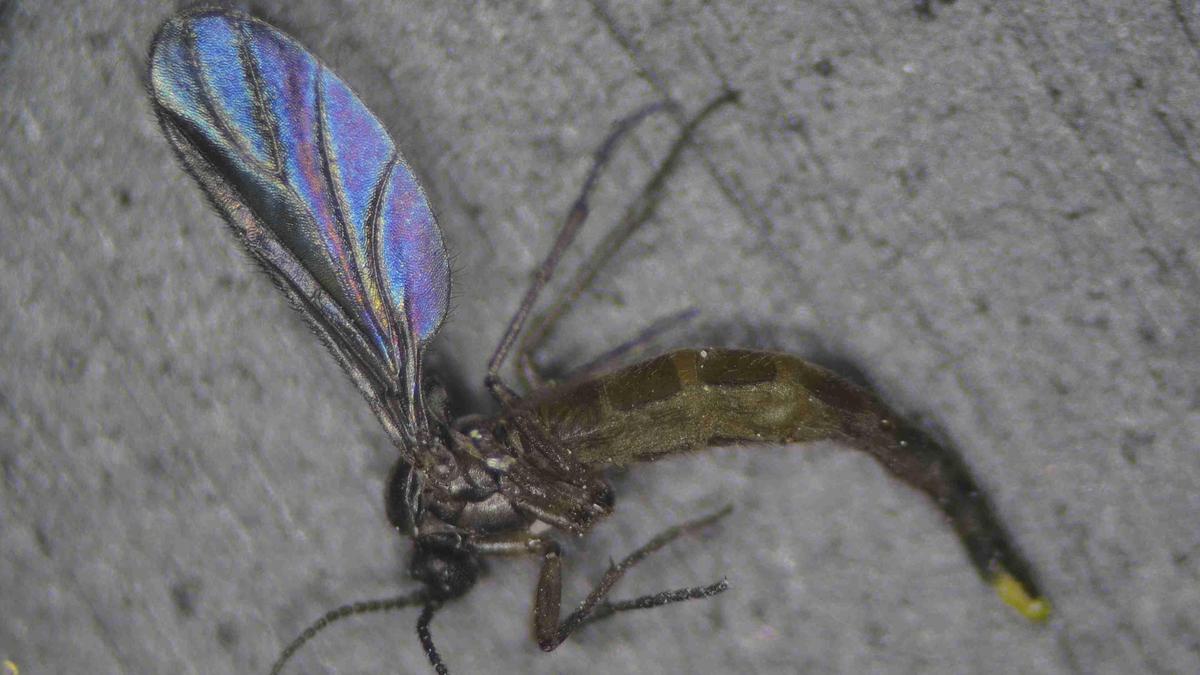
Researchers in the Nilgiris have identified a recent fly swarm in Kotagiri and Coonoor as harmless dark-winged fungus gnats, not the dangerous black flies previously feared. While the infestation has caused local economic disruption, biologists confirm these insects do not pose a direct threat to human health.
Clarifying the Nilgiris Fly Infestation
Recent reports originating from the towns of Kotagiri and Coonoor in the Nilgiris district have caused significant public concern following a sudden surge in local fly populations. Residents have documented swarms of insects that have not only caused physical discomfort—specifically reports of eye irritation—but have also triggered a decline in economic activity. Local businesses, particularly eateries and restaurants, have faced operational challenges as the presence of these swarms has deterred customers and created concerns regarding sanitation and public health.
Scientific Identification: Sciaridae vs. Black Flies
To address the growing panic, a team of wildlife biologists conducted an on-the-ground investigation to identify the species. Their findings confirm that the insects belong to the family Sciaridae, commonly referred to as dark-winged fungus gnats. This discovery is crucial because it directly contradicts rampant media speculation that the region was experiencing an outbreak of 'black flies' or 'buffalo gnats.' Independent wildlife biologist N. Moinudheen clarified that while black flies are known to be vectors for health issues in other parts of the world, the Sciaridae family present in the Nilgiris is not considered harmful to humans.
Understanding the Sciaridae Family
Dark-winged fungus gnats are generally associated with moist environments where organic matter is decaying. Their emergence in large numbers is often linked to specific environmental conditions, such as recent weather patterns or shifts in soil moisture, which provide ideal breeding grounds. Unlike the hematophagous (blood-feeding) black flies, which possess mouthparts capable of biting and causing severe allergic reactions or transmitting pathogens, Sciaridae gnats are largely nuisance insects. They do not feed on human blood, explaining why the researchers have classified them as a non-threatening presence.
The Impact of Misinformation
This incident highlights the dangers of premature identification in the digital age. The initial mislabeling of these insects as 'black flies' created unnecessary alarm, which directly exacerbated the economic impact on local businesses. When the public perceives a health threat, the resulting avoidance of public spaces like restaurants leads to tangible financial loss. By proactively engaging with scientific experts, the local community has been able to distinguish between a genuine public health crisis and an ecological nuisance, allowing for a more measured response.
Future Trends and Mitigation
Moving forward, the primary concern for Kotagiri and Coonoor will be managing the nuisance factor until the lifecycle of the gnats naturally concludes. Because these insects are not disease vectors, traditional chemical interventions designed for harmful parasites are likely unnecessary and potentially counterproductive to the local ecosystem. Instead, the focus should remain on monitoring environmental triggers and providing clear, science-backed communication to the public. As climate patterns continue to shift, understanding the local ecology of insects like Sciaridae will become increasingly important for maintaining both public comfort and the stability of local commerce in the Nilgiris.
Verification Required?