NMC notifies 1.37 lakh MBBS seats for 2026-27, private colleges in Karnataka see biggest jump
Source Entity
The Indian Express
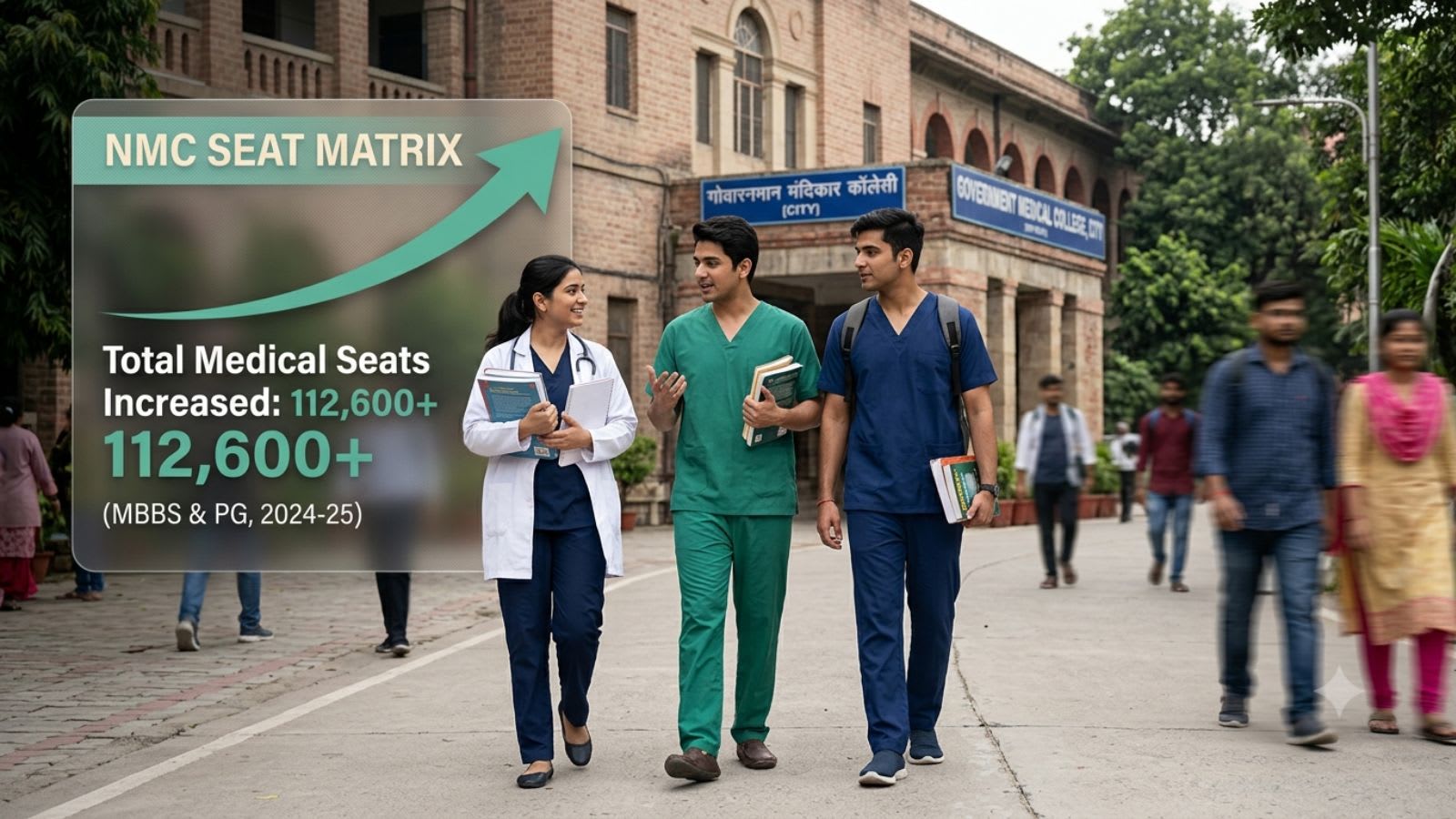
The National Medical Commission (NMC) has notified 1.37 lakh MBBS seats for the 2026-27 academic session, marking a significant expansion in medical education capacity. The growth is primarily driven by private medical colleges, with Karnataka reporting the most substantial increase in seat availability compared to government-run institutions.
Analysis of NMC MBBS Seat Expansion for 2026-27
The National Medical Commission (NMC) has officially notified a total of 1.37 lakh MBBS seats for the 2026-27 academic session. This notification represents a strategic effort to expand the medical workforce in India, addressing the chronic shortage of doctors relative to the population. The scale of this notification underscores the government's commitment to increasing healthcare accessibility; however, the distribution of this growth reveals a critical shift in how medical education is being scaled within the country.
The Divergence Between Private and Government Growth
A primary point of analysis in the latest seat matrix is the disparity in growth rates between government and private medical colleges. While government institutions continue to add seats, the pace of expansion in the private sector has significantly outstripped that of the public sector. This trend suggests that the burden of infrastructure development and capacity building is shifting toward private stakeholders. While this rapid increase in seats helps in meeting the quantitative demand for medical professionals, it raises concerns regarding the affordability of medical education, as private college tuition typically far exceeds that of government-funded institutions.
Karnataka: The Epicenter of Medical Education Expansion
Notably, private medical colleges in Karnataka have seen the biggest jump in seat availability. Karnataka has long established itself as a premier hub for medical education in India, attracting students from across the country and abroad. The surge in seats within the state indicates a strong regional appetite for private healthcare investment and a robust infrastructure capable of supporting rapid scaling. This concentration of growth in one state suggests that Karnataka is positioning itself to dominate the medical training landscape, potentially leading to an influx of students and an increased demand for ancillary services in the region.
Broader Implications for the NEET Ecosystem
The addition of seats to reach the 1.37 lakh mark will inevitably impact the competitive dynamics of the National Eligibility cum Entrance Test (NEET). With more seats available, particularly in the private sector, the 'cutoff' pressures may shift. However, because the growth is heavily skewed toward private colleges, the competition for the limited, low-cost government seats is likely to remain intensely high. This creates a bifurcated system where the ability to secure a medical degree is increasingly tied to financial capacity rather than purely academic merit.
Long-term Impact on Healthcare Delivery
From a systemic perspective, the increase in MBBS seats is a necessary step toward improving the doctor-patient ratio in India. By producing more graduates, the country can better staff rural clinics and primary health centers. However, the reliance on private-sector growth means that the future workforce may be more inclined toward urban practice or specialized private care, where the return on investment for their expensive education is higher. The challenge for the NMC and the health ministry will be to ensure that this quantitative increase in doctors translates into a qualitative improvement in public health distribution.
Conclusion
In summary, the notification of 1.37 lakh MBBS seats for 2026-27 is a landmark move in expanding India's medical capacity. While the surge in Karnataka's private sector is a testament to the state's educational infrastructure, the slower growth in government seats highlights a systemic reliance on private capital. The success of this expansion will ultimately depend on whether the increase in doctors leads to more equitable healthcare access across all socio-economic strata of the Indian population.