Andhra Pradesh to hold local body polls in Kotia today, Odisha puts disputed region under surveillance
Source Entity
Sujit Bisoyi
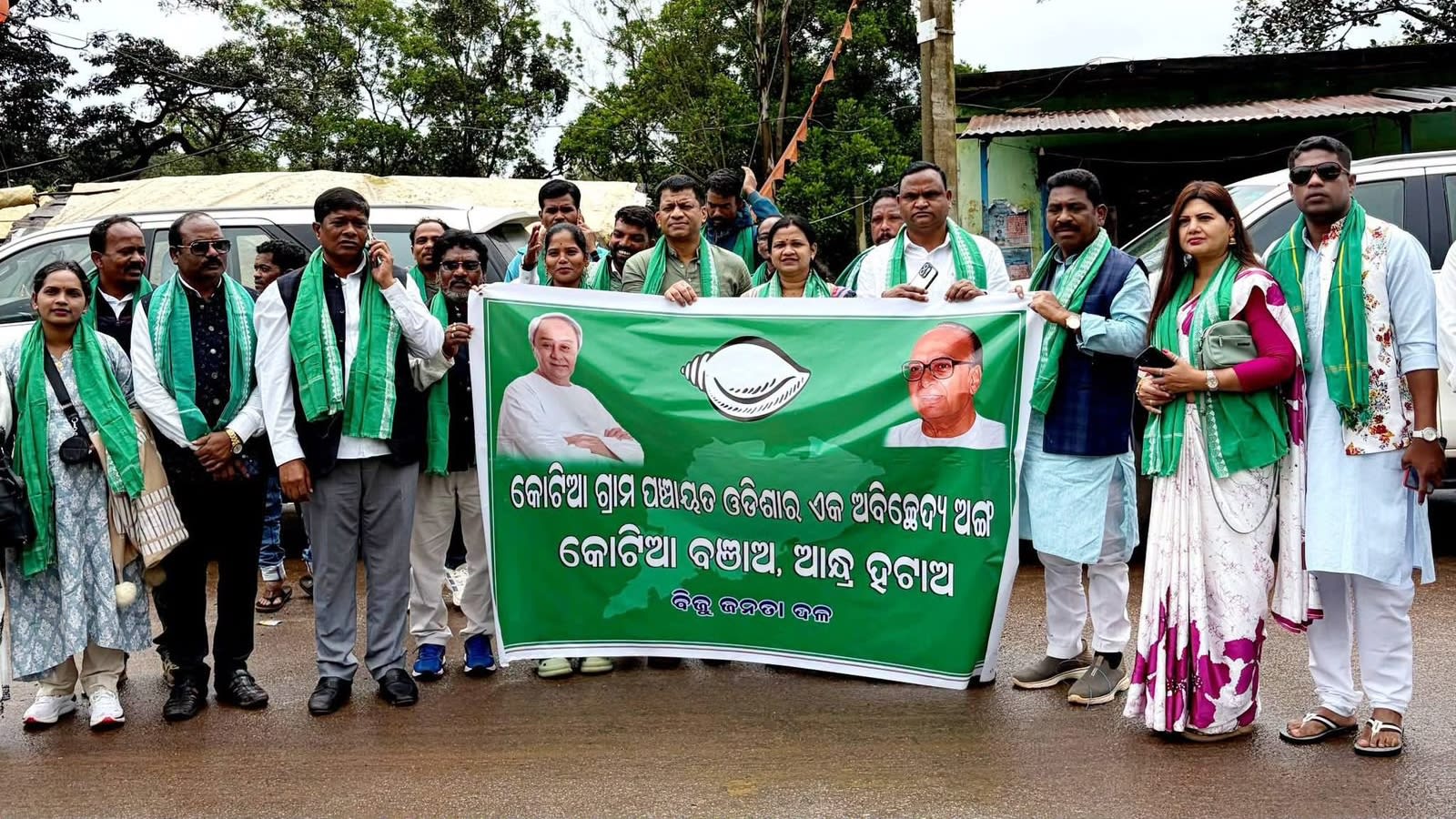
Tensions have escalated between Odisha and Andhra Pradesh over jurisdictional claims in the Kotia village cluster, leading to border scuffles and police standoffs. Simultaneously, local body elections in Andhra Pradesh's Kadapa district were marred by violent clashes between YSRCP and TDP supporters.
The Kotia Border Crisis: A Persistent Constitutional Conflict
The long-standing territorial dispute between Odisha and Andhra Pradesh has reached a new flashpoint, centered on the Kotia cluster of 28 villages in Odisha’s Koraput district. On November 3, 2026, security personnel from both states engaged in a physical scuffle at the inter-state border, as Odisha blocked Andhra Pradesh officials from entering the region. The immediate catalyst for this confrontation was the decision by Andhra Pradesh to conduct Mandal Parishad Territorial Constituencies (MPTCs) and Zilla Parishad Territorial Constituencies (ZPTCs) elections within the disputed territory, a move Odisha’s Revenue Minister, Suresh Pujari, has characterized as an attempt to incite a constitutional crisis.
Historical Context of the Kotia Dispute
This conflict is not a recent development but a systemic issue that has persisted since the 1960s. The Kotia region, home to approximately 5,000 residents, has been caught in a tug-of-war for over six decades, with both states asserting jurisdictional control. The complexity arises from the overlapping administrative claims and the strategic importance of these border regions for local governance and resource distribution. For decades, the lack of a definitive resolution has forced the residents of these 28 villages into a state of dual-administrative uncertainty, where both states attempt to provide services and assert sovereignty.
Escalation and Administrative Standoff
Following the attempt by Andhra Pradesh officials to enter the region via Neredibalasa, the Odisha administration intensified its posture by erecting heavy barricades and implementing strict surveillance. The situation grew volatile when, according to reports, an Andhra Pradesh campaign vehicle and police escort allegedly attempted to forcibly breach these barricades. The Odisha government has since solidified its stance, with Revenue Minister Suresh Pujari explicitly stating that the state has formulated a comprehensive plan to prevent further unauthorized entry, signaling a hardening of diplomatic and administrative lines between the two neighboring states.
Political Violence in Kadapa
While the border dispute dominates the inter-state narrative, internal electoral instability has also flared within Andhra Pradesh. Simultaneously with the regional tensions, violent clashes erupted in the Kadapa district between activists of the YSRCP and the TDP. The unrest, which occurred during the same MPTC and ZPTC election cycle, involved the use of petrol bombs in Yerripalli village. Although police officials, such as SDPO Murali Nayak, later downplayed the severity by clarifying that firecrackers were repurposed as projectiles, the incident underscores the intense political friction surrounding these local body elections.
Broader Implications and Future Trends
These events reveal a dual-layered challenge for regional stability: the difficulty of resolving inter-state territorial boundaries in a federal structure and the volatility of local political competition. The Kotia dispute, in particular, suggests that without high-level intervention or a Supreme Court-mandated settlement, the risk of escalation between Odisha and Andhra Pradesh will remain high. Future trends suggest that as both states continue to compete for influence over the border population, administrative friction will likely recur during every electoral cycle. The reliance on physical barricades and police standoffs points to a breakdown in inter-state communication, which poses a significant challenge to the peaceful governance of border districts in India.