Odisha CM: From Congress, selective outrage — and deep hypocrisy — about the Election Commission
Source Entity
The Indian Express
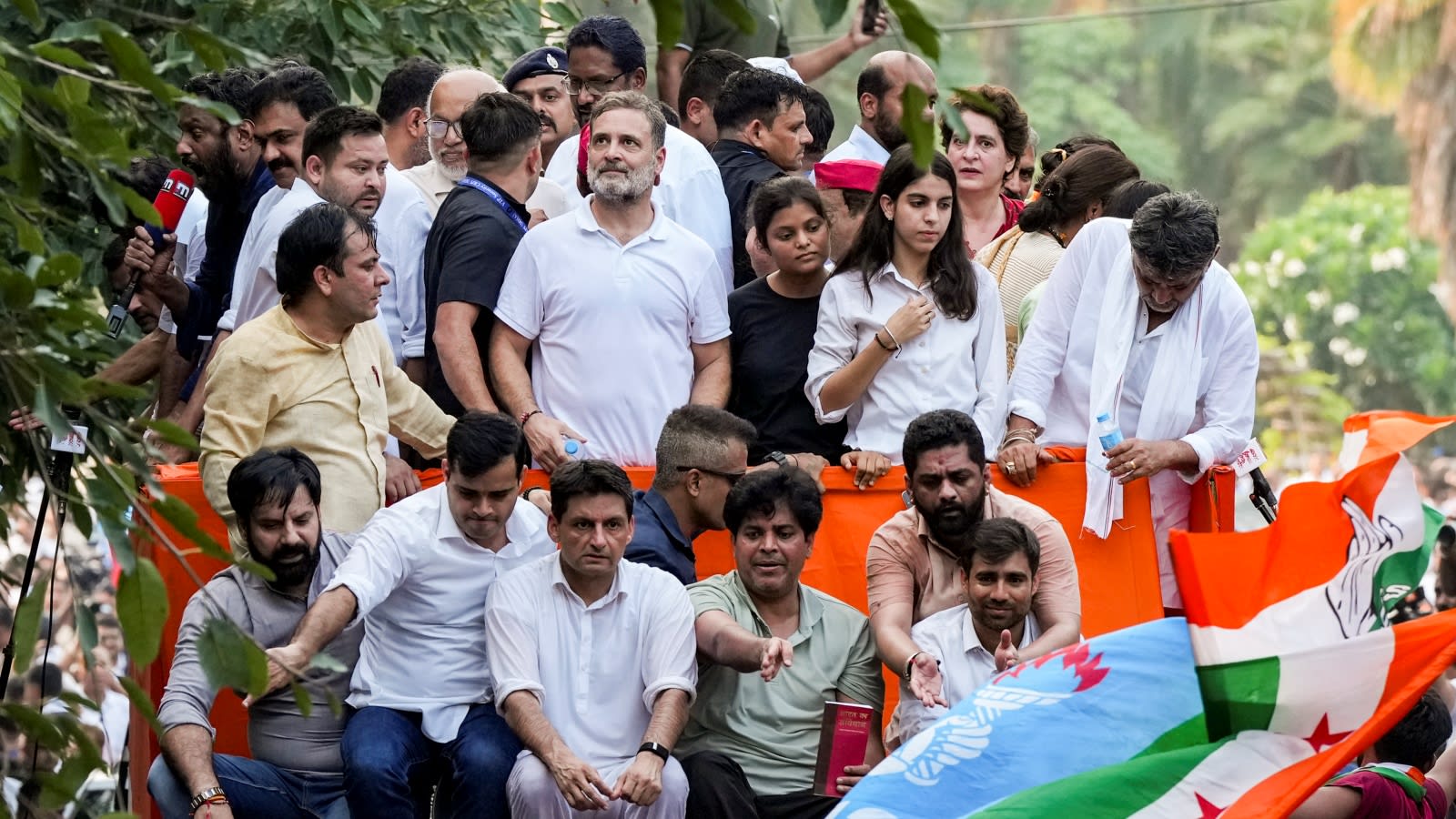
Odisha CM Mohan Charan Majhi criticizes the Opposition for hypocrisy regarding their recent protests against the Election Commission. He emphasizes the lack of judicial findings to support these allegations and defends the integrity of the institution.
The Politics of Institutional Distrust
Recent political demonstrations in Delhi, characterized by loud slogans and demands for the resignation of the Chief Election Commissioner (CEC), have ignited a fierce debate over the sanctity of India's democratic institutions. Odisha Chief Minister Mohan Charan Majhi has characterized these protests not as genuine grievances, but as a calculated narrative of convenience. By framing the Election Commission (EC) as a 'paragon of independence' only when outcomes favor them, the Opposition is accused of weaponizing institutional reputation for narrow political gains.
The Absence of Judicial Substantiation
A critical point of contention highlighted by Majhi is the glaring lack of evidentiary support for these allegations. Despite the intensity of the street protests, the Supreme Court of India—the ultimate arbiter of constitutional disputes—has refrained from issuing any interim orders to suspend or condemn the CEC. By merely issuing a notice for the Commission to respond, the judiciary has maintained a procedural stance rather than an accusatory one, effectively undermining the urgency of the protesters' claims.
Historical Context and Selective Outrage
The pattern of challenging the Election Commission is not a novel phenomenon in Indian political history. Often, when electoral results do not align with expectations, the institutional integrity of the EC becomes the primary target of political rhetoric. This 'selective outrage' serves to delegitimize the electoral process itself, creating a cycle where institutions are perceived as biased based solely on the political fortunes of the party in power or in opposition.
The Dangers of Delegitimizing Constitutional Bodies
When political discourse shifts from policy debate to the wholesale questioning of constitutional bodies, the broader implication is a degradation of public trust. The Election Commission serves as the bedrock of the world’s largest democracy, and its function relies on the perception of neutrality. By casting the Commission as a 'wicked government' tool without tangible evidence, agitators risk eroding the very foundation upon which their own future electoral legitimacy rests.
Future Trends in Political Accountability
Looking forward, the trend suggests a hardening of positions where institutional verification will be increasingly subjected to the court of public opinion before judicial review is completed. This creates a volatile environment where the 'script' of protest is written long before facts are verified. As the Commission continues to reject claims of impropriety, the burden of proof will remain squarely on those making the allegations, potentially leading to a long-term decline in the effectiveness of such protest-led political strategies.
Conclusion
Ultimately, the confrontation between the Opposition and the Election Commission, as analyzed by CM Majhi, underscores a deep divide in Indian political culture. The demand for resignation, absent of a judicial finding or concrete proof, appears to be more about political theater than institutional reform. As the legal process unfolds, the necessity for evidence over rhetoric remains the only pathway to maintaining the credibility of India's democratic framework.