Old Farmer's Almanac warns of changing US weather in November 1-10 forecast
Source Entity
Latest News: Todays Latest News Headlines from India & World | Hindustan Times
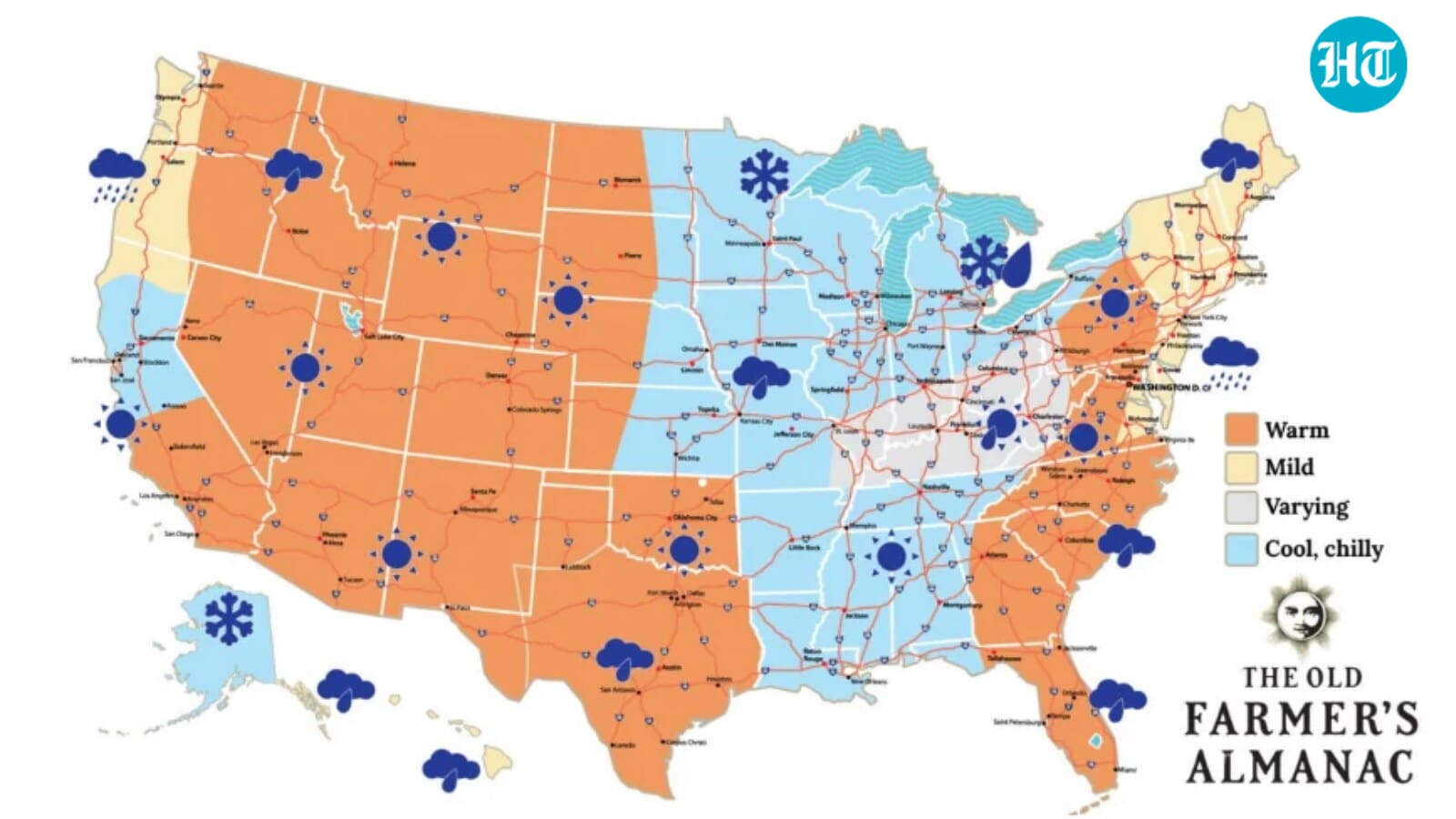
The Old Farmer's Almanac and meteorologists are forecasting a volatile November for the US, driven by a strengthening El Niño and a potential polar vortex disruption. Residents should prepare for a mix of unseasonable warmth punctuated by sudden Arctic cold snaps.
November Weather Outlook: A Collision of Climate Patterns
The United States faces a complex meteorological landscape this November as the Old Farmer’s Almanac and mainstream meteorologists align on expectations of significant shifts in regional weather. With the onset of the month, the Almanac’s long-range trends suggest a transition from initial periods of sunshine and warmth to more unsettled, cooler conditions by the second week. This forecast serves as a critical indicator of the broader climate volatility currently being monitored by experts.
The Role of El Niño and Polar Dynamics
At the heart of these forecasts is the influence of a powerful El Niño event currently strengthening in the Pacific Ocean. As a dominant climate driver, El Niño typically reshapes temperature and precipitation patterns across North America. Simultaneously, reports indicate that the Arctic polar vortex is showing signs of an unusually early collapse. When this high-altitude band of winds weakens, it often allows frigid, dense Arctic air to spill southward, creating sudden and sharp drops in temperature even in regions otherwise experiencing a mild autumn.
Methodology: Blending Tradition with Science
The Old Farmer’s Almanac maintains its long-standing reputation by integrating solar science, climatology, and meteorology to generate its seasonal outlooks. By analyzing historical climate data alongside large-scale atmospheric signals like El Niño, the Almanac provides a broad-spectrum view of regional trends. While these forecasts do not claim to predict precise day-to-day conditions, they offer a valuable macro-perspective on the transition into the winter season.
Regional Variability and Early November Trends
The forecast for the first 10 days of November illustrates the complexity of these climate interactions. Specifically, in the Appalachian region, the period between November 1-5 is projected to be warm and sunny. However, the subsequent window of November 6-10 is expected to bring a shift, with showers and cooling temperatures arriving as the atmospheric patterns adjust. This volatility is indicative of the tug-of-war between lingering seasonal warmth and the encroaching influence of polar air masses.
Broader Implications for the US
The convergence of a 'Super' El Niño and polar vortex instability suggests that the coming weeks may be characterized by unexpected, rapid fluctuations in weather. For the general public, this means that while long-term averages may lean toward specific trends, the day-to-day reality may include brief, intense Arctic cold spells. Meteorologists remain vigilant, as these two systems interacting simultaneously can lead to unpredictable outcomes that deviate from standard seasonal norms.
Conclusion: Preparing for an Uncertain Month
Ultimately, the forecast for November highlights the importance of climate monitoring in an era of shifting global weather patterns. Whether relying on the traditional methodologies of the Old Farmer’s Almanac or the real-time data analysis of modern meteorology, the message is clear: the United States is entering a period of transition where the expected warmth of autumn could be abruptly challenged by winter’s early reach. Staying informed on these trends is essential for managing agricultural, travel, and personal preparations as the country moves toward the winter season.
Multiple Citing Sources
Verification Required?