Couple clear 4,000 hectares of pests; vanished Australian animals return
Source Entity
TOI WORLD DESK
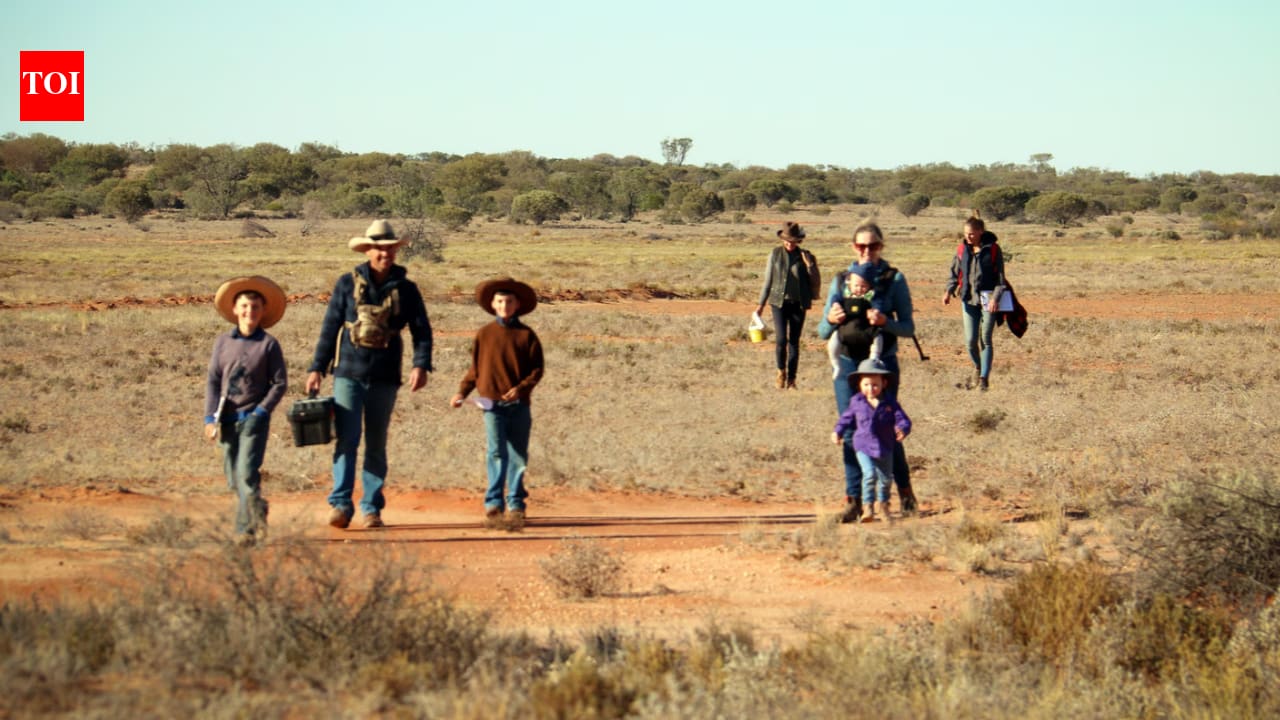
Ecologists Rebecca West and Reece Pedler have successfully reintroduced six native mammal species to New South Wales' Sturt National Park. Through the Wild Deserts project, they cleared 4,000 hectares of pests to restore local ecosystems after a century-long absence.
The Wild Deserts Project: Restoring Australia's Lost Biodiversity
In the arid expanse of north-western New South Wales, a monumental ecological restoration is unfolding. Ecologists Rebecca West and Reece Pedler have spent nearly a decade spearheading the Wild Deserts project, an initiative that has successfully reversed the local extinction of several native mammal species. By clearing 4,000 hectares of invasive pests, the team has effectively reset the environmental clock in Sturt National Park, allowing species that had been absent for over a century to return to their ancestral habitats.
The Mechanics of Ecosystem Recovery
The core of this success lies in the rigorous management of the landscape. Invasive species, such as foxes and feral cats, have historically decimated small native mammals across the Australian outback. By creating protected, pest-free environments, West and Pedler have provided a sanctuary where vulnerable species can thrive without the constant threat of predation. This strategy of large-scale exclusion fencing and systematic pest removal is a proven, albeit labor-intensive, method for facilitating the recovery of threatened fauna.
A Decade of Dedication
What began as an ambitious experiment has evolved into a long-term conservation success story. The transition from a remote station life to a high-stakes ecological recovery mission illustrates the personal and professional commitment required to combat biodiversity loss. Supported by the University of New South Wales (UNSW) and the NSW Government, the project has moved beyond theoretical research into practical, on-the-ground rewilding, proving that targeted interventions can yield tangible results in even the most isolated landscapes.
Ecological Significance of Reintroduction
The return of these six native mammal species is not merely a symbolic win; it is an essential step in restoring the functionality of the desert ecosystem. Native mammals play critical roles as seed dispersers and soil aerators, activities that promote vegetative growth and overall landscape health. By fostering a breeding population in the wild, the Wild Deserts project is ensuring that these species are not just surviving, but actively contributing to the ecological resilience of Sturt National Park.
Future Trends in Conservation
The success of the Wild Deserts project serves as a blueprint for future conservation efforts across Australia. As climate change continues to put pressure on fragile ecosystems, the ability to create and maintain 'wild' zones becomes increasingly vital. The collaborative model utilized here—partnering academic expertise with government resources and dedicated field practitioners—is likely to become the standard for large-scale biodiversity restoration projects worldwide.
Conclusion
As reported by ABC Landline, the work led by West and Pedler highlights a hopeful trajectory for Australian wildlife. By removing the barriers to survival—specifically invasive pests—the project has demonstrated that nature possesses a remarkable capacity for recovery when given the space and protection to do so. This success in Sturt National Park is a testament to the power of persistent, science-led conservation in the face of long-term environmental degradation.