Rhind Mathematical Papyrus
Source Entity
Hacker News
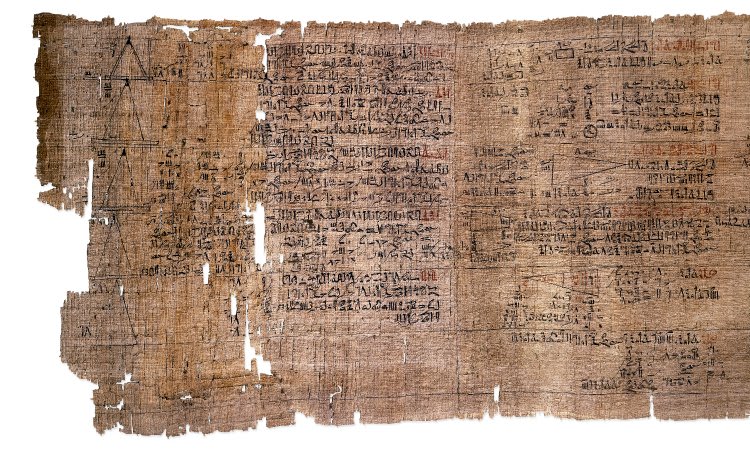
The Rhind Mathematical Papyrus serves as a foundational historical document, detailing ancient Egyptian arithmetic and geometric methods. Scribe Ahmes, who authored the copy, provides critical context regarding its origins and archival purpose.
The Significance of the Rhind Mathematical Papyrus
The Rhind Mathematical Papyrus stands as one of the most vital artifacts in the history of mathematics, offering an unprecedented window into the intellectual rigor of ancient Egypt. By documenting the scribe Ahmes’ work, historians have gained access to a structured collection of problems and solutions that highlight the advanced state of Egyptian arithmetic and geometry. The document does not merely serve as a list of equations; it acts as a cultural bridge, connecting the technical achievements of the Middle Kingdom to the later periods of Egyptian civilization.
Authorship and Historical Context
The title page of the papyrus is particularly illuminating, as Ahmes explicitly identifies his own historical circumstances while acknowledging the source material. By noting that he copied the text during the reign of ‘A-user-Re’ in the 33rd year of his rule, Ahmes provides a clear chronological anchor. Furthermore, his reference to copying from "writings of old" created during the time of Ne-ma'et-Re’ confirms that the mathematical knowledge contained within was already considered ancient and authoritative by the time of its transcription, suggesting a long-standing tradition of academic preservation.
Intellectual Ambition and Documentation
Ahmes describes his work as the "entrance into the knowledge of all existing things and all obscure secrets," a phrasing that emphasizes the high value placed on mathematical literacy in ancient Egypt. This was not merely utilitarian arithmetic for daily commerce; it was viewed as a foundational science that allowed the scribe to perceive the hidden order of the universe. The inclusion of problem numbers and detailed descriptions of solutions indicates a pedagogical intent, likely designed to train future scribes in the complexities of Egyptian fractional notation and geometric calculation.
Methodological Rigor and Transmission
The structure of the papyrus—organized into sections, problem statements, and solutions—demonstrates a highly developed methodology for knowledge transfer. By maintaining the integrity of the original "writings of old," the scribe ensured that the mathematical techniques remained consistent across generations. This preservation effort is what allows modern scholars to analyze the specific mechanics of ancient calculations, providing a reliable dataset for understanding how Egyptian mathematicians approached volume, area, and proportionality.
Broader Implications for Mathematical History
The Rhind Papyrus challenges the perception of ancient mathematics as purely practical or simplistic. Its existence proves that there was a concerted effort to codify, archive, and refine mathematical secrets over centuries. As we continue to study these documents, they remind us that the roots of modern scientific inquiry are deeply embedded in the formal records of the ancient world. The papyrus remains a testament to the scribe’s role as the primary guardian of intellectual progress, ensuring that the "obscure secrets" of their era were never truly lost to time.