‘Now that an Abdul has won…’: For Owaisi, Michigan race has Uttar Pradesh parallel
Source Entity
Sreenivas Janyala
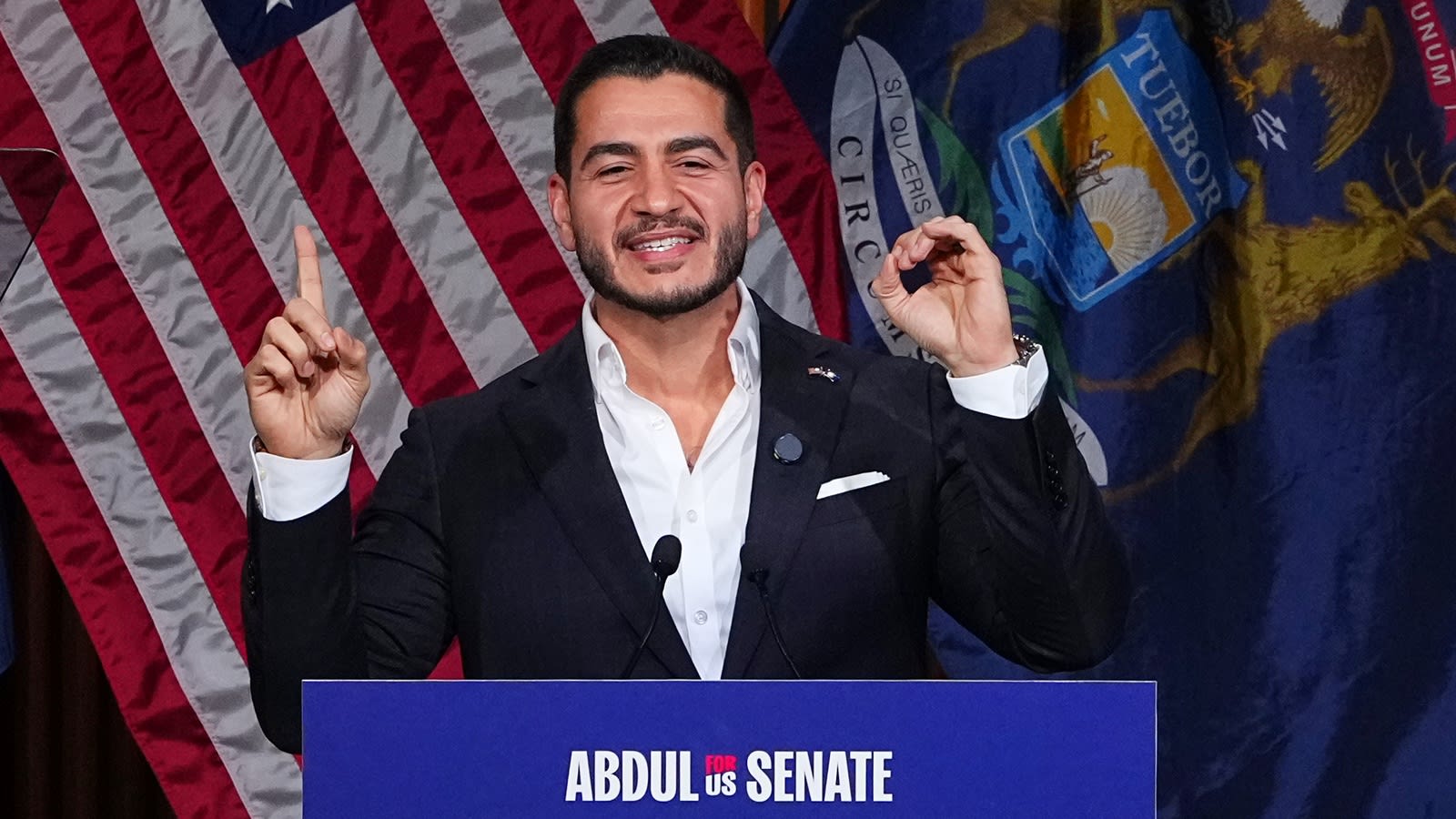
AIMIM chief Asaduddin Owaisi has cited Democrat Abdul El-Sayed’s historic US Senate win in Michigan to urge Muslims in Uttar Pradesh to bolster their political identity. Owaisi views this international milestone as a catalyst for local empowerment against political marginalization.
The Michigan Milestone and Its Indian Resonance
The recent election of Democrat Abdul El-Sayed to the United States Senate has reverberated far beyond American borders, capturing the attention of political leaders in India. Specifically, All India Majlis-e-Ittehadul Muslimeen (AIMIM) president Asaduddin Owaisi has utilized this victory as a rhetorical pivot point to address the Muslim electorate in Uttar Pradesh. By framing the success of an 'Abdul' in Michigan as a source of inspiration, Owaisi is attempting to galvanize a community he argues has been subjected to systemic political marginalization and derogatory labeling.
Reclaiming the Narrative of 'Abdul'
At the core of Owaisi’s message is the reclamation of the name 'Abdul'—a common name among Muslims—which he alleges has been weaponized as a taunt by right-wing elements ('Sanghis') within Indian political discourse. Owaisi’s rhetoric suggests that the Michigan victory serves as a psychological counter-narrative, proving that individuals from the community can achieve significant electoral success in diverse, high-stakes democratic environments. He posits that this achievement should embolden Muslims in Uttar Pradesh to move past defensive posturing and assert a more robust, independent political identity.
The Quest for Political Agency in Uttar Pradesh
Uttar Pradesh remains the most critical theater for Indian electoral politics. For the AIMIM, the struggle has consistently been to move beyond being a minor player and toward establishing a consolidated Muslim vote bank that can influence policy outcomes. Owaisi’s call to 'not bow to anyone but Allah' and his assertion that the time for 'laying out the prayer mat' (a metaphor for passive political participation) is over, signals an intent to push for a more assertive, rights-based political activism that rejects traditional, often subservient, alliances with major national parties.
Global Trends and Local Implications
The election of the first Muslim to the US Senate represents a broader global trend of minority representation in Western democracies. Owaisi is keenly aware that such international milestones provide a powerful comparative context for his supporters. By drawing a parallel between a US Senate seat and the political landscape of UP, he is attempting to internationalize the struggle for representation, suggesting that the barriers faced by minorities are part of a global political reality that can be overcome through organized democratic participation.
Future Trends and Political Polarization
Looking forward, Owaisi’s strategy indicates a shift toward identity-centric mobilization. This approach is likely to deepen the political polarization in Uttar Pradesh, as it challenges the existing hegemony of both the ruling party and the traditional opposition. Whether this rhetoric will translate into tangible electoral gains remains to be seen, but it certainly sets the stage for a more confrontational political climate in the state. The effectiveness of this 'Michigan model' will depend on the AIMIM's ability to convert this symbolic inspiration into a structured, grassroots political organization that can withstand the pressures of the complex Indian electoral system.
Conclusion
In summary, the connection drawn by Asaduddin Owaisi between a US Senate election and Uttar Pradesh politics is a calculated effort to re-energize his base. By transforming a distant electoral result into a local rallying cry, he is attempting to shift the political consciousness of the Muslim community in India, urging them to shed the constraints of past political alignments in favor of a more assertive and independent identity.
Multiple Citing Sources