"An Abdul Has Won In Michigan": Asaduddin Owaisi's UP Pitch After US Senate Race
Source Entity
NDTV News Search Records Found 1000
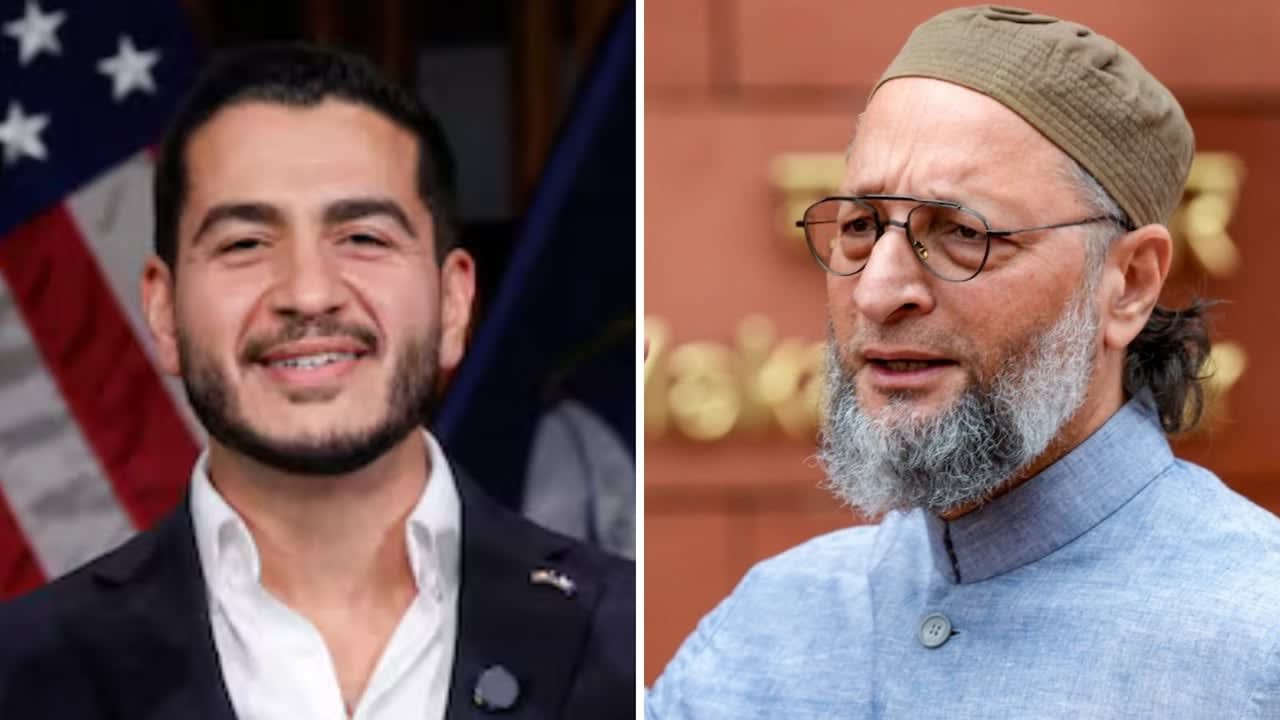
AIMIM chief Asaduddin Owaisi has cited Democrat Abdul El-Sayed’s historic US Senate victory in Michigan as a catalyst for Indian Muslims to bolster their political identity. Owaisi urged the community in Uttar Pradesh to move past historical marginalization and assert their representation in the electoral process.
The Michigan Milestone and its Indian Resonance
The recent election of Democrat Abdul El-Sayed to the United States Senate has transcended borders, sparking a significant political discourse in India. For Asaduddin Owaisi, the president of the All India Majlis-e-Ittehadul Muslimeen (AIMIM), this victory is not merely a foreign policy event but a symbolic rallying cry for the Muslim community in Uttar Pradesh. By framing the American victory as a milestone for representation, Owaisi is attempting to mobilize his base by drawing a direct, albeit symbolic, parallel between the success of a Muslim politician in a Western democracy and the political aspirations of Muslims in India.
Challenging the Narrative of Marginalization
Owaisi’s rhetoric centers on the claim that the term 'Abdul' has been weaponized by political opponents—whom he refers to as 'Sanghis'—as a form of social and political taunting in India. By highlighting El-Sayed’s success, he seeks to flip this narrative, transforming a label intended to marginalize into a badge of political resilience. This strategy aims to shift the psychological landscape for his supporters, encouraging them to view their identity not as a source of vulnerability, but as a foundation for assertive political action.
The Quest for Political Agency in Uttar Pradesh
Uttar Pradesh, a state with a significant Muslim population, has historically been a focal point for identity politics. Owaisi’s call for Muslims to 'strengthen their political identity' reflects a long-standing critique that the community has been treated as a 'vote bank' by mainstream parties rather than as a group with independent political agency. By referencing the Michigan victory, he is urging a departure from passive participation toward a more proactive, self-reliant political strategy that prioritizes community-specific interests.
Historical Context and Modern Aspirations
Historically, the Muslim community in India has navigated complex electoral dynamics, often aligning with parties that claim to be secular. However, Owaisi’s AIMIM represents a shift toward distinct, community-focused political platforms. The Michigan example serves as a potent tool to illustrate that religious identity and civic participation are not mutually exclusive in a democratic framework. This comparison is strategically designed to resonate with younger, politically active voters who are increasingly looking for models of successful representation.
Future Implications for Indian Electoral Politics
Looking ahead, Owaisi’s focus on this international event signals a desire to broaden the scope of his political campaign. If the AIMIM succeeds in framing electoral engagement through the lens of identity affirmation, it could significantly alter the voting patterns in Uttar Pradesh. The long-term trend suggests an increasing move toward fragmented, identity-centric voting blocs, which could complicate the efforts of larger national parties to consolidate support across religious lines.
Conclusion
The synthesis of global political trends with local Indian issues highlights the evolving nature of political discourse in the digital age. By leveraging the victory of Abdul El-Sayed, Asaduddin Owaisi has successfully injected a global narrative into the local Uttar Pradesh political arena. Whether this will translate into tangible electoral gains remains to be seen, but it undoubtedly marks a strategic shift in how the AIMIM intends to frame its struggle for political representation in the coming years.
Multiple Citing Sources
Verification Required?