'Protocol, not power': Ex-IMF director punctures Pakistan's 'historic milestone' claim
Source Entity
PRIYANKA JAISWAL
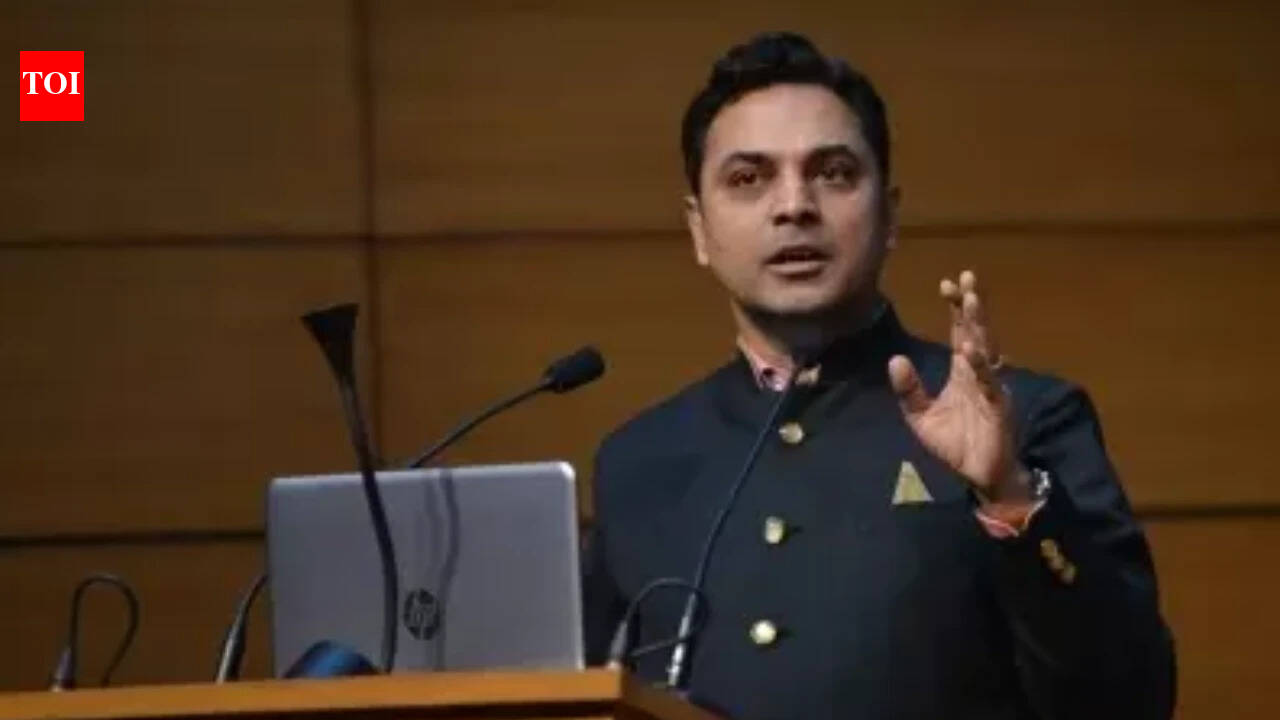
Former IMF executive director Krishnamurthy V. Subramanian has clarified that Pakistan's upcoming 2027 chairmanship of the IMF and World Bank boards is purely ceremonial. He countered Pakistan's claims of a 'historic milestone,' emphasizing that the role rotates annually and holds no executive power.
The Mirage of Global Influence: Analyzing the IMF Chairmanship Controversy
Dissecting the 'Historic Milestone' Narrative
Pakistan's Ministry of Economic Affairs recently generated headlines by labeling the country's upcoming appointment to chair the IMF and World Bank Boards of Governors in 2027 as a "historic milestone." This framing suggested a significant resurgence in Pakistan's global financial stature and leadership influence. However, this narrative has been sharply challenged by Krishnamurthy V. Subramanian, a former executive director at the International Monetary Fund, who took to social media to provide a necessary correction regarding the nature of the position.
The Reality of Ceremonial Protocol
Subramanian’s critique focuses on the structural realities of international financial institutions. He explicitly described the chairmanship as a role defined by "protocol, not power." In the context of the IMF and World Bank, the Board of Governors is the highest decision-making body, but the position of Chair is largely a rotating, ceremonial function that changes annually among member nations. By reframing the appointment, Subramanian highlighted that the role does not grant the holder executive authority to dictate policy, influence lending conditions, or shift the strategic direction of the institutions.
Contextualizing Pakistan's Financial Dependence
To understand why this distinction is critical, one must look at Pakistan's broader economic reality. The nation has a long, documented history of deep dependence on IMF support to stabilize its volatile economy and manage recurring balance-of-payments crises. Because the public perception of economic strength is vital for domestic political stability, government narratives often seek to elevate minor administrative developments into major diplomatic victories. This incident serves as a case study in how state-led PR campaigns can attempt to reshape the perception of global standing, even when structural economic realities remain unchanged.
The Mechanics of International Governance
International organizations like the IMF operate through complex, multi-layered governance structures. While the Board of Governors holds the ultimate power, the day-to-day operations and executive decisions are managed by the Executive Board and the Managing Director. The confusion surrounding the 2027 chairmanship highlights a common misunderstanding of international organizational hierarchy. For the average observer, the term "Chair" implies executive control; in the context of these institutions, it is primarily a diplomatic honor that follows a predetermined rotation schedule, void of substantive policy-making leverage.
Implications for Future Economic Diplomacy
As Pakistan continues to navigate its ongoing economic challenges, the focus on such ceremonial milestones may become a point of contention. Experts suggest that the discrepancy between official government messaging and the technical reality of international roles could lead to increased public skepticism. Moving forward, the effectiveness of Pakistan’s economic diplomacy will likely be measured by its ability to secure tangible structural reforms and fiscal stability, rather than its participation in the routine, rotating administrative protocols of global financial bodies.
Conclusion
The correction issued by Krishnamurthy V. Subramanian underscores the importance of transparency in international affairs. By clarifying that the 2027 chairmanship is a procedural rotation rather than a leadership achievement, the former IMF official has provided a necessary reality check. For Pakistan, the path to genuine global financial leadership remains tied to addressing its deep-seated economic vulnerabilities, rather than the honorary titles bestowed through standard institutional protocols.