Pala-era Vishnu sculpture sold for Rs 8.16 crore, over 9 times estimate
Source Entity
TOI LIFESTYLE DESK
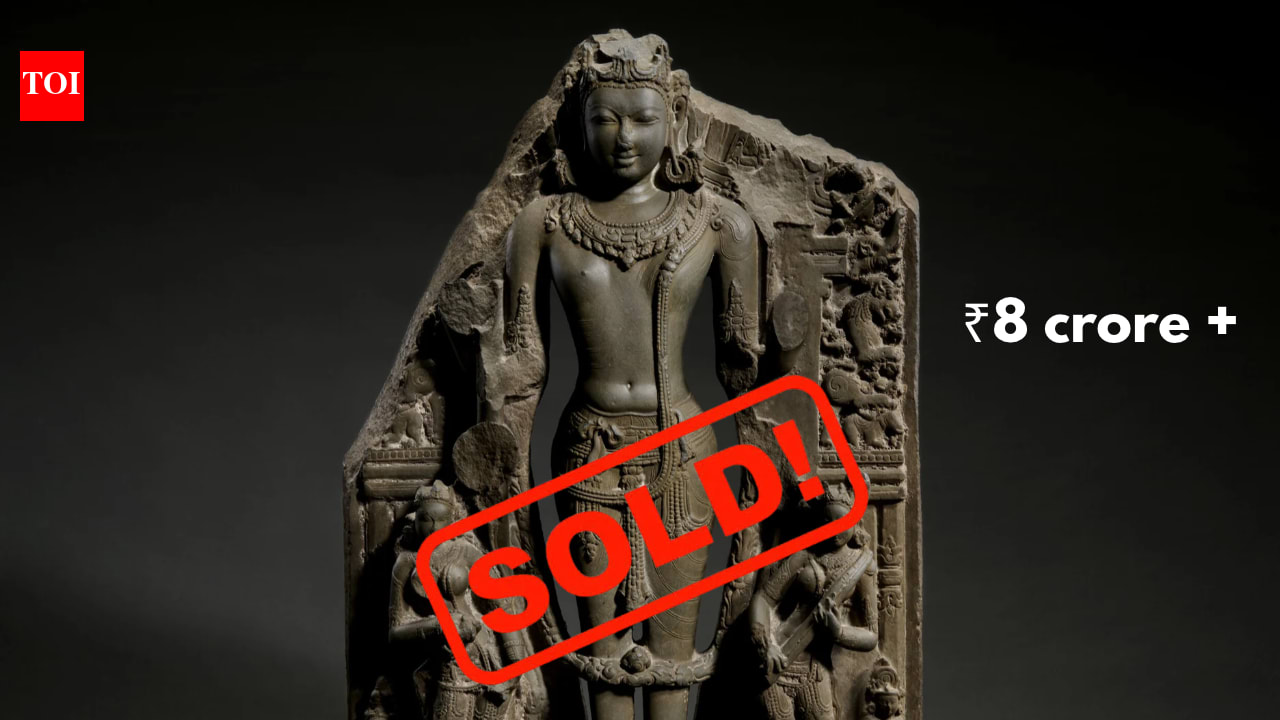
An 11th-12th-century Pala-era Vishnu sculpture fetched £635,000 (Rs 8.16 crore) at a Christie’s auction, significantly exceeding its initial estimates. The artifact, which spent 53 years in a private Swiss collection, highlights the enduring global market demand for ancient Indian antiquities.
The Resurgence of Pala-Era Artistry
The recent sale of a Pala-era Vishnu sculpture for £635,000—approximately Rs 8.16 crore—marks a significant milestone in the valuation of South Asian antiquities. Dating back to the 11th or 12th century, this blackstone carving serves as a testament to the sophisticated artistic traditions of the Pala Empire, which once governed regions in eastern India. The fact that the hammer price reached more than nine times the high estimate underscores a robust, competitive market for historically significant religious iconography.
Provenance and Historical Journey
The sculpture’s journey provides a fascinating window into the movement of art across borders. First auctioned in March 1973, the piece was acquired by a Swiss collector, remaining in their possession for 53 years. This long-term private stewardship often adds a layer of prestige to an artifact, as it implies a stable provenance—a critical factor for modern auction houses like Christie’s. The sculpture’s transition from a long-held private Swiss collection back into the public market highlights how ancient Indian heritage continues to circulate within international art spheres.
Economic Implications of Cultural Heritage
The dramatic discrepancy between the estimate and the final sale price is emblematic of a broader trend: the increasing economic appreciation for South Asian art. While the sculpture was initially valued at a much lower figure, the final result indicates that collectors are willing to pay a substantial premium for authentic, well-preserved examples of medieval Indian sculpture. This surge in value is not merely financial; it reflects a growing global recognition of the intricate craftsmanship inherent in Pala-era stone carving.
Global Market Dynamics
When the sculpture appeared at the June 2026 auction, it was part of a curated focus on South Asian art, a move that likely concentrated buyer interest and drove the bidding war. Auction houses frequently leverage these specialized sales to create a sense of scarcity and urgency, which clearly paid off in this instance. The sale serves as a case study for how thematic auctions can elevate the profile of specific historical periods, effectively transforming archaeological artifacts into high-value luxury assets.
Future Trends and Preservation
Looking forward, the high price tag for this Vishnu sculpture will likely influence future valuations for similar works from the Pala period. As the market for such pieces matures, there is an increasing emphasis on the history of ownership and the legal status of artifacts. For collectors and museums alike, the sale highlights that while these objects are commodities in a market, their primary value remains rooted in their cultural and historical significance. The successful auction of this piece suggests that the appetite for Indian antiquities remains insatiable, even as the global community continues to debate the ethics and regulation of cultural property trade.