40 years ago September 9, 1986: Zia says death for hijackers
Source Entity
The Indian Express
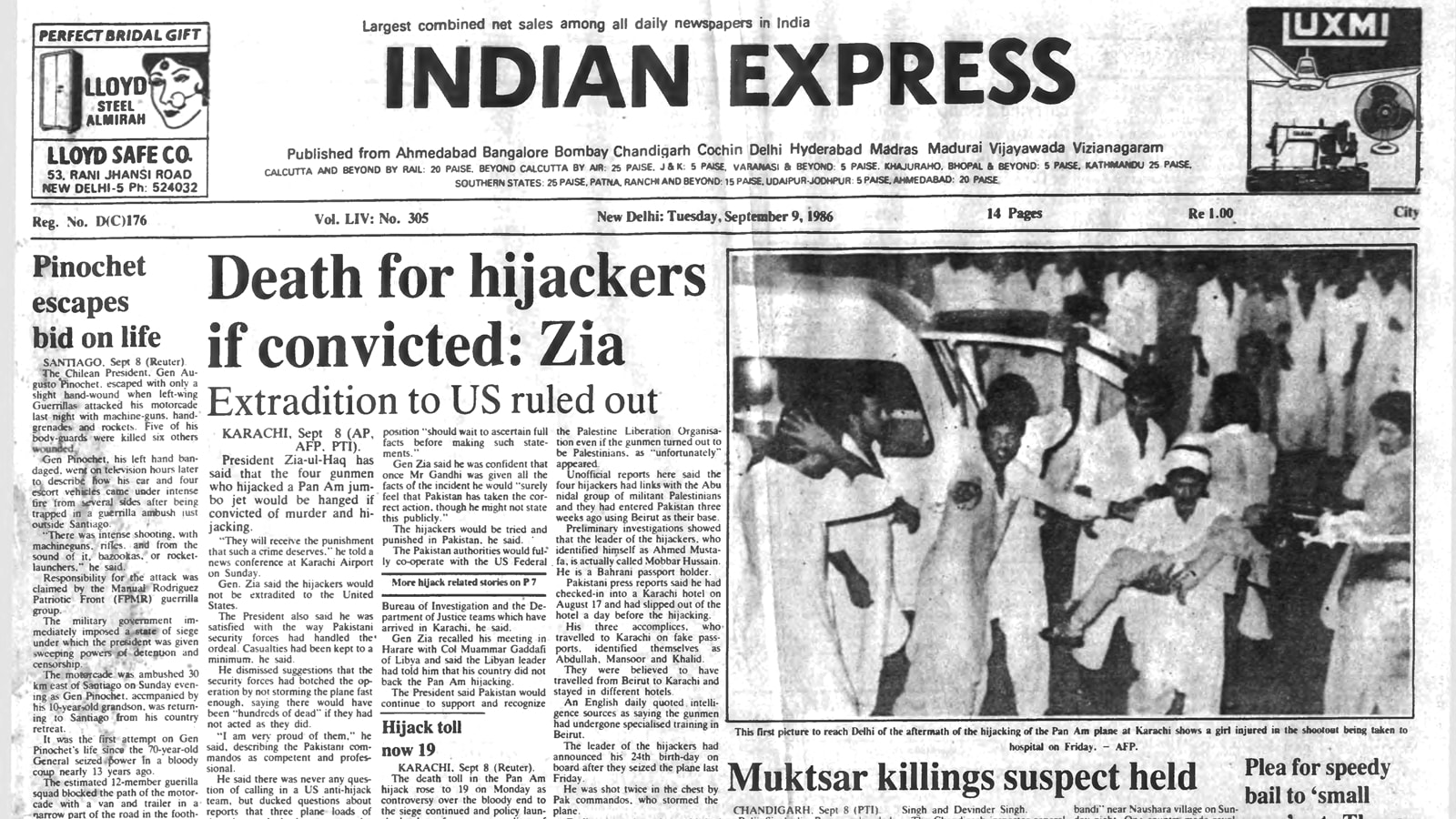
President Zia-ul-Haq announced that the four hijackers responsible for the tragic Pan Am Flight 73 siege would face the death penalty. As the death toll rose to 19, the Pakistani government maintained control over the legal proceedings, refusing extradition to the United States.
The Pan Am Flight 73 Crisis: A Historical Reckoning
On September 9, 1986, the aftermath of the harrowing hijacking of Pan Am Flight 73 reached a critical turning point. President Zia-ul-Haq of Pakistan issued a stern declaration, stating that the four gunmen responsible for the siege would face the death penalty if convicted of murder and hijacking. This proclamation underscored the gravity of the incident, which occurred on the tarmac at Karachi Airport and resulted in a devastating loss of life.
The Human Cost and Security Controversy
The human toll of the hijacking continued to climb in the days following the event. A hospital spokesman confirmed that the death toll had risen to 19, as additional victims succumbed to injuries sustained when the gunmen opened fire indiscriminately inside the darkened cabin of the Boeing 747. This tragedy sparked intense national and international debate regarding the effectiveness of the security response, with critics questioning the timing of the intervention. President Zia publicly defended the actions of the security forces, dismissing allegations that the operation was botched by failing to storm the aircraft with sufficient speed.
Legal Sovereignty and Extradition Stance
A significant aspect of this diplomatic and legal standoff was President Zia's firm stance against the extradition of the hijackers to the United States. Despite the international nature of the crime—involving a US-flagged carrier and victims of various nationalities—Pakistan asserted its jurisdiction over the prosecution. By insisting that the perpetrators would face local justice, the Pakistani government signaled a desire to manage the fallout of the incident within its own legal framework, regardless of external political pressure.
The Broader Implications of Aviation Terrorism
The 1986 Pan Am hijacking served as a grim reminder of the vulnerabilities inherent in global aviation during the 1980s. The incident prompted a re-evaluation of airport security protocols worldwide, highlighting the dangers posed by armed non-state actors targeting civilian infrastructure. The resolve shown by the Pakistani leadership to impose the "punishment that such a crime deserves" reflected a growing global consensus that acts of terror against civil aviation must be met with severe judicial consequences to serve as a deterrent.
Historical Legacy and Conclusion
Looking back at the events of September 1986, the Pan Am Flight 73 tragedy remains a pivotal case study in crisis management, international diplomacy, and the evolution of counter-terrorism policy. The hunt for accomplices mentioned in the aftermath underscored the complexity of such operations, which often involve extensive networks beyond the immediate gunmen. Ultimately, the incident forced nations to confront the difficult balance between national sovereignty and international cooperation in the pursuit of justice for victims of terrorism.