Video: Philippines' Mayon Volcano Erupts, Ash Plumes Rise To 3-Km High
Source Entity
NDTV News Search Records Found 1000
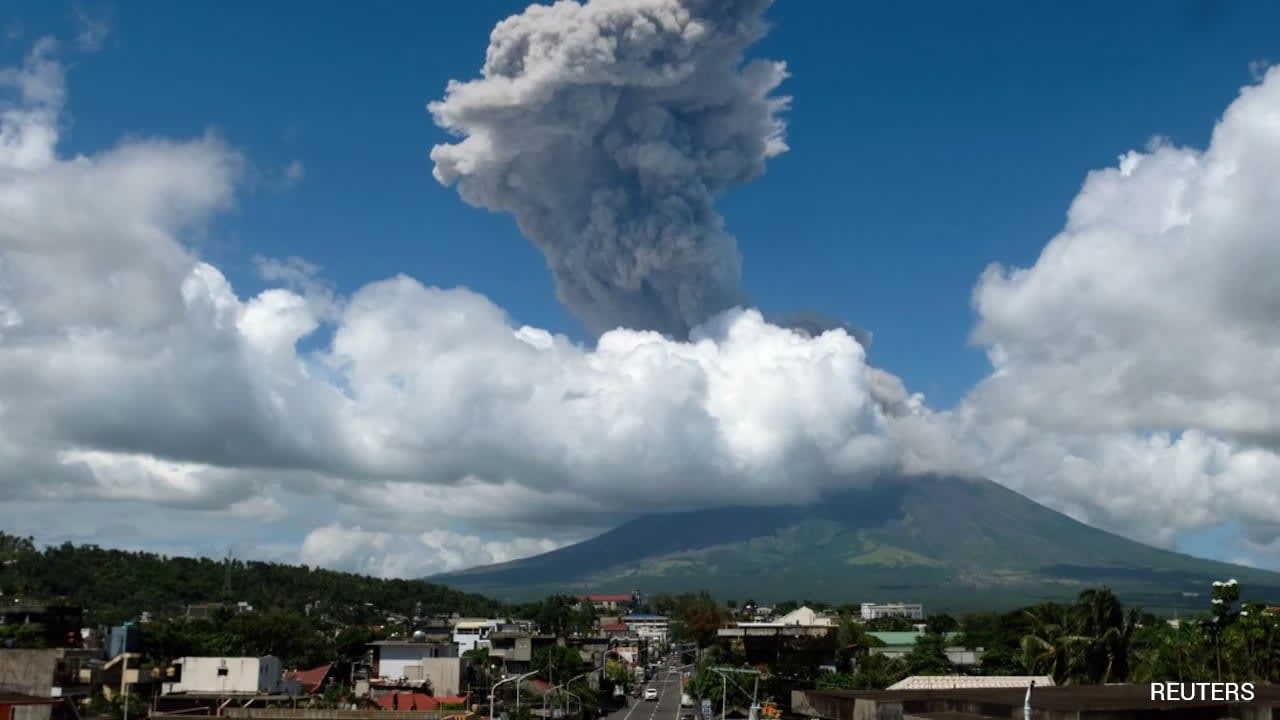
The Mayon Volcano in the Philippines has erupted, sending ash plumes 3,000 meters into the sky. The resulting ashfall is currently impacting nearby population centers as the column drifts southwest.
Volcanic Activity at Mayon Volcano
Recent reports confirm that the Mayon Volcano, one of the Philippines' most active and iconic stratovolcanoes, has experienced a significant eruption. The event was characterized by a massive ash column reaching an altitude of 3,000 meters. This sudden release of volcanic material highlights the volatile nature of the Pacific Ring of Fire, where the Philippines is situated, necessitating constant vigilance from local geological authorities.
Impact on Local Communities
The immediate concern regarding this eruption is the trajectory of the volcanic debris. The 3,000-meter ash column has been observed drifting toward the southwest, directly affecting nearby population centers. Ashfall poses multiple health and safety risks, including respiratory distress, the contamination of water supplies, and potential structural damage to buildings if the accumulation becomes heavy enough to compromise roofs.
Geological Context and Hazards
Mayon Volcano is renowned for its near-perfect conical shape, but its beauty masks its status as a highly dangerous volcano. Stratovolcanoes like Mayon are prone to explosive eruptions that produce pyroclastic flows—fast-moving currents of hot gas and volcanic matter—and ash plumes. The current 3-km column indicates a significant release of pressure from the magma chamber, which often serves as a precursor to more sustained activity or lava flow.
Disaster Preparedness and Response
The drift of ash toward populated areas mandates an immediate response from disaster management agencies. In the Philippines, the Philippine Institute of Volcanology and Seismology (PHIVOLCS) typically coordinates with local government units to enforce exclusion zones and manage evacuations. The southwest drift of the ash plume suggests that communities in that specific downwind path are currently the primary focus for emergency health advisories and mitigation efforts.
Future Trends and Monitoring
Looking forward, the duration of this eruptive phase remains uncertain. Experts will be monitoring seismic activity, sulfur dioxide emissions, and ground deformation to predict whether this event will escalate into a major eruption or subside into a period of quiescence. The ongoing threat posed by Mayon underscores the critical need for long-term land-use planning and robust early-warning systems in the vicinity of active volcanic peaks.
Summary of the Situation
In summary, the eruption of Mayon Volcano serves as a stark reminder of the geological hazards inherent to the region. With the ash plume reaching 3,000 meters and drifting toward residential areas, the priority remains the safety of the affected populations. Continued monitoring and adherence to official safety protocols will be essential as the situation develops.
Verification Required?