Prediction markets cement their status after forecasting Democratic sweep of Congress
Source Entity
US Top News and Analysis
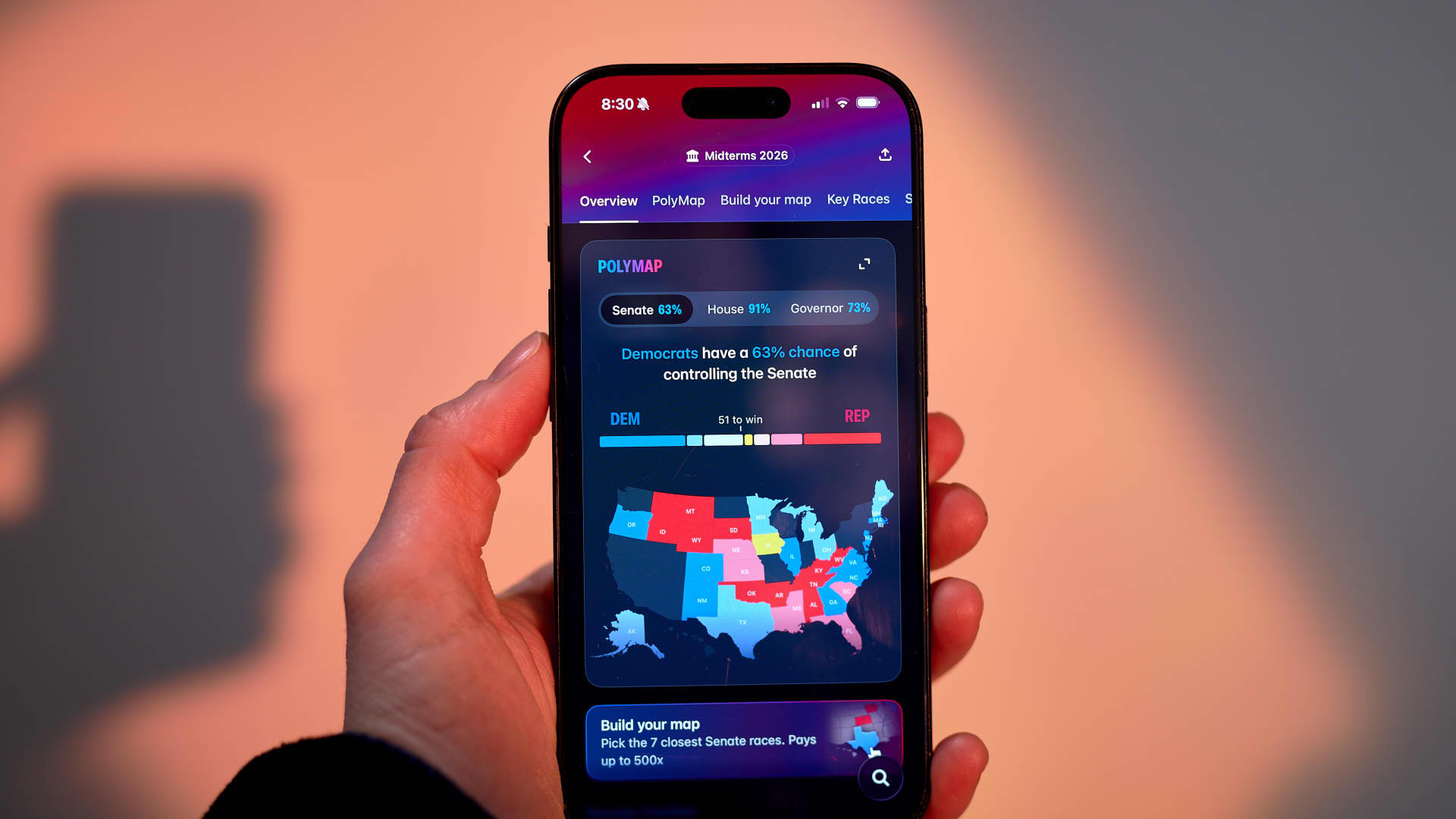
Prediction markets have emerged as highly accurate forecasting tools in the 2026 U.S. midterms, correctly predicting a Democratic sweep. These platforms are increasingly rivaling traditional media outlets by providing faster, data-driven election insights.
The Rise of Prediction Markets in Election Forecasting
The 2026 midterm elections have marked a significant shift in how political outcomes are anticipated and reported. As the results unfolded, prediction market platforms emerged as front-runners in election intelligence, successfully forecasting a Democratic sweep of both the U.S. House of Representatives and the Senate before traditional media outlets could process the incoming data. By leveraging decentralized betting mechanisms, these platforms provided real-time probabilities that proved remarkably prescient.
Accuracy Amidst Volatility
One of the most striking examples of this precision was the Senate race in Iowa. While traditional polling often struggles with the margin of error in tight contests, prediction markets correctly identified the race as a 50-50 toss-up, ultimately reflecting the narrow Democratic victory. Similarly, the platforms navigated the complexities of the South Carolina race, where Republicans were initially favored, yet the markets maintained a nuanced view that captured the shifting sentiment leading to the final results. This ability to synthesize disparate data points into a single, actionable probability metric represents a departure from static, periodic polling.
Challenging Traditional Media Narratives
For years, major news organizations have relied on exit polls and historical models to project winners. However, the 2026 cycle demonstrated that prediction markets—such as those accessible via smartphones in locations like Forest Hills, New York—can process information at a speed that traditional newsrooms struggle to match. By the time polls closed at 6:00 p.m. ET, these markets had already established a clear narrative: a Democratic majority in the Senate of at least 53 seats, with a 54th seat appearing increasingly likely. This rapid dissemination of data forced a shift in how the public consumed election night updates.
The Mechanics of Market-Based Forecasting
Prediction markets operate on the theory that collective intelligence, incentivized by financial stakes, often outperforms individual expert opinion. By requiring participants to put capital behind their predictions, these platforms filter out noise and hyperbole, resulting in a more grounded assessment of political reality. The 90% odds assigned to candidates like Scott Colom in Mississippi and Mary Peltola in Alaska illustrate the market's confidence in late-stage data, providing a high-fidelity outlook even while ballots were still being counted.
Broader Implications for Political Analysis
As we look toward future election cycles, the success of these platforms suggests that prediction markets will become a permanent fixture in the political ecosystem. While they do not replace the necessity of official vote tallies, they serve as a powerful barometer for public sentiment and momentum. This trend indicates a future where political analysts and voters alike will increasingly look to market-based probabilities as a primary source of truth, potentially pressuring traditional media to adopt more agile, data-centric reporting methods to remain relevant in a fast-paced digital environment.