Priyanka Gandhi vs Anurag Thakur Over "Cow Urine Expert" Jab At IIT Professor
Source Entity
NDTV News Search Records Found 1000
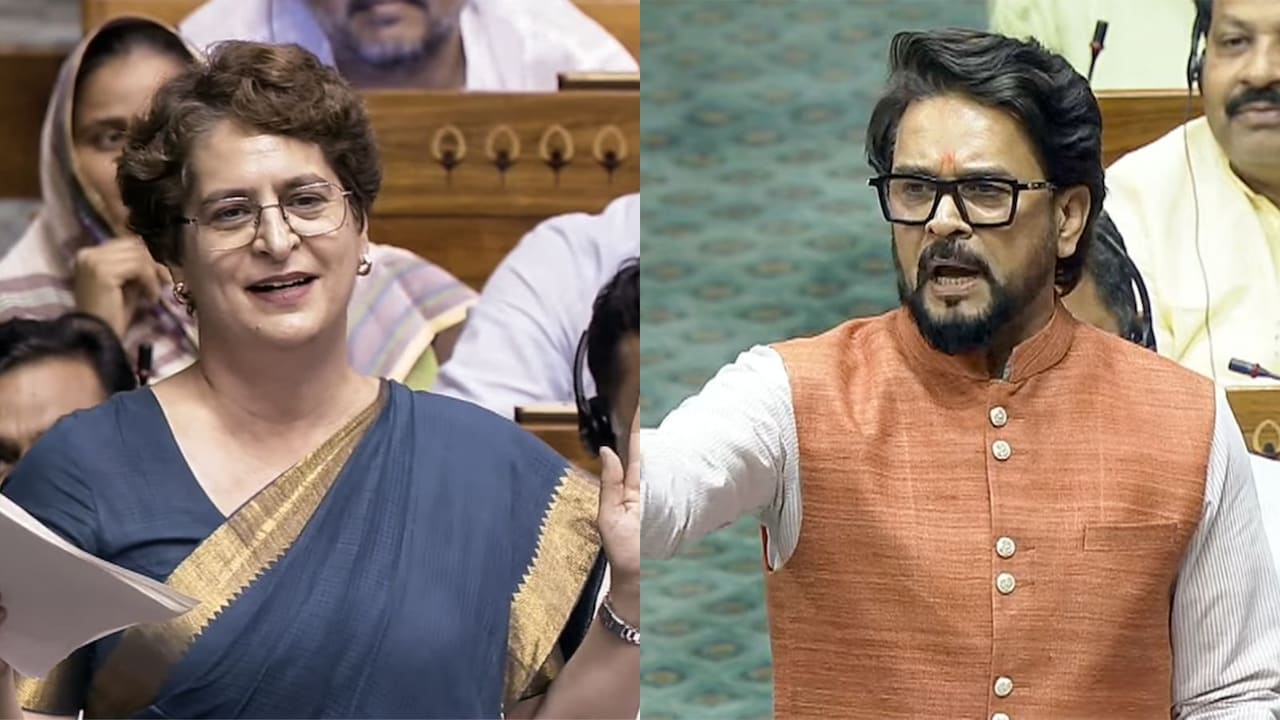
A political controversy has erupted after Congress leader Priyanka Gandhi questioned the inclusion of IIT-Madras Director V Kamakoti in a new exam reform task force. Gandhi labeled Kamakoti a 'gaumutra expert' due to his advocacy for cow urine, sparking a sharp rebuttal from BJP MP Anurag Thakur.
The Intersection of Science and Politics in India
A recent high-level initiative by the Indian government to overhaul the National Testing Agency (NTA) has inadvertently triggered a heated political debate. Following widespread protests regarding NEET paper leaks and the subsequent resignation of the former education minister, Prime Minister Narendra Modi established a task force aimed at systemic exam reform. However, the inclusion of IIT-Madras Director V Kamakoti in this panel, headed by Infosys co-founder Nandan Nilekani, has become the center of a vitriolic exchange between the Congress party and the Bharatiya Janata Party (BJP).
The Controversy Over Credentials
Congress leader Priyanka Gandhi initiated the controversy by questioning the composition of the task force. During parliamentary proceedings, Gandhi specifically targeted V Kamakoti, referring to him as a 'gaumutra expert' (cow urine expert). This remark was a direct allusion to the professor's previous public advocacy regarding the alleged medicinal benefits of cow urine. By highlighting this aspect of his personal advocacy, Gandhi sought to cast doubt on the suitability of the panel members tasked with rectifying the nation's fragile examination infrastructure.
Professional Background vs. Public Advocacy
To understand the gravity of the criticism, one must examine the professional standing of V Kamakoti. Beyond his commentary on traditional medicine, Kamakoti is a highly decorated academic, having been conferred the Padma Shri for his significant contributions to computer architecture research and national security. His team at IIT-Madras is notably responsible for developing 'Shakti,' India’s first indigenous microprocessor. This dual identity—as an elite scientist and a proponent of controversial traditional beliefs—forms the crux of the current political friction.
The BJP's Rebuttal and Historical Context
BJP MP Anurag Thakur responded to Gandhi’s comments with sharp criticism, accusing her of political opportunism. Thakur characterized the attack as a deliberate attempt to malign one of India's foremost scientific minds while simultaneously masking the alleged corruption and policy failures of past Congress-led administrations. This retort frames the incident not merely as a disagreement over committee appointments, but as a continuation of a long-standing ideological battle regarding the role of tradition versus modern scientific discourse in public policy.
Broader Implications for Governance
This incident highlights a growing tension in Indian public life: the scrutiny of experts based on their cultural or ideological leanings rather than solely on their technical expertise. As the government attempts to stabilize the NTA and restore public trust in the examination system, the political noise surrounding the task force’s composition risks overshadowing the urgent need for technical reform. The reliance on high-powered panels like the one led by Nandan Nilekani is intended to depoliticize the process, yet this event demonstrates that even technical appointments remain highly susceptible to political weaponization.
Future Trends in Political Discourse
Looking ahead, it is likely that future government appointments will face increased scrutiny from the opposition, with historical remarks and personal beliefs of experts being leveraged to delegitimize official panels. The focus on Kamakoti’s advocacy suggests that political actors will continue to use cultural symbols to challenge the credibility of institutional experts. As the NTA reform process continues, the effectiveness of the task force will be measured not only by its policy outputs but by its ability to maintain credibility in a polarized political environment.
Multiple Citing Sources
Verification Required?