The Pune ‘witch’ working magic with water hyacinth
Source Entity
Dipanita Nath
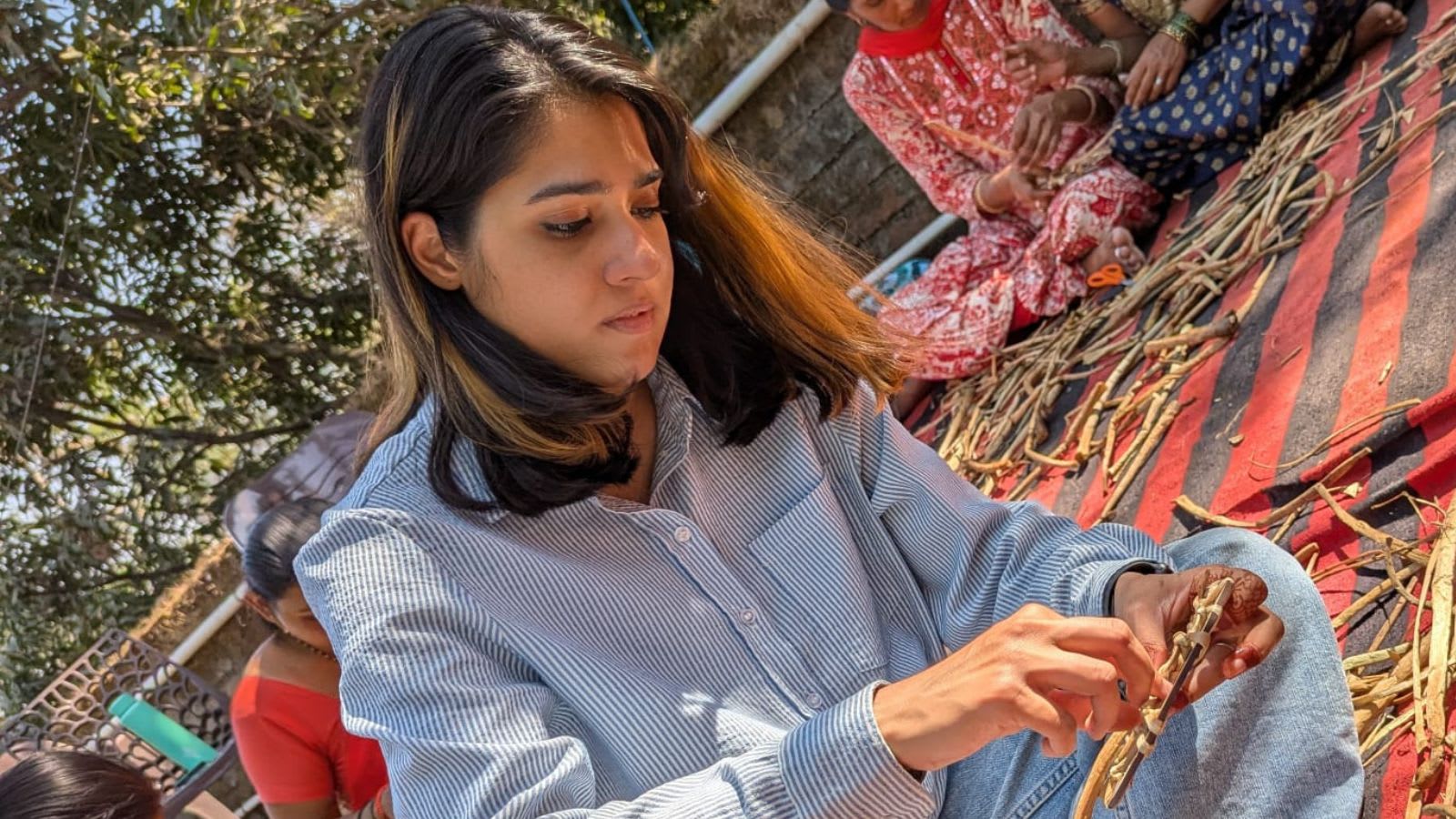
Industrial designer Laxmi Behere is transforming invasive water hyacinths from Pune's rivers into sustainable raw materials. Her initiative seeks to mitigate environmental degradation while turning a pervasive ecological nuisance into a viable economic resource.
Turning Ecological Blight into Sustainable Design
In the urban landscape of Pune, the presence of water hyacinths has long been viewed as an environmental catastrophe. Cluttering the surfaces of the Mutha River and Pashan Lake, these invasive plants create a suffocating blanket that prevents sunlight and oxygen from penetrating the water. This biological obstruction not only kills off native aquatic flora and fauna but also creates stagnant conditions that serve as breeding grounds for disease-carrying mosquitoes, severely degrading local water quality.
The Design-Led Intervention
Laxmi Behere, an industrial design professional and alumna of the Srishti Manipal Institute of Art, Design and Technology, has reframed this 'nature lover’s nightmare' as a design opportunity. Rather than treating the hyacinth solely as a waste management problem, Behere has begun exploring its latent material properties. By experimenting with techniques such as braiding, structural breakdown, and pulp creation, she has identified that the very plant causing ecosystem collapse possesses unique physical characteristics suitable for manufacturing and craft.
Scaling the Solution
Behere’s approach represents a shift toward circular economy principles. By positioning the water hyacinth as a raw material for her startup, she aims to create a market-driven incentive for harvesting the plant. The logic is straightforward: if the invasive species is treated as a commodity rather than debris, the economic demand will naturally drive the systematic removal of the plant from local water bodies, theoretically allowing the ecosystem to recover.
Broader Environmental Implications
This initiative highlights the growing role of design thinking in environmental remediation. Historically, the management of invasive species has relied on costly, chemical, or mechanical removal methods that often lack long-term sustainability. Behere’s model suggests that the future of conservation lies in 'resource recovery,' where the byproduct of an environmental crisis is harvested to fuel new industrial processes, effectively solving the problem by consuming the cause.
Future Trends and Challenges
While the conversion of water hyacinth into pulp or braided textiles is promising, the long-term success of this venture will depend on scalability and infrastructure. If more entrepreneurs adopt this model, the cumulative impact on Pune’s water health could be transformative. However, this also requires establishing supply chains that can handle the volume of biomass required to actually clear the river surfaces, moving beyond boutique design to large-scale industrial output.
Conclusion
The work of Laxmi Behere serves as a critical case study in how interdisciplinary expertise can address complex urban environmental issues. By transforming a pervasive, suffocating weed into a functional raw material, she is not only cleaning the water bodies of Pune but also setting a precedent for how cities can leverage invasive species to foster sustainable innovation and ecological restoration.