Putin praises Elon Musk as a ‘real genius’ as Russia develops Starlink alternative
Source Entity
US Top News and Analysis
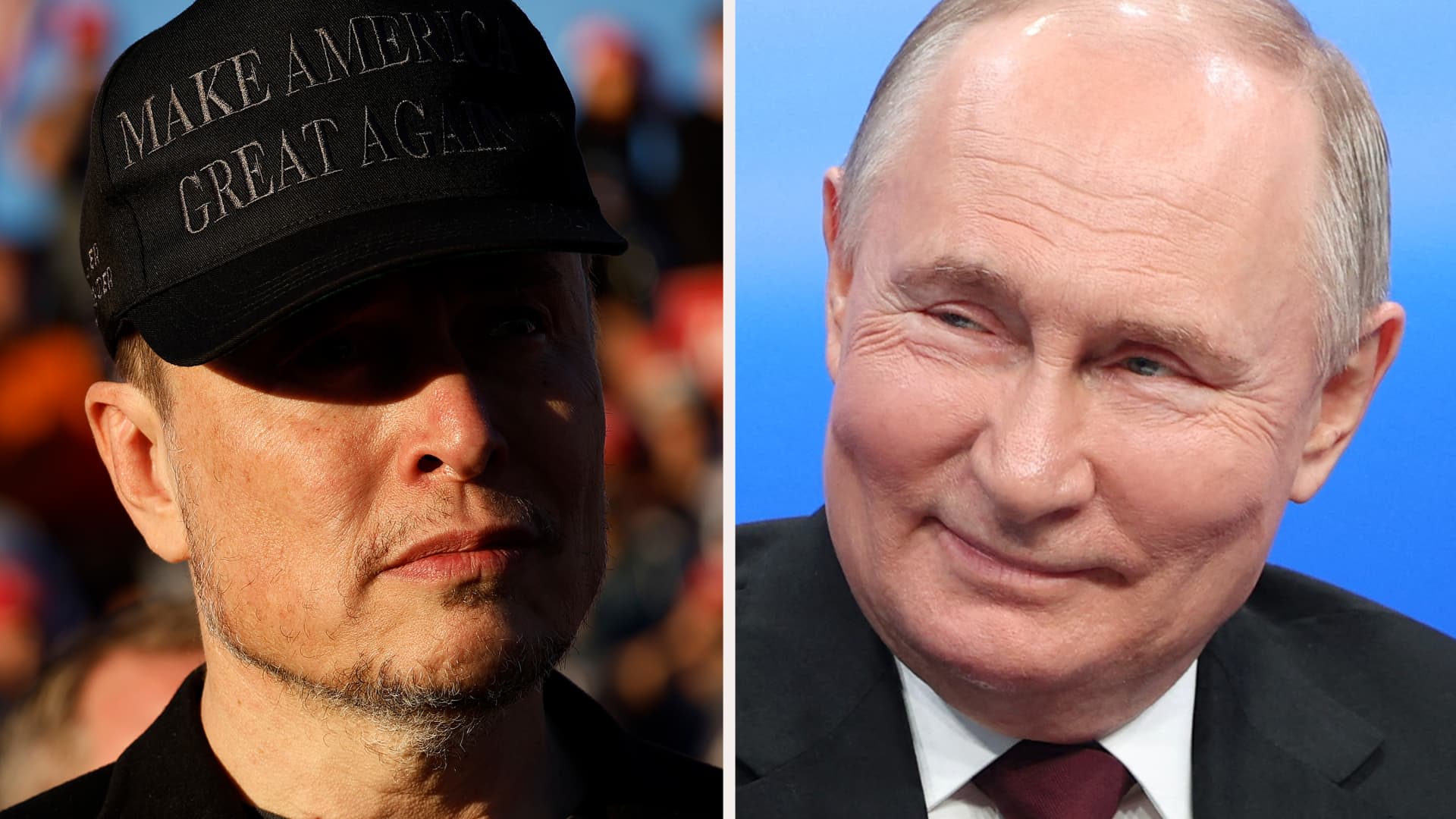
Russian President Vladimir Putin has publicly lauded Elon Musk as a 'real genius' while confirming ongoing communication regarding satellite technology. The dialogue centers on coordinating orbital space between SpaceX's Starlink and Russia's nascent Rassvet satellite project.
The Intersection of Geopolitics and Orbital Infrastructure
Recent statements from the Russia-Africa Summit in Moscow have highlighted a rare and noteworthy public alignment between Russian President Vladimir Putin and SpaceX CEO Elon Musk. During the event, Putin characterized Musk as a "real genius," a remark that underscores the growing importance of private aerospace entities in the global geopolitical arena. This public acknowledgment follows revelations that the two parties maintain "close contact," a development that places the future of low Earth orbit (LEO) infrastructure at the center of international discourse.
The Strategic Importance of LEO Constellations
The core of this high-level dialogue revolves around the rapid expansion of satellite internet constellations. With SpaceX’s Starlink currently operating over 5,000 satellites in orbit, it has become the dominant force in global connectivity. Conversely, Russia is in the early stages of developing its own indigenous satellite internet project known as Rassvet. Built by the Russian private firm Bureau 1440, Rassvet represents a strategic attempt by Moscow to establish technological sovereignty in the telecommunications sector, mirroring the capabilities Musk has already demonstrated.
Managing Orbital Congestion
Beyond mere praise, the dialogue between Putin and Musk addresses the urgent, practical necessity of orbital management. As the number of satellites in low Earth orbit increases, the risk of interference and potential collisions becomes a significant concern for all spacefaring nations. Putin explicitly mentioned the need for coordination between Rassvet and Starlink to ensure these systems do not "interfere with each other in orbit." This indicates that despite broader geopolitical tensions, the physical constraints of space necessitate a degree of technical cooperation between private American enterprises and the Russian state.
Russia’s Push for Technological Independence
Russia’s pursuit of the Rassvet constellation is reflective of a broader desire to maintain its status as a premier spacefaring power. By acknowledging that Russia is only "taking the first steps" compared to Musk’s established fleet, Putin is positioning the Rassvet project as a vital national security interest. The emphasis on doing this "independently" highlights the shift toward private-public partnerships within the Russian aerospace sector, moving away from purely state-run models toward the model pioneered by companies like SpaceX.
Global Implications and Future Trends
The fact that a world leader is actively engaging with a private CEO regarding satellite spectrum and orbital pathways signifies a shifting paradigm in international relations. As space becomes increasingly crowded, the influence of private actors like Musk becomes impossible for governments to ignore. Future trends will likely see more formal frameworks for "space traffic management," where private corporations and sovereign nations must negotiate directly to ensure the safety and functionality of global communication networks.
Conclusion
While the public praise from Putin toward Musk is politically charged, the substance of their communication is rooted in the technical reality of modern space exploration. The necessity of preventing orbital interference ensures that, regardless of political climates, the entities controlling satellite constellations must engage in consistent, professional communication. As Rassvet develops, the world will be watching to see how this delicate balance of competition and coordination unfolds in the final frontier.
Multiple Citing Sources