'Putin's not as strong as he appears, knows Ukraine war a mistake': Russia's ex-PM
Source Entity
SUBHADRA SRIVASTAVA
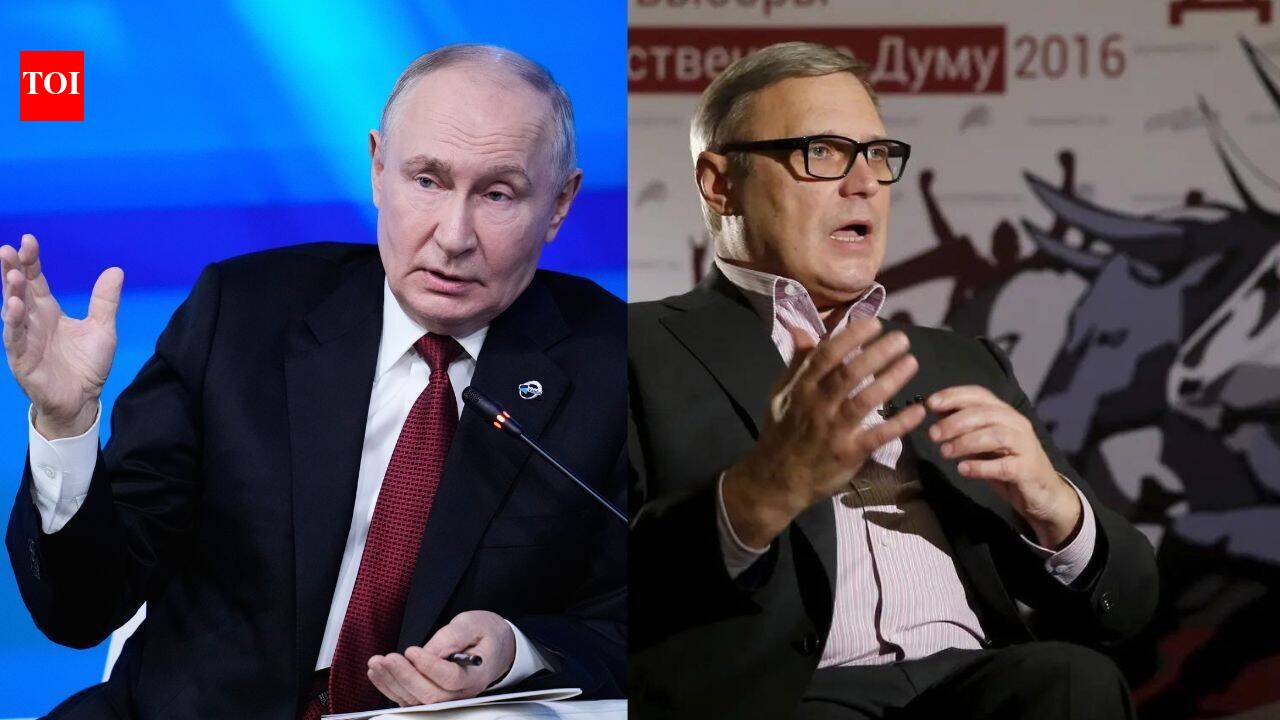
Former Russian PM Mikhail Kasyanov asserts that Vladimir Putin recognizes the Ukraine invasion as a strategic error but remains unwilling to negotiate. Despite domestic economic strain and elite unease, Putin continues to double down on the conflict.
The Strategic Impasse: Analyzing Kasyanov’s Assessment of Putin
The Anatomy of a Strategic Miscalculation
Mikhail Kasyanov, who served as Russia’s Prime Minister from 2000 to 2004, has provided a rare, high-level perspective on the internal mindset of the Kremlin. According to Kasyanov, the 2022 invasion of Ukraine was predicated on faulty intelligence provided by Russian security services, which grossly underestimated Ukrainian resistance. This initial miscalculation has trapped the Russian leadership in a cycle of escalation, as admitting the error would undermine the foundational narrative of the 'Special Military Operation' and threaten the political stability of the regime.
Psychological Barriers to Negotiation
A critical component of Kasyanov’s analysis is the psychological barrier preventing a diplomatic exit. He suggests that while Vladimir Putin understands the conflict is a mistake, the personal and political cost of admitting such a failure is too high. This 'sunk cost' mentality is a recurring theme in long-term autocratic conflicts, where the leader’s personal legitimacy becomes inextricably linked to the success of a military venture, regardless of the objective reality on the ground.
Economic Pressures vs. Political Resolve
While the Russian economy faces mounting pressure due to sanctions and the reallocation of capital toward the military-industrial complex, Kasyanov notes that this has not yet translated into a shift in policy. The resilience of the Russian economy, buoyed by global energy markets and high oil prices—partly influenced by broader geopolitical tensions such as the US-Iran conflict—has provided the Kremlin with sufficient runway to sustain its war machine for the immediate future, blunting the impact of Western financial restrictions.
Internal Dissent and the Elite
Kasyanov highlights a growing, albeit quiet, unease among the Russian elite and broader segments of society. Historically, such internal friction serves as a leading indicator of regime fragility. However, the consolidation of power within the security apparatus has effectively suppressed open dissent, creating a scenario where the elite are trapped in a system they may privately criticize but publicly support to maintain their status and security.
Future Trajectories and Global Implications
Looking ahead, the prospect of a near-term resolution appears dim. Kasyanov’s assessment suggests that the war will likely persist well into the future, as the Kremlin lacks a clear 'off-ramp' that satisfies its domestic propaganda requirements. This implies that the international community must prepare for a prolonged conflict, which will continue to shape global energy policy, defense spending, and the geopolitical alignment of nations for years to come.
Conclusion
In summary, the insights provided by the former Prime Minister underscore a grim reality: the war in Ukraine is driven less by military necessity and more by the political inertia of a leader who cannot afford to lose. As long as the regime perceives the continuation of the war as the lesser of two evils compared to an admission of defeat, the path to peace remains obstructed by the very architecture of the Russian state.