New airliner sets record flying 24 hrs nonstop from Australia to France
Source Entity
Jeremy Hsu
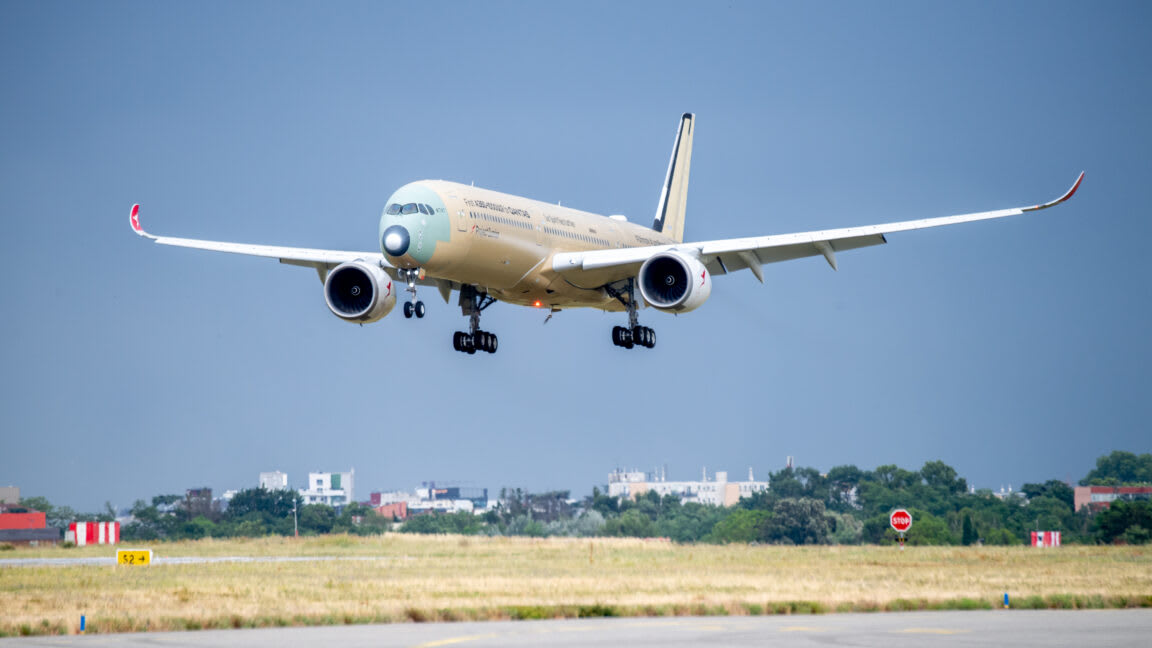
Qantas Airways has successfully completed a 24-hour ultra-long-haul test flight using the Airbus A350-1000ULR. This achievement validates the operational viability of the airline's upcoming 'Project Sunrise' routes, scheduled to launch in 2027.
The Future of Global Aviation: Project Sunrise
Qantas Airways has reached a historic milestone in aviation, with a specialized Airbus A350-1000ULR completing a marathon flight lasting over 24 hours. This achievement is not merely a technical feat; it represents the successful stress-testing of the infrastructure and aircraft capabilities required to bridge the world’s most distant cities. By successfully navigating such an extended duration in the air, Qantas has provided a proof-of-concept for its ambitious 'Project Sunrise' initiative, which aims to redefine the limits of commercial travel.
Engineering the Ultra-Long-Haul Experience
The Airbus A350-1000ULR (Ultra Long Range) is a marvel of modern aeronautical engineering. Developed specifically to meet the rigorous demands of Qantas, this aircraft is designed to sustain passengers and crew for nearly a full day of continuous flight. The recent test flight, which originated near Airbus facilities in Toulouse, France, serves as the critical final phase of verification before these jets are integrated into the carrier’s commercial fleet. With a dozen of these aircraft on order, the airline is clearly positioning itself to dominate the premium long-haul market.
Strategic Implications for Global Connectivity
Project Sunrise is set to launch in 2027, with the primary goal of connecting Sydney to major global hubs like New York and London without the need for intermediate stops. Historically, such routes have been impossible due to fuel limitations and human endurance constraints. By eliminating layovers, Qantas is betting on a significant shift in traveler preferences, where the value of time and the convenience of direct access outweigh the physical challenges of ultra-long-haul transit.
The Operational and Economic Landscape
From a business perspective, the introduction of these routes represents a high-stakes investment in efficiency. Operating such flights requires not only advanced fuel management and aerodynamic optimization but also a complete rethinking of cabin design and crew management. The 24-hour test flight allowed engineers to monitor performance data under real-world conditions, ensuring that the aircraft can handle the extreme operational stresses associated with the world’s longest commercial routes.
Looking Toward 2027 and Beyond
As the industry prepares for the 2027 rollout, the success of these test flights suggests that the global aviation map is about to shrink. If successful, Qantas will set a new global standard, likely prompting competitors to re-evaluate their own long-range capabilities. The transition from test flights to commercial ticket sales will be the next major hurdle, but the technical groundwork laid in Toulouse provides a strong foundation for the future of ultra-long-haul aviation.