'Not going to let him get away': Rahul targets Shah over police action on NEET protesters
Source Entity
KUMAR RAKESH AND VISHWA MOHAN
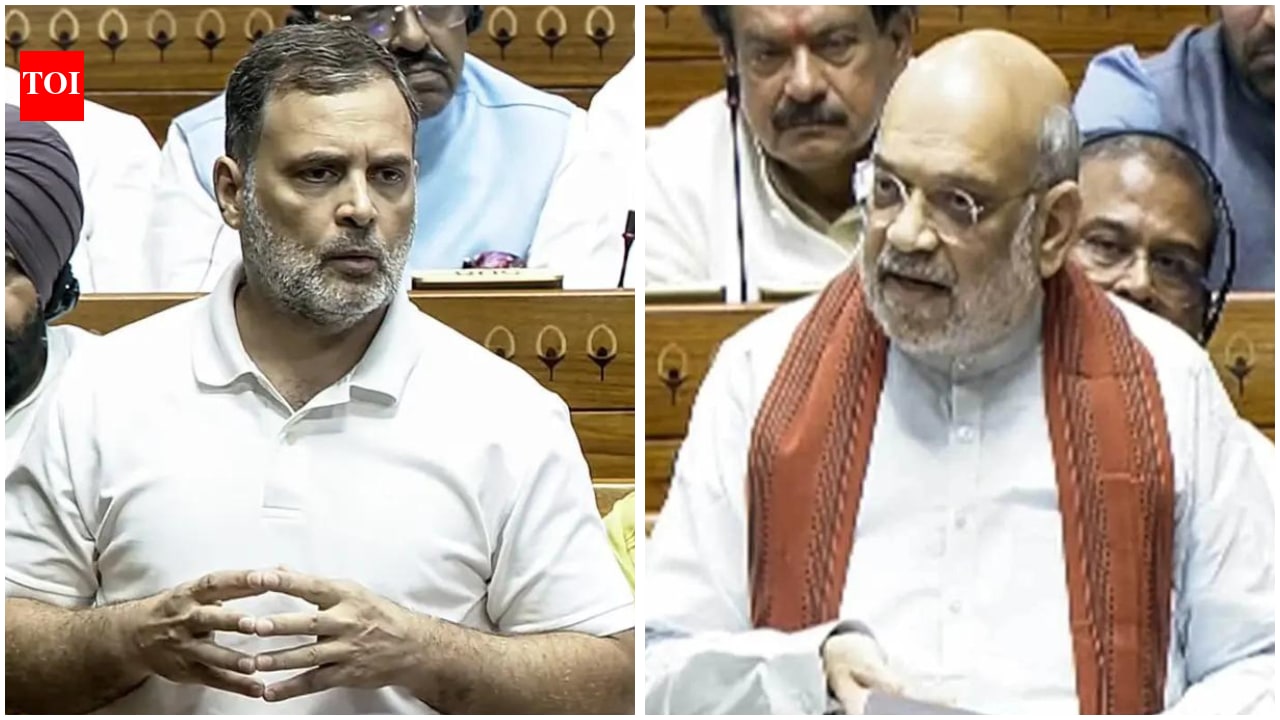
Rahul Gandhi’s accusation that Home Minister Amit Shah ordered police fire on students during recent protests has triggered a major parliamentary standoff. The government has dismissed the claims as baseless, asserting that police conduct is managed by local authorities, not cabinet ministers.
Parliamentary Standoff: Allegations and Counter-Claims
The recent proceedings in the Lok Sabha were marked by an intense confrontation between the Opposition and the Treasury benches. Rahul Gandhi, serving as the Leader of the Opposition, leveled a grave accusation against Union Home Minister Amit Shah, alleging that he personally ordered the use of force, including the use of pellet guns, against students protesting against examination paper leaks. This explosive claim, made during a debate on the Public Examinations (Prevention of Unfair Means) Amendment Bill, has reignited tensions regarding the government's handling of civil unrest and student movements.
The Government’s Rebuttal and Procedural Defense
In response to these allegations, Parliamentary Affairs Minister Kiren Rijiju mounted a fierce defense, characterizing the Leader of the Opposition’s remarks as "misleading" and "unparliamentary." Rijiju argued that the structural hierarchy of law enforcement in India does not permit cabinet ministers to issue tactical orders for police firing. According to his explanation, such decisions are the exclusive domain of the magistrate or Sub-Divisional Magistrate (SDM) present at the scene, who assesses the ground situation independently. The government has demanded substantive proof for Gandhi's claims, asserting that the accusations are a distraction from the legislative intent of the anti-paper leak Bill.
Context of the Student Protests
The political friction stems from ongoing protests centered at Jantar Mantar, where students have been agitating against repeated paper leaks in public examinations. The situation escalated following a march to Parliament on July 20, which resulted in a crackdown by security forces. The mention of pellet guns in a Parliament Street police station diary entry has added a layer of evidentiary complexity to the narrative, fueling the Opposition's insistence that the state’s response to student dissent has been disproportionate and state-sanctioned.
Legislative Intent vs. Political Rhetoric
Amid the shouting matches, the Lok Sabha successfully passed the Public Examinations (Prevention of Unfair Means) Amendment Bill. This legislation is a critical response to the systemic issue of exam fraud, proposing rigorous punishments for those involved in paper leaks and other unfair practices. However, the debate over the bill was largely overshadowed by the personality-driven conflict between the government and the Opposition. While the bill aims to restore integrity to India’s competitive examination landscape, the legislative process itself has become a theater for broader ideological battles over governance and accountability.
Broader Implications and Future Trends
This incident highlights a growing trend in Indian politics where legislative debates are frequently derailed by high-stakes accusations regarding executive overreach. The demand for accountability in how the state manages public protests is a recurring theme that likely signals a challenging monsoon session for the government. As the administration pushes to implement stricter examination norms, the Opposition seems equally committed to using the floor of Parliament to challenge the government's moral authority. Moving forward, the efficacy of the new anti-leak legislation will be measured not just by its implementation, but by how the government handles the persistent unrest among the student demographic, which remains a vital and highly sensitive political constituency.
Multiple Citing Sources