Rahul's dharna, FIR demand, face-off: How drama unfolded over pellet use
Source Entity
ABHISHEK MISHRA
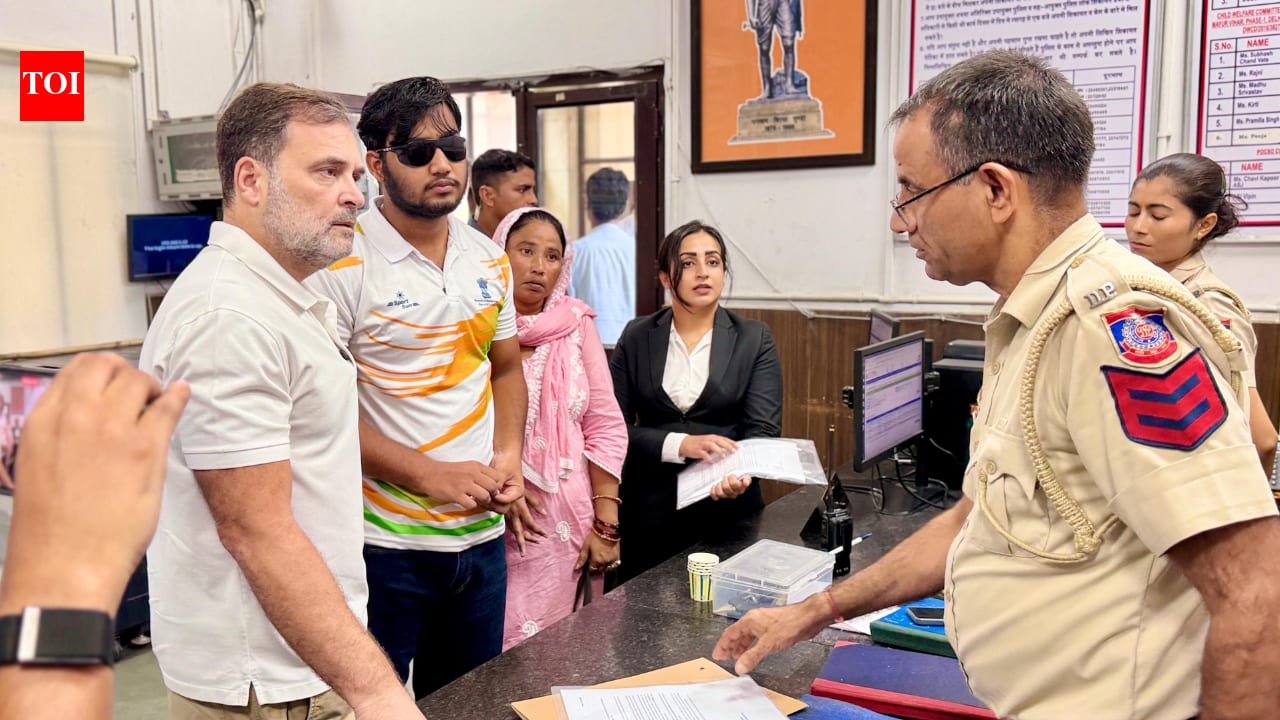
Rahul Gandhi staged a sit-in at the Parliament Street Police Station in New Delhi to protest the police's refusal to file an FIR regarding pellet injuries sustained by 19-year-old Sahil Lochab. The incident stems from a July 20 protest concerning the NEET paper leak, leading to heightened tensions and a deployment of the Rapid Action Force.
Confrontation at Parliament Street: The Demand for Accountability
On August 21, 2026, Leader of Opposition (LoP) Rahul Gandhi staged a high-profile dharna outside the Parliament Street Police Station in New Delhi. This protest was a direct response to the Delhi Police's refusal to register a First Information Report (FIR) regarding severe injuries sustained by 19-year-old Sahil Lochab, who was struck by pellets during a protest on July 20. The July 20 demonstration, organized by the Cockroach Janata Party, was centered around the contentious issue of the NEET paper leak, a topic that has galvanized significant youth unrest across the nation.
The Human Cost: Medical Consequences of the July 20 Protest
Sahil Lochab, the victim accompanying Mr. Gandhi, represents the physical toll of the recent civil unrest. According to reports, Lochab suffered pellet injuries to his eyes and abdomen during the police action on July 20. These injuries necessitated surgery at the AIIMS Trauma Centre, highlighting the severity of the force used during the crowd control measures. By bringing the victim directly to the seat of authority, the LoP intended to force a confrontation between the narrative of administrative procedure and the visceral reality of the injury sustained by a civilian.
Administrative Standoff and Security Escalation
The situation at the Parliament Street Police Station escalated rapidly as the Delhi Police implemented a security lockdown. Gates were closed and the area was heavily barricaded to prevent Congress party workers and supporters from entering the premises. The arrival of the Rapid Action Force (RAF) underscores the sensitivity of the situation and the government's concern regarding potential civil disruption. This strategic deployment of force reflects a broader trend of hardening security responses to political demonstrations in the capital.
The Political Implications of the 'No FIR' Stance
The refusal to file an FIR has become the focal point of the current political standoff. For the Congress leadership, the inaction by the police serves as a symbol of institutional apathy and the shrinking space for democratic dissent. By choosing to sit on a dharna alongside the victim, Rahul Gandhi and Priyanka Gandhi Vadra are attempting to shift the discourse from a local police matter to a national debate on police accountability and the handling of NEET-related protests.
Broader Context and Future Outlook
The NEET paper leak issue has been a recurring point of contention, leading to widespread protests throughout the summer of 2026. The use of pellet guns for crowd control remains a controversial practice, often criticized by human rights advocates and political opponents due to the permanent, life-altering injuries they can inflict. As this situation develops, the pressure on the Delhi Police to register an FIR will likely mount, potentially setting a precedent for how future protests linked to the NEET scandal are handled by both the police and the judiciary.
Conclusion
The ongoing dharna represents a critical intersection of political maneuvering and the quest for justice for injured protesters. With the Congress party intensifying its pressure on the administration, the resolution of this FIR demand will likely serve as a barometer for the current political climate in India. The incident underscores the persistent tension between the right to protest and the state's security apparatus, a dynamic that remains a central feature of contemporary Indian politics.
Multiple Citing Sources