'You became MP in 2024, so will you resign?': Ravi Shankar Prasad to Rahul Gandhi
Source Entity
India Latest News: Top National Headlines Today & Breaking News | The Hindu
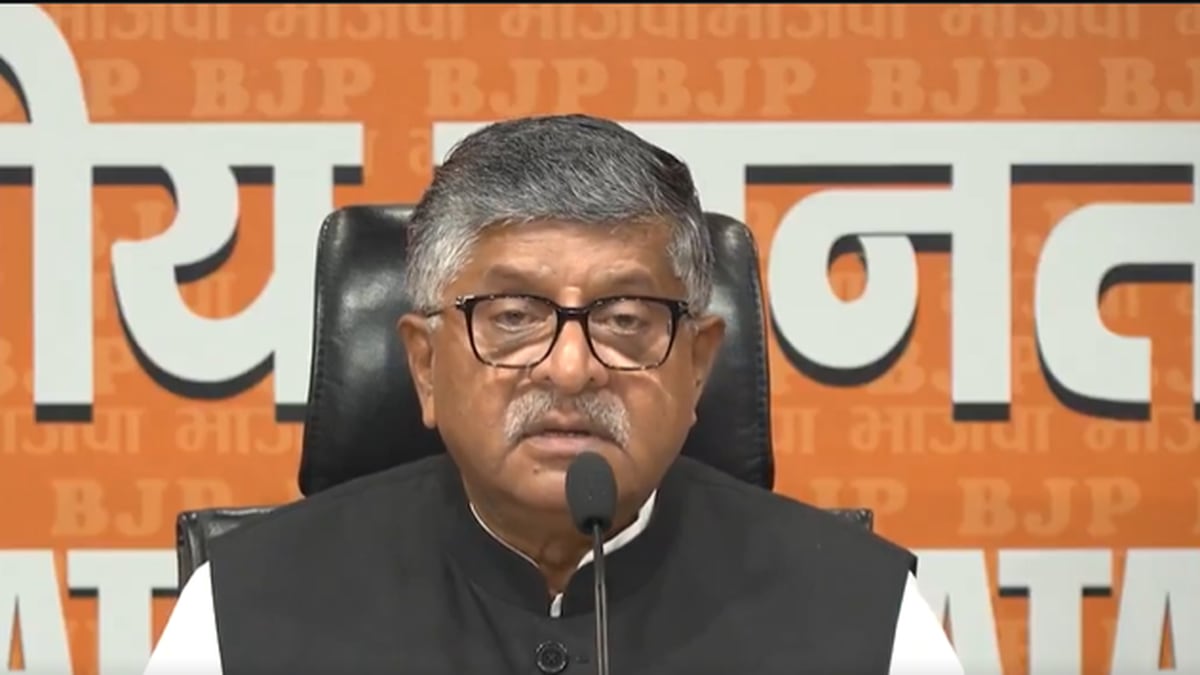
BJP leader Ravi Shankar Prasad has challenged Rahul Gandhi to resign from his parliamentary seat following the latter's criticism of electoral roll revisions. The confrontation occurred during a BJP-organized conclave focused on historical anti-Sikh riots.
The Confrontation: Prasad Challenges Gandhi on Electoral Integrity
In a sharp political escalation, senior Bharatiya Janata Party (BJP) leader and former Union Minister Ravi Shankar Prasad has publicly challenged Leader of the Opposition Rahul Gandhi to resign from his parliamentary position. The demand stems from Gandhi’s recent criticisms regarding the 'Special Intensive Revision' (SIR) of electoral rolls, a process the Congress leader has characterized as involving irregularities. Prasad’s retort suggests that if Gandhi truly believes the 2024 electoral process—which resulted in his own victory—is fundamentally flawed, he should logically vacate his seat.
The Context of Electoral Roll Revisions
The 'Special Intensive Revision' (SIR) of electoral rolls is a critical administrative function overseen by the Election Commission of India to ensure the accuracy and integrity of voter databases. For the opposition, questioning these revisions is often framed as a defense of democratic transparency. However, the BJP views such skepticism as a direct attack on the institutional credibility of India’s electoral machinery. By framing the issue as a binary choice—either accept the legitimacy of the 2024 mandate or resign—Prasad is attempting to box the opposition into a position of perceived hypocrisy.
Political Rhetoric and the 2024 Mandate
Prasad’s argument pivots on the consistency of the Congress party's stance. He highlighted that if the 2024 elections were indeed marred by irregularities, the party’s current political gains, including their governance in states like Himachal Pradesh, should also be subject to the same scrutiny. This tactical maneuver aims to force the Congress party to either endorse the validity of the current electoral system or face the political fallout of delegitimizing their own electoral victories.
The Conclave and Historical Narratives
The remarks were delivered during a BJP-organized conclave focused on the 1984 anti-Sikh riots. By integrating the criticism of Rahul Gandhi into this specific historical context, the BJP is effectively linking modern concerns over electoral integrity with long-standing narratives regarding the Congress party's historical governance. This creates a multi-layered political argument that addresses both past policy failures and current institutional skepticism.
Broader Implications for Indian Democracy
This exchange underscores a deepening divide in Indian parliamentary discourse. As the Leader of the Opposition, Gandhi’s focus on the mechanics of electoral rolls represents a strategy of 'institutional auditing,' while the BJP’s counter-strategy focuses on the 'sanctity of the mandate.' As these two narratives clash, the electorate is increasingly exposed to high-stakes debates that question the very foundations of the electoral system. Future trends suggest this rhetoric will intensify as both parties prepare for upcoming state and local election cycles, where the legitimacy of the electoral process will likely remain a central theme of political campaigning.
Verification Required?