The Reconstruction of Torn Documents
Source Entity
Hacker News
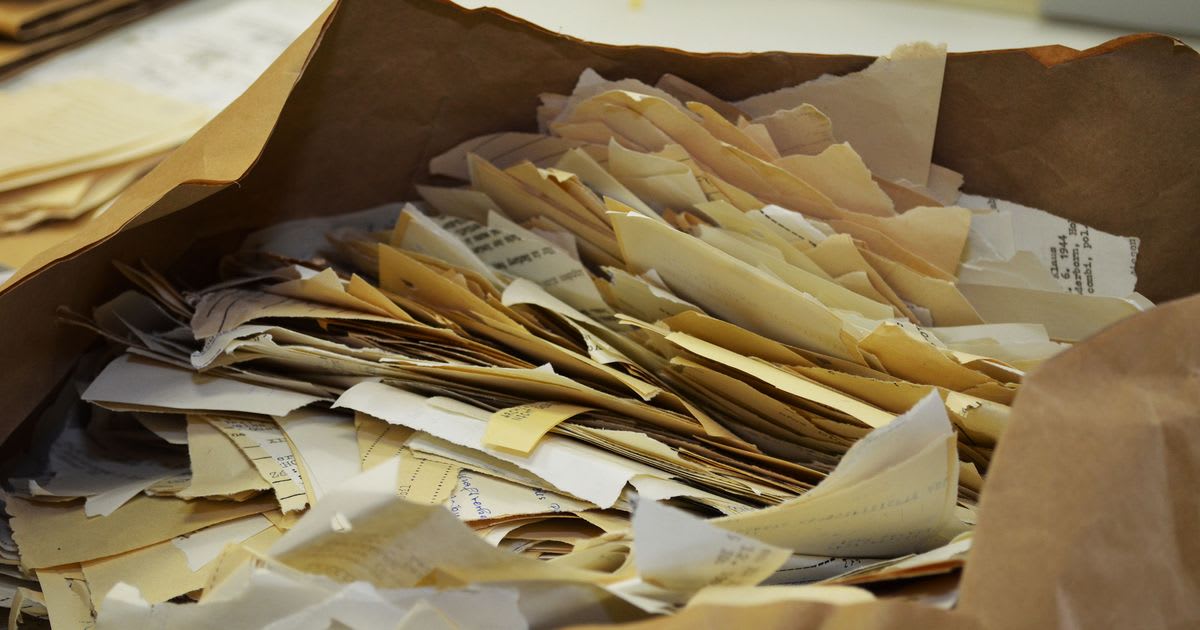
The Stasi Records Archive is systematically reassembling millions of documents destroyed by the East German secret police. This ongoing effort, utilizing both manual labor and computer-assisted technology, aims to restore historical transparency and accountability.
The Herculean Task of Reconstructing East German History
The collapse of the German Democratic Republic (GDR) in 1989 triggered a desperate attempt by the Ministry for State Security (MfS), commonly known as the Stasi, to erase the evidence of decades of domestic surveillance. In the final chaotic months of the regime, staff members resorted to manually tearing millions of sensitive documents into scraps to prevent them from falling into the hands of the public and the emerging democratic government. This act of destruction resulted in 16,000 bags filled with shredded paper, a massive physical manifestation of the regime's attempt to obfuscate its history.
The Manual Restoration Phase
Beginning in the 1990s, the Stasi Records Archive embarked on a monumental task to reclaim this history. The process of manual reconstruction—painstakingly piecing together individual scraps of paper—has been the primary method for decades. To date, archivists have successfully reconstructed 1.7 million pages from 600 of the 16,000 bags. This work is not merely clerical; it is an essential act of restorative justice, allowing victims of state surveillance to finally access the truth about their pasts and the mechanisms used to control their lives.
Technological Innovation in Archiving
Recognizing that manual reconstruction would take centuries to complete, the Archive initiated a pilot project to leverage modern technology. A computer-assisted reconstruction program was developed to scan and digitally match thousands of torn document fragments. This pilot has already seen success, with approximately 91,000 pages reassembled from 23 bags. This transition from human-intensive labor to algorithmic support marks a critical evolution in archival science, providing a blueprint for how other nations might recover lost or destroyed sensitive records in the future.
The Broader Implications for Transparency
The contents of these reconstructed documents are invaluable to historians, researchers, and the German public. They provide an unfiltered look into the operational tactics of the MfS, detailing the extent of state-sponsored intimidation and the erosion of civil liberties. By reassembling these files, the Archive is actively preventing the 'disappearance' of history, ensuring that the legacy of the GDR is documented with empirical evidence rather than conjecture.
Historical Context and Future Trends
The Stasi Records Archive stands as a global benchmark for how a society deals with the legacy of a totalitarian regime. The intersection of traditional archival methods and advanced computational reconstruction highlights a growing trend in digital humanities. As machine learning and image recognition technologies continue to improve, the speed at which these 16,000 bags can be processed will likely accelerate, bringing more clarity to one of the most secretive chapters of the 20th century.
Concluding Summary
The ongoing reconstruction of Stasi records is a vital endeavor that transforms physical fragments of destruction into coherent historical narratives. Through the combination of dedicated human effort and innovative software, the Archive is successfully overcoming the intentional sabotage of the past. This project remains a testament to the power of documentation in the pursuit of historical truth, ensuring that the victims of the MfS are not forgotten and that the mechanisms of state surveillance are fully exposed to public scrutiny.