Residential Proxies Detected on White House Network
Source Entity
Hacker News
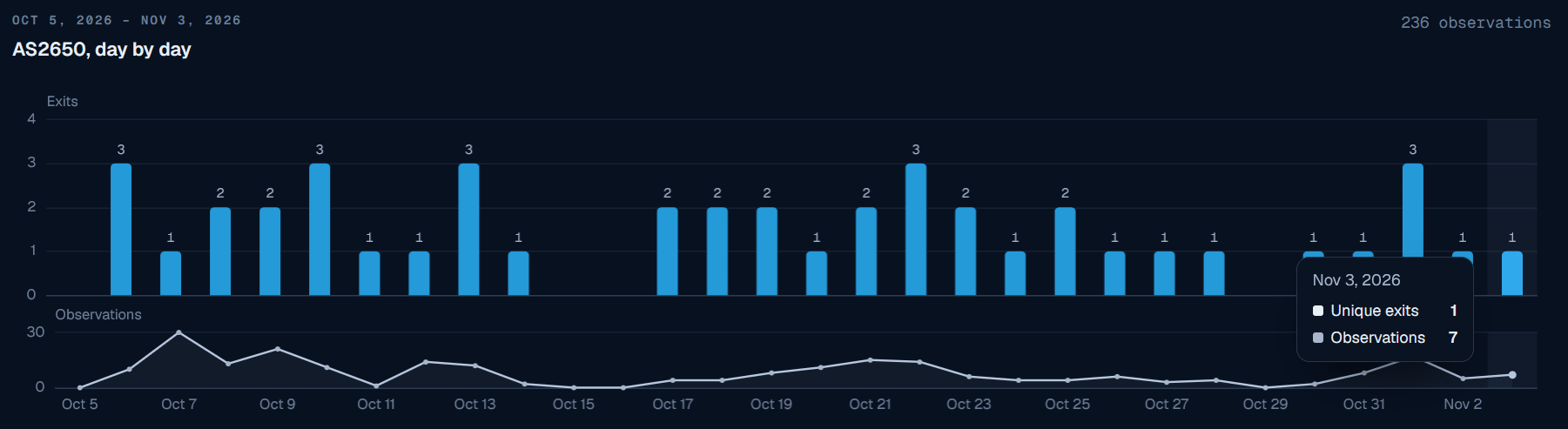
Security researchers have detected unauthorized residential proxy traffic originating from the White House network between October and November 2026. This incident highlights significant vulnerabilities in federal network security and the risks posed by compromised consumer devices.
Unauthorized Proxy Activity Detected on White House Network
Discovery and Methodology
A recently launched Residential Proxy Observatory, designed to monitor global anonymized internet activity, has identified suspicious traffic patterns originating from AS2650—the network registered to the Executive Office of the President. Between October 5 and November 3, 2026, researchers documented 236 instances of residential proxy exit activity linked directly to the White House network infrastructure. This discovery underscores the growing efficacy of specialized monitoring tools in identifying clandestine digital traffic that would otherwise remain hidden within massive government data streams.
Understanding Residential Proxy Risks
Residential proxies function by routing internet traffic through legitimate, everyday consumer devices, effectively masking the true origin of the user. By utilizing these proxies, malicious actors or unauthorized entities can make their activities appear as if they are originating from a trusted, static IP address—in this case, the White House. The ability of external parties to leverage federal network assets as exit nodes poses a severe security risk, as it potentially allows for the bypassing of standard firewall protections and geo-blocking measures.
Technical Implications for Federal Security
The fact that an enumeration pipeline was able to confirm exit traffic from the White House network suggests a significant breach or a critical configuration vulnerability. When a high-security network like that of the Executive Office of the President acts as a proxy node, it implies that devices connected to that network may have been compromised by malware or illicit software. This creates a dual-threat environment: the network is being exploited for external anonymity, and the internal devices themselves are likely under the control of unauthorized third-party operators.
Broader Cybersecurity Context
This incident is part of a larger global trend where the distinction between secure corporate/government networks and compromised consumer hardware is blurring. As residential proxy services expand, the potential for state-level and non-state actors to 'piggyback' on high-value networks increases. Historical patterns in cybersecurity suggest that once a network is used as a proxy exit, it often becomes a target for further reconnaissance, as the vulnerability remains exposed until the specific compromised endpoints are identified and isolated.
Future Trends and Mitigation
Moving forward, federal agencies will need to adopt more rigorous network egress filtering and advanced endpoint detection to ensure that no internal device is acting as an unauthorized bridge. The transition toward Zero Trust architectures is likely to accelerate as a result of such findings, prioritizing the verification of every device connection rather than assuming network-level security is sufficient. This event serves as a wake-up call for government IT security teams to treat residential proxy activity as a high-priority threat vector.
Conclusion
The detection of residential proxy activity on the White House network between October and November 2026 is a critical security development. It highlights the urgent need for enhanced monitoring of egress traffic and the hardening of internal devices against proxy-based exploitation. Addressing these vulnerabilities is essential to maintaining the integrity of sensitive government communications and preventing the misuse of federal digital assets.