Reviving the rhino: A true conservation gain
Source Entity
Latest News: Todays Latest News Headlines from India & World | Hindustan Times | Hindustan Times
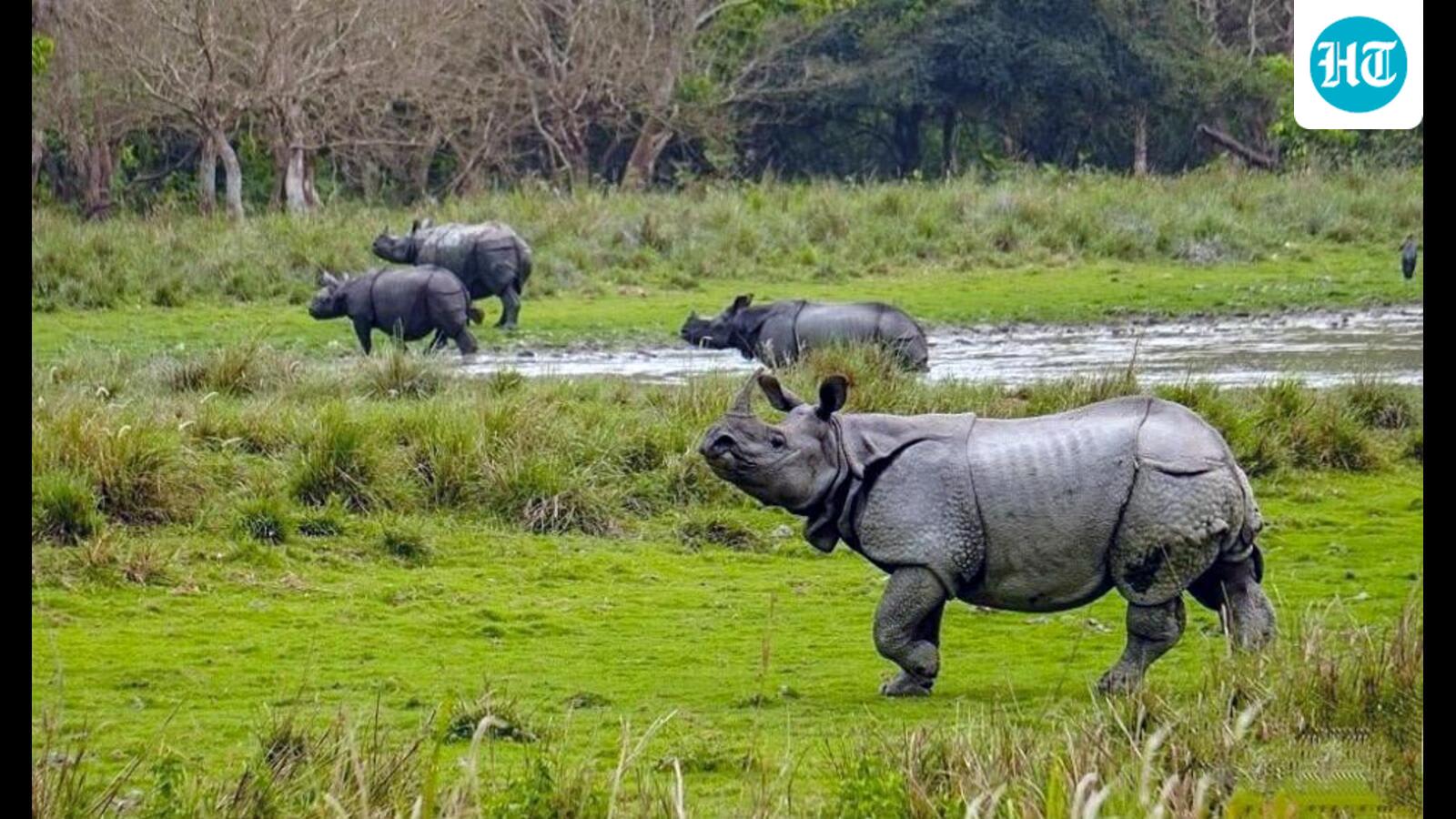
The Indian Rhino Vision 2020 has successfully surpassed its goal of 3,000 rhinos, marking a significant recovery for the species. This success highlights the necessity of site-specific 'fortress protection' for territorial animals like rhinos.
The Resurgence of the Indian Rhinoceros: A Conservation Milestone
As the Indian Forest Service commemorates its 60th anniversary, the narrative of the Indian rhinoceros stands as a beacon of ecological hope. From a perilous low of just 20 individuals in Kaziranga at the dawn of the 20th century, the species has undergone a remarkable demographic turnaround. The success of the Indian Rhino Vision 2020 (IRV2020), launched in 2005, has been instrumental in this trajectory, effectively pushing the population beyond the milestone of 3,200 today.
The Strategy of Fortress Protection
Unlike migratory megafauna that thrive on expansive corridors, the rhinoceros possesses a distinct biological and behavioral profile. Because they are solitary, reactive, and highly territorial, they rely on intense, site-specific attachment to their habitat. This reality necessitates a "fortress protection" model—a strategy that focuses on securing specific, high-density protected areas rather than attempting to link vast, fragmented landscapes. The concentration of 2,600 rhinos in Kaziranga alone underscores the efficacy of this localized approach.
Historical Context and Recovery
Centuries ago, the Indian rhino was a common sight across the vast stretches of the Indo-Gangetic Plain. However, the combination of relentless hunting pressures and the rapid encroachment of agricultural expansion nearly pushed the species to the brink of extinction. The recovery from a mere 20 survivors to a stable herd of 2,500 by the mid-2000s—and subsequently exceeding 3,200 today—represents one of the most successful wildlife management interventions in modern history.
Evaluating the IRV2020 Framework
The IRV2020 initiative was designed with the ambitious target of achieving a population of 3,000 across seven protected areas in Assam. By surpassing this goal, the program has provided a blueprint for how targeted, state-backed conservation efforts can reverse human-induced biodiversity loss. The involvement and recognition of this success by national leadership, including the Prime Minister, underscores the cultural and ecological significance of the rhino to India’s national heritage.
Future Trends in Conservation
The success of the current localized model raises important questions about future expansion. While the current "fortress" strategy has secured the immediate safety of the population, long-term sustainability will require maintaining the integrity of these seven protected areas against external threats. As the population density increases, forest managers will need to balance the carrying capacity of these habitats with the need for continued protection, ensuring that the progress made over the last six decades remains permanent.
Verification Required?