‘Swimming competition in Yamuna?’ Rijiju challenges Manoj Tiwari after his dip
Source Entity
ABHISHEK MISHRA
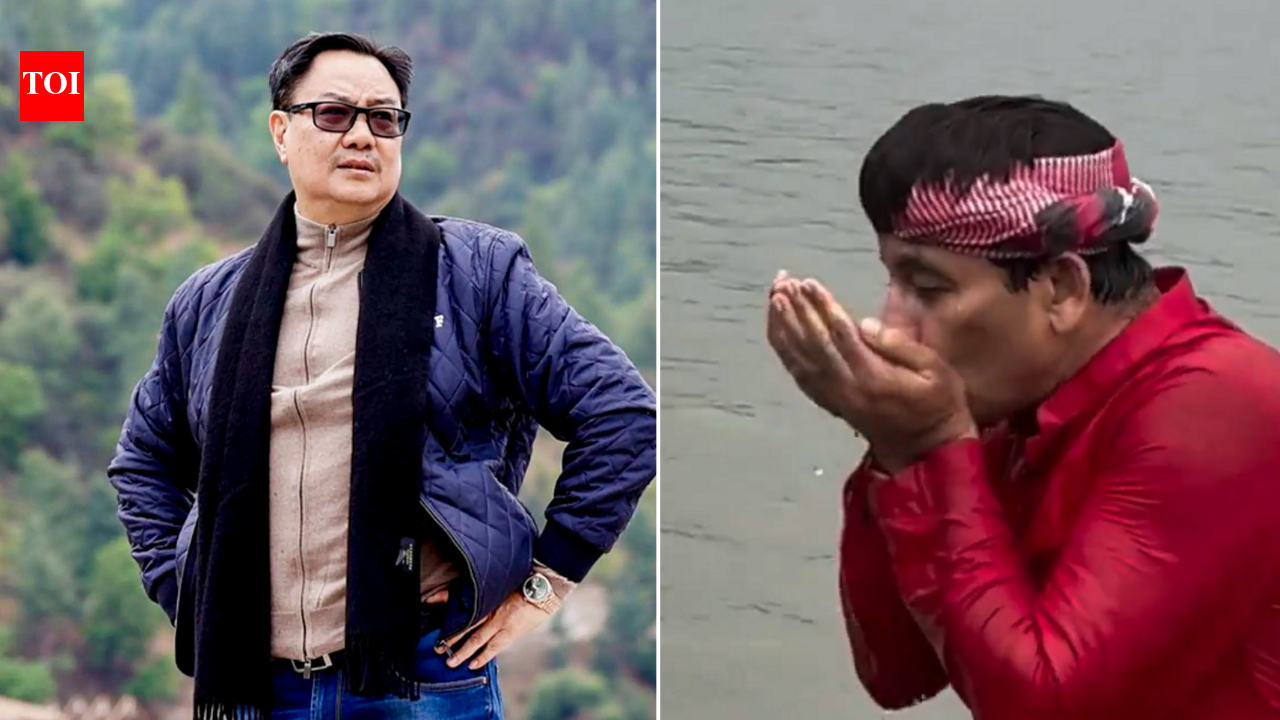
Union Minister Kiren Rijiju has publicly challenged BJP MP Manoj Tiwari to a swimming competition in the Yamuna River. This provocative political gesture highlights the ongoing debate surrounding the severe pollution levels and failed cleanup efforts of the river in Delhi.
The Symbolic Politics of the Yamuna River
Recent political discourse in India has taken a surreal turn as Union Minister Kiren Rijiju publicly challenged BJP MP Manoj Tiwari to a swimming competition in the Yamuna River. While appearing as a lighthearted or hyperbolic remark, the challenge serves as a biting commentary on the long-standing ecological crisis facing Delhi’s primary water source. The Yamuna, which has historically been the lifeline of the national capital, has become a focal point for political friction, with various stakeholders trading accusations over the persistent failure of cleaning initiatives.
The Intersection of Governance and Environment
This challenge underscores the deep-seated frustration regarding the state of the Yamuna. Despite multiple 'Yamuna Action Plans' and significant budgetary allocations over several decades, the river remains heavily contaminated with industrial effluents and untreated sewage. By proposing a swimming competition, Rijiju is essentially forcing a public confrontation with the reality of the river's condition. It acts as a performative critique, demanding that political leaders move beyond rhetoric and address the physical state of the waterway that millions of citizens rely upon.
Historical Context of Yamuna Cleanup Efforts
For years, the cleanup of the Yamuna has been a recurring campaign promise in Delhi’s political landscape. Successive governments have proposed engineering solutions, such as the construction of interceptor sewers and the modernization of sewage treatment plants (STPs). However, the complexity of urban encroachment, lack of inter-state coordination, and the sheer volume of pollutants often render these efforts insufficient. The challenge between Rijiju and Tiwari highlights how the issue has shifted from a technical administrative hurdle to a high-profile political blame game.
Political Implications and Public Perception
When political figures engage in such rhetoric, it often signals a shift toward 'confrontational accountability.' By daring a fellow politician to enter the water, the implication is clear: the river is currently unfit for human contact, let alone swimming. This narrative strategy effectively highlights the gap between official claims of progress and the visible, often hazardous, reality of the river's froth-covered surface, which has become a recurring image in local and national news cycles.
Future Trends in Urban Environmental Policy
Moving forward, such political theater may force a more aggressive policy response. If the state of the Yamuna continues to be weaponized in political debates, there will likely be increased pressure for transparent, data-driven oversight of pollution control boards. The future of the river depends not just on political challenges, but on the successful implementation of long-term infrastructure projects that can handle the city's massive waste output. Without such structural changes, the Yamuna will likely remain a symbol of governance failure rather than an ecological success story.
Conclusion
In summary, the exchange between Kiren Rijiju and Manoj Tiwari is more than a mere quip; it is a manifestation of the deep political stakes attached to the environment in Delhi. As the national capital continues to expand, the urgency of restoring the Yamuna will only grow, making it inevitable that the river will remain at the heart of political discourse until tangible, observable improvements are made to its water quality.