Bad news for EU & NATO: Putin's Borei‑class 'doomsday' nuclear submarines to remain active till...
Source Entity
Latest News: Todays Latest News Headlines from India & World | Hindustan Times | Hindustan Times
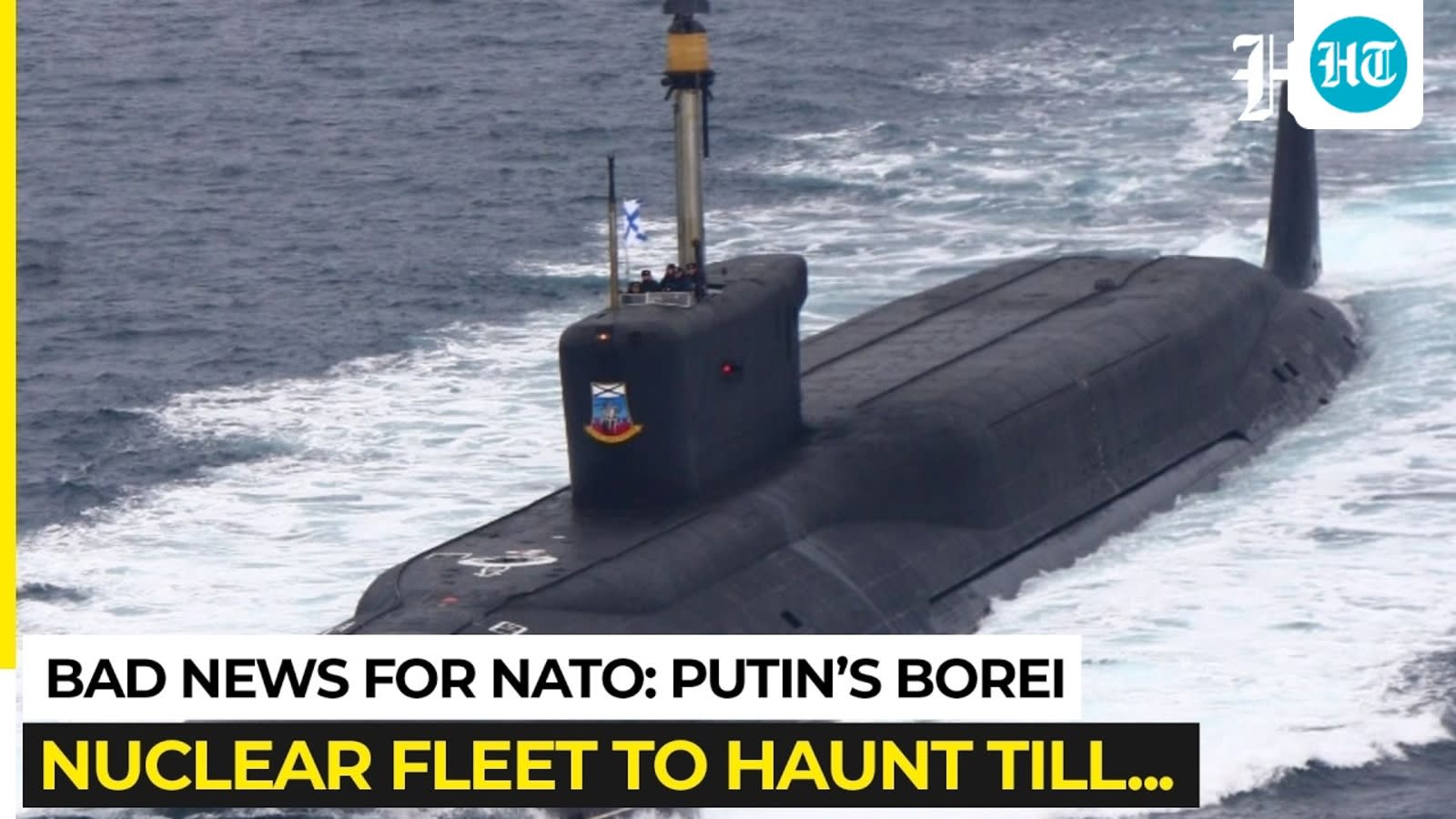
Russia has confirmed that its Borei-class nuclear submarines will serve as the core of its sea-based deterrent through the 2060s. The recent commissioning of the Knyaz Pozharsky highlights Moscow's commitment to modernizing its fleet with advanced, stealth-capable vessels.
The Future of Russia's Sea-Based Deterrence
Russia has officially solidified its long-term naval strategy by confirming that the Borei-class ballistic missile submarines will serve as the primary pillar of its sea-based nuclear deterrent through the 2060s. Russian Navy Commander Admiral Alexander Moiseyev stated that these vessels are slated for a service life spanning another 30 to 40 years. This announcement marks a definitive transition away from the aging Soviet-era Delta IV class, signaling a generational shift in how Moscow intends to project power across the global maritime domain.
Technical Capabilities and Strategic Significance
At the heart of this strategic posture is the Borei-class's lethal payload: 16 Bulava submarine-launched ballistic missiles. These missiles are engineered to carry multiple independently targetable reentry vehicles (MIRVs), allowing a single submarine to pose a significant threat to multiple high-value targets simultaneously. By maintaining this capability, Russia ensures that its 'nuclear triad' remains credible, particularly as its maritime assets focus on deep-sea concealment to evade detection by NATO and EU tracking systems.
The Role of the Borei-A Variant
The modernization program reached a critical milestone in July 2025 with the commissioning of the Knyaz Pozharsky. As the eighth overall Borei-class submarine and the fifth of the improved 'Borei-A' variant, this vessel represents the pinnacle of Russian underwater engineering. The Borei-A variant incorporates enhanced acoustic stealth, improved command and control systems, and better maneuverability, making it significantly harder to track than its predecessors, thus complicating the defensive calculus for Western naval forces.
Arctic Superiority and Geopolitical Implications
President Vladimir Putin has emphasized that these submarines provide a decisive strategic advantage, specifically citing their ability to remain hidden beneath Arctic ice for extended durations. The Arctic has become an increasingly contested region, and the Borei-class fleet’s ability to operate in these frigid, difficult-to-monitor waters serves as a powerful deterrent. This capacity essentially creates a 'bastion' strategy, where Russia can shield its assets while maintaining a constant, credible threat of a second-strike capability.
Long-Term Stability and Future Trends
Looking toward the 2060s, the longevity of these submarines suggests a period of sustained naval investment by the Kremlin. As the transition from the Delta IV fleet nears completion, the Russian Navy will likely focus on maintaining the operational readiness of the Borei-A fleet. For the EU and NATO, this reality necessitates a long-term adjustment in maritime surveillance and anti-submarine warfare (ASW) strategies. The persistence of these 'doomsday' vessels ensures that the underwater theater remains a primary focus of global military competition for the next four decades.
Verification Required?