Putin aide hits back at Rubio over anchorage talk claims: 'Need to understand exactly who failed...'
Source Entity
Latest News: Todays Latest News Headlines from India & World | Hindustan Times | Hindustan Times
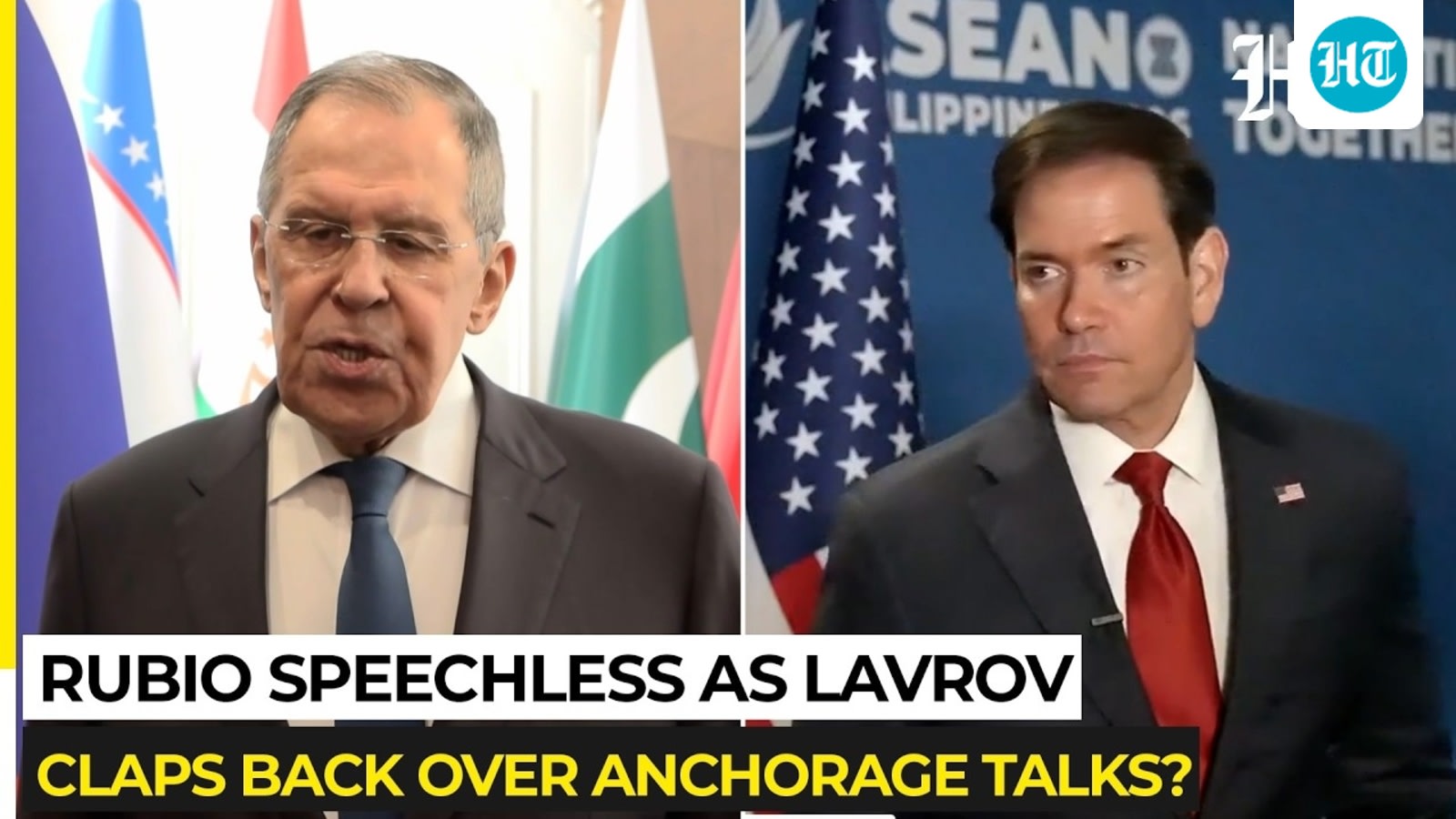
Russian Foreign Minister Sergey Lavrov has challenged U.S. claims regarding the failed Anchorage peace talks, asserting that Moscow accepted a compromise that Kyiv subsequently rejected. Senator Marco Rubio maintains that Ukraine never agreed to the proposed territorial plan, signaling a diplomatic impasse.
The Anchorage Deadlock: A Diplomatic War of Narratives
Recent statements from Russian Foreign Minister Sergey Lavrov at the Shanghai Cooperation Organization (SCO) meeting in Kyrgyzstan have reignited the debate over the collapse of the Anchorage peace talks. Lavrov’s direct challenge to the U.S. account of events marks a significant escalation in the war of words between Moscow and Washington regarding the potential for a negotiated settlement in Ukraine. By demanding clarity on 'who exactly failed,' Lavrov is attempting to shift the blame for the diplomatic breakdown away from the Kremlin and onto the coalition of Ukraine, the EU, and the United States.
The '3+2' Proposal and Its Discontents
At the heart of the dispute is the so-called '3+2' territorial plan, a framework intended to resolve the ongoing conflict through specific concessions. While Moscow claims it had accepted the compromise proposal put forward by Washington, Senator Marco Rubio has vehemently countered this narrative. Rubio maintains that Ukraine never formally agreed to these terms, suggesting that the plan was either inherently flawed or miscommunicated. This fundamental disagreement over whether the plan was 'accepted' or merely 'proposed' illustrates the deep-seated mistrust that continues to sabotage diplomatic progress.
The Impact of the G7 Summit
Lavrov explicitly ties the collapse of these negotiations to the G7 summit held in Evian-les-Bains. According to the Russian perspective, the momentum for peace was effectively destroyed following this gathering, where Kyiv and the EU allegedly abandoned the framework. The declaration by Ukraine's foreign minister that the deal was 'buried' serves as the primary evidence cited by Moscow to demonstrate a coordinated effort by Western allies to reject the compromise. This sequence of events highlights how international summits can serve as catalysts for both potential resolution and, in this case, entrenched opposition.
Divergent Perspectives on Future Negotiations
Senator Rubio’s assertion that 'new ideas are needed' suggests that the diplomatic window for the original '3+2' proposal has effectively closed. By framing the previous plan as a non-starter, the U.S. is signaling a shift in strategy, potentially moving away from the specific territorial divisions that Moscow claims to have accepted. This leaves the international community in a state of uncertainty, as both sides appear to be operating under contradictory versions of historical fact regarding the Anchorage talks.
Broader Geopolitical Implications
The public nature of this dispute reflects the broader geopolitical struggle where control over the 'truth' of negotiations is as vital as the negotiations themselves. For Russia, maintaining that they were prepared to compromise is a tool to appeal to international observers seeking an end to the conflict. Conversely, for the U.S. and Ukraine, rejecting the narrative of the '3+2' plan is essential to maintain their stance on sovereignty and the rejection of unfavorable territorial deals. As this blame game continues, the prospect of a breakthrough remains increasingly distant, with both sides entrenched in their respective interpretations of the failed Anchorage process.
Verification Required?