SC bars coercive action against student protesters; directs release of minors
Source Entity
Latest News: Todays Latest News Headlines from India & World | Hindustan Times | Hindustan Times
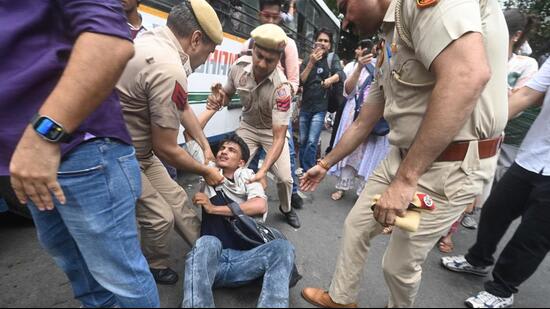
The Supreme Court has ordered a transparent, independent probe into allegations of police excesses against students protesting NEET paper leaks. The court further directed the release of arrested minors and barred coercive action against peaceful protesters, while excluding those with criminal backgrounds.
Supreme Court Intervenes in NEET Protest Violence
The Supreme Court of India, led by Chief Justice Surya Kant and comprising Justices Joymalya Bagchi and V Mohana, has taken a decisive stance regarding the recent wave of violence surrounding student protests against NEET paper leaks. Acknowledging that a prima facie case exists for a thorough, fair, and impartial inquiry, the bench has emphasized that those who have committed excesses or taken the law into their own hands must be held accountable.
The Need for an Independent Inquiry
Central to the court's proceedings is the potential formation of a Special Investigation Team (SIT) to conduct a transparent probe. By questioning why such an independent body should not be established, the court has signaled its intent to move beyond departmental inquiries, which are often criticized for lacking neutrality. This inquiry aims not only to address specific allegations of police brutality—including claims of an AK-47 being brandished against peaceful protesters in Bihar—but also to establish a sustainable protocol for handling student demonstrations in the future.
Protection of Student Rights
In a significant interim relief, the Supreme Court has barred coercive action against student protesters and mandated the immediate release of all minors detained during these demonstrations. This directive underscores the judiciary's role in balancing the state's mandate to maintain public order with the fundamental democratic right of students to assemble and voice grievances regarding systemic failures in national examinations.
Defining the Limits of Protest
While the court has offered protection to students, it has been careful to delineate the boundaries of this relief. The bench clarified that the interim protection explicitly does not extend to 'anti-social elements' or individuals with established criminal antecedents. This distinction is crucial, as it prevents the misuse of judicial protection by those who might infiltrate peaceful protests to incite violence or chaos, thereby ensuring that the focus remains on the students' legitimate concerns.
Broader Implications for Governance
The court’s intervention highlights a growing tension between law enforcement protocols and the rising frequency of student-led civil unrest. By demanding that police adhere to defined protocols and ordering that personal data of protesters not be made public, the Supreme Court is effectively curbing potential state overreach. The outcome of the proposed commission of inquiry will likely set a national precedent for how authorities must manage large-scale protests, ensuring that the response to public dissent remains within the bounds of constitutional morality.
Future Outlook
The judicial process is expected to continue with a focus on the Union government and the chief secretaries of affected states, including Delhi. As the court moves toward formalizing an SIT or similar commission, the focus will remain on the accountability of law enforcement officers who allegedly utilized excessive force, such as the use of pellet guns. This case serves as a critical juncture in the ongoing discourse regarding the integrity of the NEET examination process and the protection of the youth who are demanding accountability from the education system.
Multiple Citing Sources
Verification Required?