Second complete map of a fruit fly brain completed
Source Entity
John Timmer
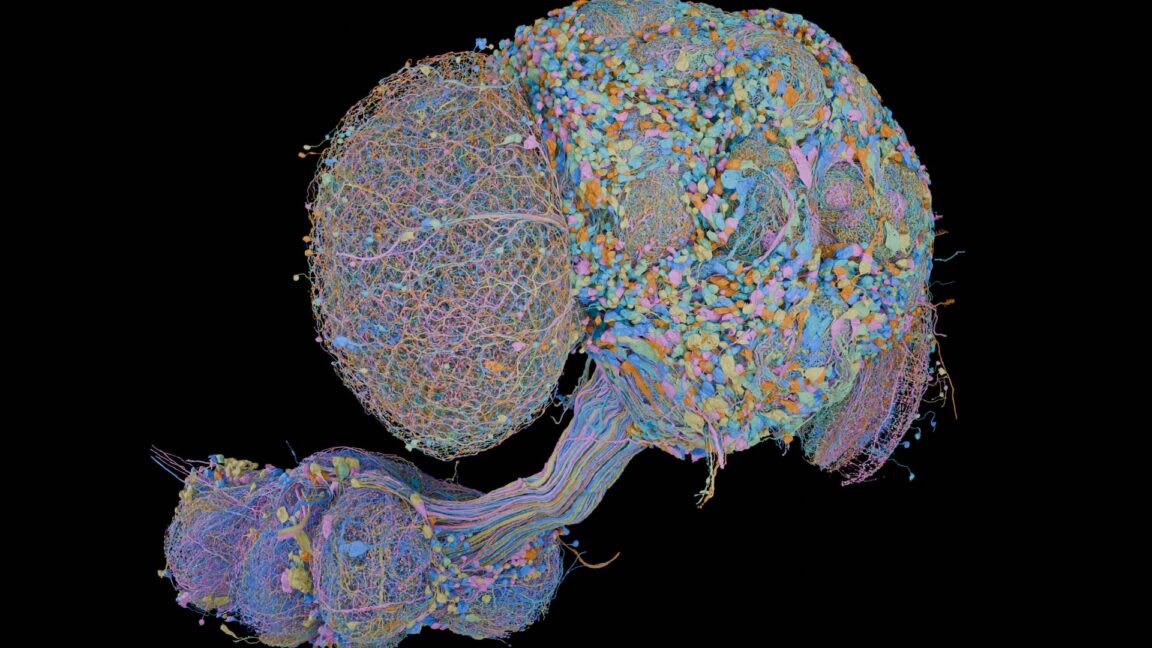
Researchers have completed a second full brain map of a fruit fly, this time for a male specimen. This milestone, achieved through a collaboration between the Howard Hughes Medical Institute and Google, advances neurobiological research and paves the way for mapping more complex nervous systems.
A Landmark Achievement in Neurobiology
The scientific community has reached a significant milestone with the completion of the second full brain map of a fruit fly, Drosophila melanogaster. By mapping every neuron and connection—a structure known as a "connectome"—in a male fruit fly, researchers have successfully built upon the earlier mapping of a female fly completed earlier this year. This achievement represents a monumental leap in our ability to visualize the complex architecture of an entire brain.
The Power of Collaborative Innovation
This project was made possible through a unique partnership between biologists at the Howard Hughes Medical Institute’s (HHMI) Janelia Research Campus and computer scientists at Google. The complexity of the data required to map a brain at this level of detail is immense, and both parties have acknowledged that the project would have been impossible to execute independently. By combining biological expertise in specimen preparation with advanced computational power for image processing, the team has set a new standard for interdisciplinary scientific research.
Refining Tools for Future Discovery
Beyond the immediate benefits of having a male connectome to compare against the female one, the work has served as a crucible for refining imaging and mapping technologies. The methodologies developed during this project are designed to be scalable. As researchers look toward the future, these refined tools are expected to be applied to increasingly complex nervous systems, potentially including those of vertebrates, which possess significantly larger and more intricate neural networks.
Comparative Analysis: Male vs. Female Connectomes
Having both a male and female connectome provides a unique opportunity for scientists to conduct comparative neurobiology. By observing the structural differences and similarities between the sexes, researchers can begin to map how specific neural pathways contribute to behavior and biological function. This comparative approach is essential for understanding the fundamental principles of brain organization across different biological contexts.
Implications for Neurobiology
This connectome serves as more than just a static map; it acts as an essential research tool that will accelerate the pace of neurobiological study. By providing a comprehensive "wiring diagram" of the fruit fly brain, scientists can now formulate and test hypotheses about neural circuitry with unprecedented precision. This foundational data will likely influence studies on everything from sensory processing to complex decision-making behaviors.
Looking Toward the Future
As we look ahead, the successful mapping of the fruit fly brain suggests that we are entering an era of high-resolution structural biology. While the fruit fly brain is relatively small, the lessons learned here are the building blocks for future endeavors. The path from Drosophila to more complex organisms is long, but the collaboration between HHMI and Google has provided a clear roadmap for how such ambitious biological projects can be achieved in the coming decades.