AI Investors Are Becoming Pickier. 2 Stocks Still Stand Out.
Source Entity
Yahoo Finance
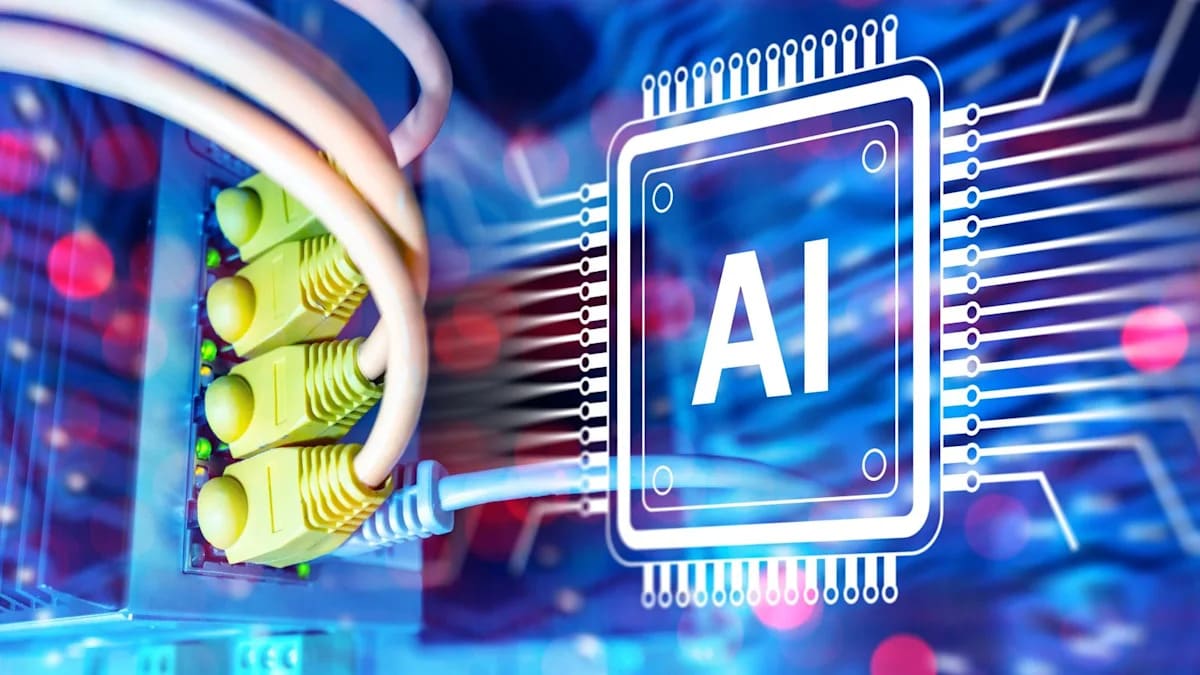
Investment is surging in silicon photonics to replace copper wiring, which has become a critical bottleneck in massive AI data centers. One leading provider is seeing significant revenue growth in optical interconnects, with projected growth accelerating through 2028.
The Infrastructure Pivot: From Chips to Interconnects
While the prevailing narrative surrounding artificial intelligence has focused almost exclusively on the raw processing power of GPUs and specialized chips, a critical physical bottleneck is emerging within the data center. As AI clusters scale exponentially—reaching sizes of tens or even hundreds of thousands of processors—the traditional method of connecting these components is failing. The industry is now shifting its focus toward how these chips communicate, marking a transition from a chip-centric investment strategy to one that prioritizes the underlying networking infrastructure.
The Copper Bottleneck and the Silicon Photonics Solution
For decades, copper wiring has been the standard for computer connectivity. However, the sheer scale of modern AI workloads has pushed copper to its physical limits. As clusters swell, the "humble copper wiring" is running out of room to efficiently move massive amounts of data between processors without incurring significant latency or energy loss. This has created a performance ceiling that threatens to stifle the growth of larger AI models.
To resolve this, investment is ramping rapidly into silicon photonics. By using light (photons) instead of electrical signals (electrons) to transmit data, silicon photonics allows for significantly higher bandwidth and lower power consumption over longer distances. This technology is essential for maintaining the coherence and speed of communication across the massive processor arrays required for generative AI and large-scale machine learning.
Financial Indicators and Market Momentum
The market is already reflecting this technological shift. Data indicates that investors are becoming more selective, moving beyond general AI hype to identify companies providing the essential "plumbing" of the AI era. One notable industry player has reported robust customer demand and exceptional bookings across its data center portfolio, with segment revenue surging 27% year-over-year to $1.8 billion. This growth is specifically driven by three key areas: optical interconnect products, custom silicon programs, and Ethernet switching solutions.
Future Growth Projections and Scalability
The trajectory for optical networking is steeply upward. Projections suggest that data center revenue for these critical components will increase by 50% year-over-year in fiscal 2027, with an even further acceleration to roughly 55% growth in fiscal 2028. This acceleration underscores the growing importance of internal networking within AI data centers. Furthermore, short-term expectations have been revised upward, with management now anticipating 10% sequential growth for second-quarter revenue, targeting $2.7 billion—a 35% increase year-over-year at the midpoint.
Conclusion: The New Frontier of AI Investment
The transition from copper to silicon photonics represents a fundamental evolution in data center architecture. As the industry realizes that the bottleneck is no longer just the speed of the processor but the speed of the connection, the value chain is shifting. The massive projected growth through 2028 suggests that the companies capable of solving the interconnect crisis will be as pivotal to the AI revolution as the chipmakers themselves, providing the essential highway upon which AI intelligence travels.
Multiple Citing Sources