Sonam Wangchuk Hunger Strike News Live Updates: PIL before Delhi High Court seeks force feeding
Source Entity
Ashish Shaji
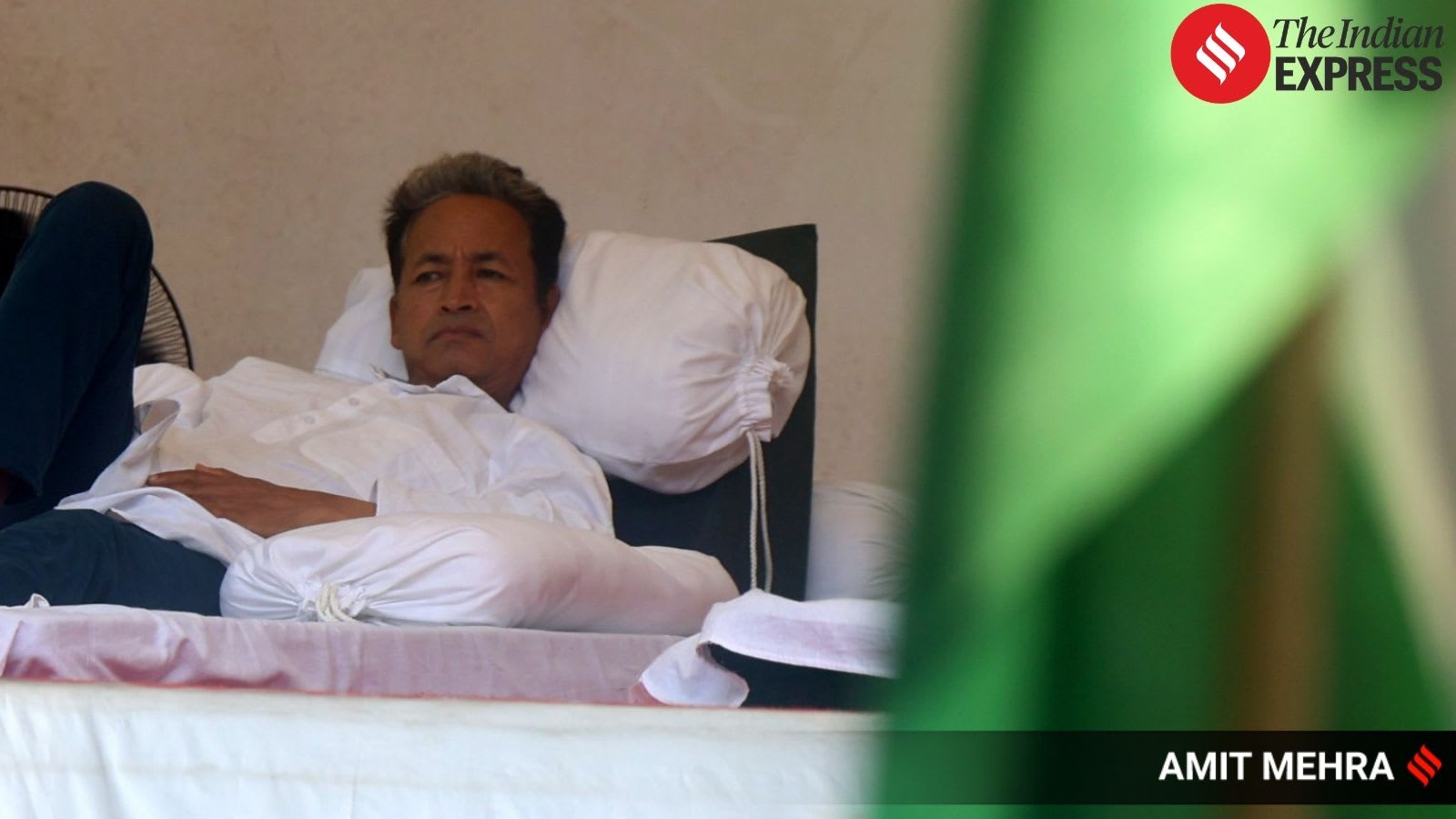
The Delhi High Court is set to hear a Public Interest Litigation (PIL) requesting the force-feeding of Sonam Wangchuk, who is currently conducting an indefinite hunger strike at Jantar Mantar to advocate for the rights and environmental protections of Ladakh.
Legal and Political Standoff: The Hunger Strike of Sonam Wangchuk
The current situation unfolding at Jantar Mantar, where renowned educator and innovator Sonam Wangchuk is engaged in an indefinite hunger strike, has reached a critical legal juncture. The intervention of the Delhi High Court, prompted by a Public Interest Litigation (PIL) seeking the force-feeding of Wangchuk, highlights a profound tension between the state's obligation to preserve human life and an individual's right to political protest. This event is not merely a health concern but a symbolic clash between administrative authority and grassroots activism in the heart of India's capital.
The Core Demands and the Ladakhi Struggle
To understand the gravity of this hunger strike, one must look toward the high-altitude region of Ladakh. Sonam Wangchuk has become the face of a movement demanding that Ladakh be granted statehood and included under the Sixth Schedule of the Indian Constitution. The Sixth Schedule is designed to protect the tribal populations of North-East India by allowing for the creation of Autonomous District Councils. For Ladakh, this is seen as a vital safeguard to protect its fragile Himalayan ecosystem from unregulated industrialization and to preserve its unique cultural identity against external demographic and economic pressures.
The Legal Paradox of Force-Feeding
The PIL seeking force-feeding introduces a complex legal and ethical paradox. Under Indian law, the 'Right to Life' enshrined in Article 21 of the Constitution is paramount. However, the act of force-feeding a conscious adult who has chosen a hunger strike as a form of non-violent protest is often viewed as a violation of bodily autonomy and personal liberty. The Delhi High Court's deliberation will likely balance the humanitarian urgency of preventing death with the democratic tradition of the 'Satyagraha'—a method of peaceful resistance popularized by Mahatma Gandhi, which Wangchuk is explicitly channeling.
Environmental Imperatives and Geopolitical Context
Beyond the legalities, the strike underscores a desperate plea for environmental conservation. Ladakh is one of the most ecologically sensitive zones in the world, facing acute threats from glacier melt and climate change. Wangchuk's advocacy emphasizes that without local governance and constitutional protections, the region's water resources and biodiversity could be compromised by large-scale corporate interests. Furthermore, Ladakh's strategic importance as a border region makes the stability and contentment of its local population a matter of national security, adding a layer of geopolitical urgency to the demands for autonomy.
Historical Context of Hunger Strikes in India
Hunger strikes have a deep-rooted history in the Indian psyche as a tool for moral leverage. From the independence movement to modern-day agrarian protests, fasting has been used to draw national attention to systemic injustices. By choosing this path, Wangchuk is utilizing a historically potent medium to signal that the grievances of the Ladakhi people have reached a breaking point. The government's response—or lack thereof—is being viewed by observers as a litmus test for the administration's willingness to engage with marginalized frontier populations.
Future Trends and Potential Outcomes
Looking forward, the outcome of the Delhi High Court hearing will set a significant precedent for how the state handles high-profile political fasts. If the court mandates force-feeding, it may be perceived as an attempt to silence the protest; conversely, if it refuses, the responsibility for Wangchuk's health remains a volatile political liability for the government. The likely trajectory suggests a continued escalation of protests in Ladakh unless a middle ground is found, possibly involving a high-level committee to address the Sixth Schedule demands.
Conclusion
Sonam Wangchuk's hunger strike is a manifestation of a deeper crisis of representation for the people of Ladakh. While the immediate legal battle focuses on the medical necessity of force-feeding, the underlying conflict is about constitutional rights, environmental stewardship, and the democratic right to dissent. The resolution of this standoff will depend not just on judicial orders, but on the political will to address the legitimate concerns of a strategically vital region.