SpaceX flirts with a further descent down the market-cap ranks
Source Entity
William Gavin
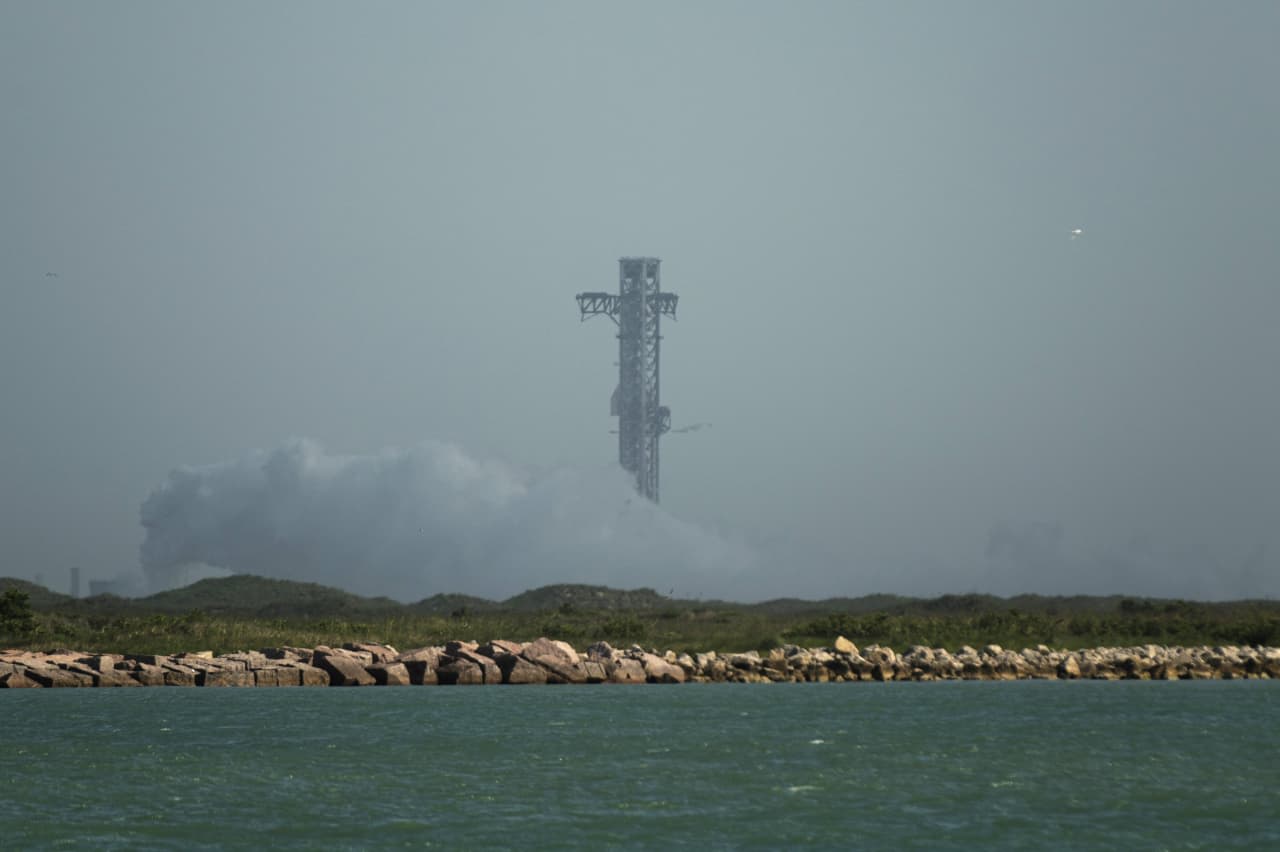
SpaceX has experienced a significant valuation decline, losing over $1 trillion in market capitalization from its peak. This downturn has momentarily shifted the company's standing relative to other major market leaders like Meta.
The Volatility of Private Space Valuation
SpaceX, the aerospace giant led by Elon Musk, has recently navigated a period of intense financial scrutiny as it shed over $1 trillion in market value from its all-time peak. While SpaceX remains a private entity, its valuation has long been a benchmark for the broader space economy. This significant contraction highlights the inherent volatility involved in capital-intensive industries that rely heavily on speculative future growth and long-term infrastructure deployment.
Market-Cap Dynamics and Competitive Positioning
The most striking aspect of this valuation shift is the company's fleeting descent below Meta on the market-cap leaderboards. For a company that has redefined orbital logistics and satellite internet via Starlink, such a drop serves as a reminder that even industry disruptors are subject to macroeconomic pressures and shifting investor sentiment. Comparing a space exploration firm to a social media conglomerate like Meta underscores the unique position SpaceX occupies, bridging the gap between deep-tech manufacturing and consumer-facing digital services.
Analyzing the Drivers of Valuation
The loss of $1 trillion in market value is a massive fiscal event, even for a company of SpaceX's stature. This decline likely reflects a recalibration of investor expectations regarding the timelines for Starship development, the profitability of the Starlink constellation, and the broader global appetite for high-risk, high-reward space ventures. Unlike publicly traded tech giants, private market valuations are often sensitive to funding rounds and secondary market liquidity, which can lead to rapid, non-linear adjustments.
Broader Implications for the New Space Era
This trend signals a maturing phase for the 'New Space' industry. As investors become more discerning, the emphasis is shifting from theoretical potential to tangible revenue generation and operational efficiency. The fact that SpaceX’s valuation is being measured against the titans of the S&P 500 demonstrates that the space sector is no longer a niche interest but a central pillar of modern industrial and technological strategy.
Future Trends and Resilience
Moving forward, the resilience of SpaceX will depend on its ability to maintain its launch cadence and scale its satellite network effectively. While the current market-cap dip is significant, the company's historical ability to overcome engineering challenges suggests a high degree of institutional durability. The market will likely continue to monitor these fluctuations as indicators of both the company's health and the overall viability of commercialized space exploration in a constrained fiscal environment.
Verification Required?