SpaceX scrubs Starship launch after some of its engines didn't start
Source Entity
Stephen Clark
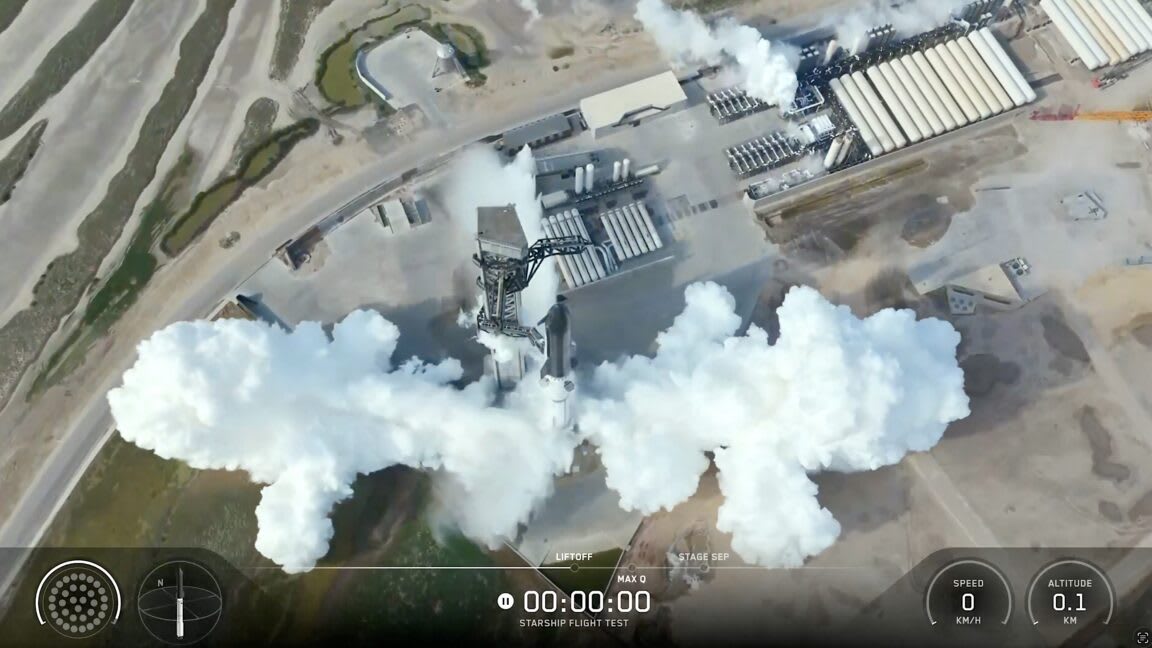
SpaceX scrubbed its 13th full-scale Starship launch in South Texas after several Super Heavy booster engines failed to ignite. The automatic abort occurred during the startup sequence of the new Raptor 3 engines.
Analysis of SpaceX Starship Launch Abort
SpaceX's ambitious trajectory toward interplanetary travel encountered a technical hurdle on Thursday when a test flight of the Starship rocket and its Super Heavy booster was scrubbed. The attempt, marking the 13th full-scale launch of the vehicle, reached its climax at the company's Starbase facility in South Texas. Just as the countdown clock hit zero, the mission was halted by an automatic launch abort, highlighting the rigorous safety protocols embedded in the rocket's flight software.
Technical Breakdown: The Raptor 3 Challenge
Central to this specific launch attempt was the deployment of the Raptor 3 engine, SpaceX's third-generation propulsion system. This flight was intended to be only the second time these upgraded engines were used on the Starship Version 3 rocket. The failure of some engines to ignite during the startup sequence suggests that the transition to the Raptor 3 design is still in a critical phase of reliability testing. In aerospace engineering, "infant mortality" of components—where failures occur early in a new design's lifecycle—is a known phenomenon that provides essential data for iterative improvement.
The Complexity of the Launch Sequence
The scale of the operation at Starbase is immense, as evidenced by the loading of over 11.5 million pounds of liquid methane and liquid oxygen into the two-stage vehicle. The precision required to ignite the massive array of engines on the Super Heavy booster is extreme. The fact that the onboard computers triggered an automatic abort demonstrates the efficacy of SpaceX's fail-safe systems; by detecting the engine failure in real-time, the system prevented a potentially catastrophic "hard start" or an asymmetric thrust event that could have damaged the 400-foot-tall rocket or the launch pad.
SpaceX's Iterative Development Philosophy
This scrub is a reflection of SpaceX's broader "fail fast, learn fast" philosophy. Unlike traditional aerospace programs that rely on exhaustive simulations and slow deployment, SpaceX pushes hardware to its limits in real-world environments. The 13th full-scale launch attempt indicates a rapid cadence of testing. While a scrub is a temporary setback, the telemetry gathered from the engines that failed to start will allow engineers to diagnose whether the issue was a mechanical failure, a software glitch in the ignition sequence, or a propellant delivery problem.
Broader Implications and Infrastructure
Standing at over 400 feet, Starship is designed to be the most powerful launch vehicle ever flown, intended for lunar and Martian missions. The Super Heavy booster serves as the critical first stage, providing the necessary thrust to escape Earth's gravity. Any instability in the booster's performance jeopardizes the entire mission profile. Furthermore, the location of the spaceport just north of the US-Mexico border necessitates these strict automatic aborts to ensure the safety of the surrounding region and the integrity of the launch infrastructure.
Future Outlook
Following the scrub, the immediate priority for the SpaceX team is the safe draining of the propellant tanks to prepare the vehicle for inspection. The focus will now shift to analyzing the startup sequence of the Raptor 3 engines to ensure consistency across all boosters. As SpaceX continues to refine Version 3 of the Starship, these technical hurdles are expected to be ironed out, paving the way for more stable and frequent flights as the company pursues its long-term goals of full reusability and deep-space exploration.