Metals in Motion: Sprott Outlines New Era of Critical Minerals
Source Entity
Yahoo Finance
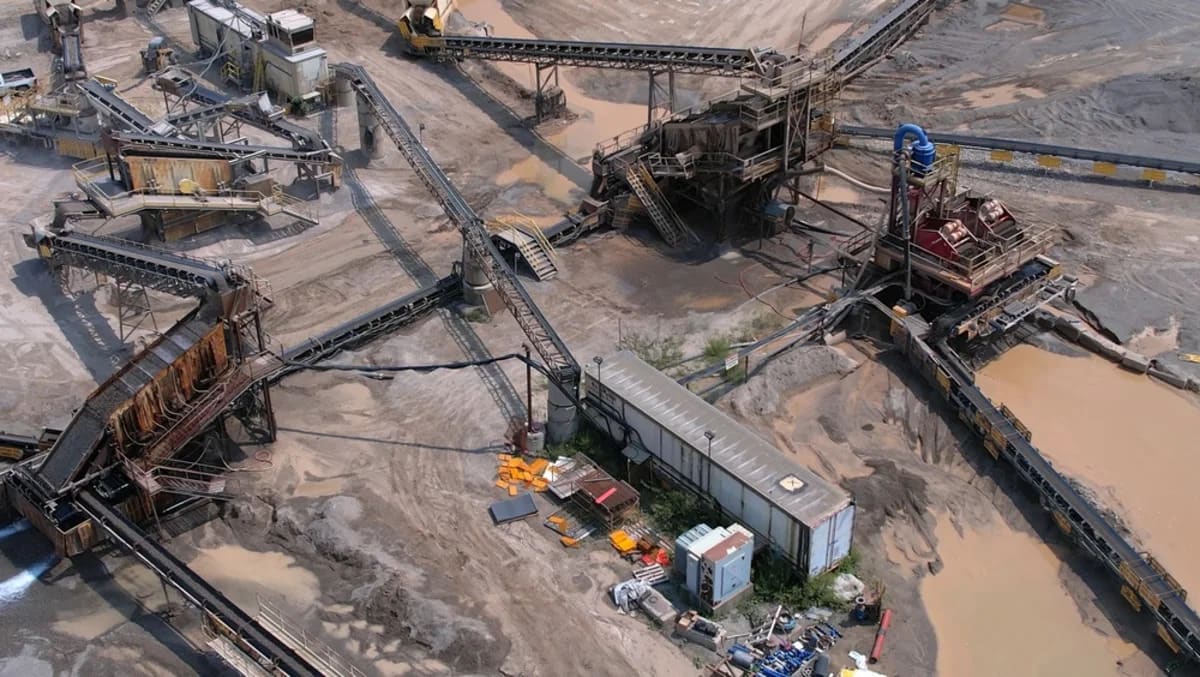
Global commodity markets are undergoing a structural shift as critical minerals transition from ordinary assets to high-stakes geopolitical weapons. Justin Tolman of Sprott highlights how resource nationalism and export bans are being used to force localized downstream processing.
The Geopolitical Pivot: Critical Minerals as Strategic Leverage
Global commodity markets are currently undergoing a profound structural transformation, moving away from a regime governed primarily by supply-and-demand price metrics toward one dictated by state policy and national security. As outlined by Justin Tolman, Senior Portfolio Manager and Economic Geologist at Sprott Asset Management, critical minerals and rare earth elements have ceased to be treated as mere raw materials. Instead, they have evolved into high-stakes geopolitical weapons, fundamentally altering how nations interact in the pursuit of industrial dominance.
From Commodities to Strategic Assets
Historically, the trade of minerals was largely a matter of economic efficiency, where materials were sourced from the lowest-cost producer and shipped globally. However, the current landscape reflects a shift where critical minerals are now viewed as strategic leverage. This transition is driven by the essential role these elements play in modern technology, defense systems, and the global transition toward green energy. Because a handful of nations control the majority of these deposits, the ability to restrict access has become a powerful diplomatic and economic tool.
The Rise of Resource Nationalism
One of the most significant trends identified is the surge in resource nationalism. Vital resource-rich nations are no longer content with simply exporting raw ores; they are increasingly implementing tightening quotas and strict export bans. The primary objective behind these measures is to force localized downstream processing. By preventing the export of raw materials, these nations compel foreign buyers and investors to build refineries and manufacturing plants within their borders, thereby capturing more value from the supply chain and fostering domestic industrial growth.
Government Intervention and Market Distortion
This new era is characterized by heavy intervention from governments, regulators, and financiers, which supplants traditional market dynamics. When critical minerals are treated as security assets rather than commodities, the "invisible hand" of the market is replaced by strategic procurement and state-led mandates. This involves the creation of strategic stockpiles and the formation of bilateral agreements to ensure supply chain resilience, effectively creating a tiered market where political alignment may become as important as financial capital.
Broader Implications for Global Supply Chains
The shift toward localized processing and export restrictions suggests a move away from globalized, "just-in-time" supply chains toward a model of "friend-shoring" or regionalization. For industries relying on rare earths—such as electric vehicle manufacturers and aerospace firms—this means facing higher volatility and the necessity of diversifying sources. The insistence on domestic processing by resource nations will likely lead to a period of intense capital expenditure as new processing hubs are established globally to bypass geopolitical bottlenecks.
Future Outlook: A New Economic Order
Looking forward, the tension between resource-rich nations and technology-dependent economies is likely to intensify. We can expect a proliferation of strategic partnerships and perhaps the emergence of "mineral blocs" similar to oil cartels, where producing nations coordinate to manage supply and maximize political leverage. The ability of a nation to secure a stable, processed supply of critical minerals will likely become a primary indicator of its economic and military competitiveness in the 21st century.
Conclusion
In summary, the insights provided by Sprott Asset Management underscore a pivotal moment in global trade. The transition of critical minerals from ordinary commodities to strategic weapons marks the end of the traditional commodity era and the beginning of a policy-driven market. As resource nationalism continues to rise, the global economy must adapt to a landscape where geopolitical strategy outweighs market efficiency.