Starbucks is becoming cool again. Here’s how it pulled off its turnaround.
Source Entity
Claudia Assis
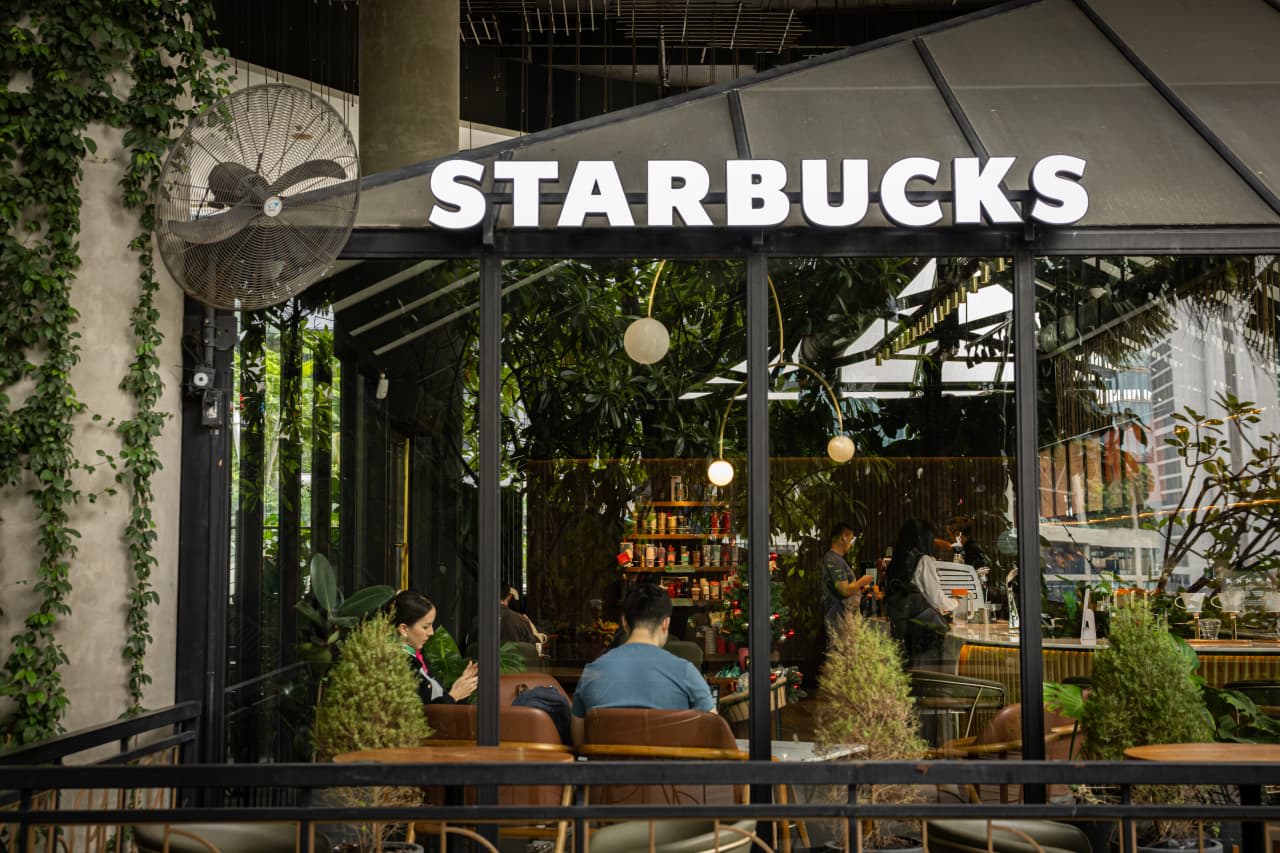
Starbucks stock surged after the company raised its fiscal 2026 outlook following four consecutive quarters of same-store sales growth. CEO Brian Niccol's turnaround strategy, focused on faster service, menu innovation, and improved food options, has successfully revitalized the coffee giant's performance.
Starbucks Rebounds: A Strategic Turnaround
Starbucks has officially entered a new phase of growth, evidenced by a significant jump in its stock price following a robust earnings report. The coffee giant reported its fourth consecutive quarter of same-store sales growth, a key indicator of health in the restaurant industry. This momentum has allowed the company to raise its full-year fiscal 2026 outlook, with adjusted earnings per share now projected between $2.55 and $2.65, a notable increase from the previous guidance of $2.25 to $2.45.
The Niccol Effect: Driving Operational Efficiency
At the heart of this resurgence is CEO Brian Niccol, who has been instrumental in steering the company toward a more agile operational model. Under his leadership, Starbucks has prioritized faster service and an expanded menu, addressing long-standing consumer complaints regarding wait times and product variety. By focusing on these core operational metrics, Niccol has managed to move the needle on both global and U.S. same-store sales, which are now projected to climb more than 6% annually.
Financial Performance Surpasses Expectations
Financial data from the fiscal 2026 third quarter confirms the success of these initiatives. Starbucks reported revenue of $9.32 billion, comfortably beating the consensus estimate of $9.16 billion. Furthermore, adjusted earnings per share reached 85 cents, significantly outperforming the 66-cent estimate. Comparable store sales, a critical metric measuring the performance of stores open for at least 13 months, surged by 7.9% year-over-year, far exceeding the anticipated 5.7% growth.
Innovation as a Growth Catalyst
Beyond mere operational efficiency, the company's turnaround is being driven by the introduction of trendier products and an enhanced food menu. By aligning its offerings with evolving consumer preferences, Starbucks has managed to increase its "cool" factor and re-engage its core demographic. This shift toward product innovation ensures that the company remains competitive in a saturated coffee market where consumer loyalty is increasingly tied to menu diversity.
Future Outlook and Market Implications
Looking ahead, the increased sales targets suggest that management is confident in the sustainability of their current strategy. The upward revision of global and U.S. same-store sales growth from a minimum of 5% to nearly 6% signals a long-term shift in consumer behavior toward the brand. As Starbucks continues to refine its service model, investors appear increasingly optimistic, viewing the recent quarterly results as a "home-run" that validates the current leadership's vision.
Conclusion
In summary, Starbucks has effectively navigated a challenging economic landscape by doubling down on core strengths: service speed, menu innovation, and operational excellence. With four quarters of consistent growth and improved financial guidance, the company has successfully transitioned from a period of stagnation to a clear growth trajectory. The market's positive reception to these results reflects a broader confidence in the effectiveness of CEO Brian Niccol’s strategic roadmap for the brand.
Verification Required?