CJP Jantar Mantar Protest Live: 17 Metro Stations shut in Delhi as CJP pushes ahead with nationwide protests
Source Entity
Majid Alam
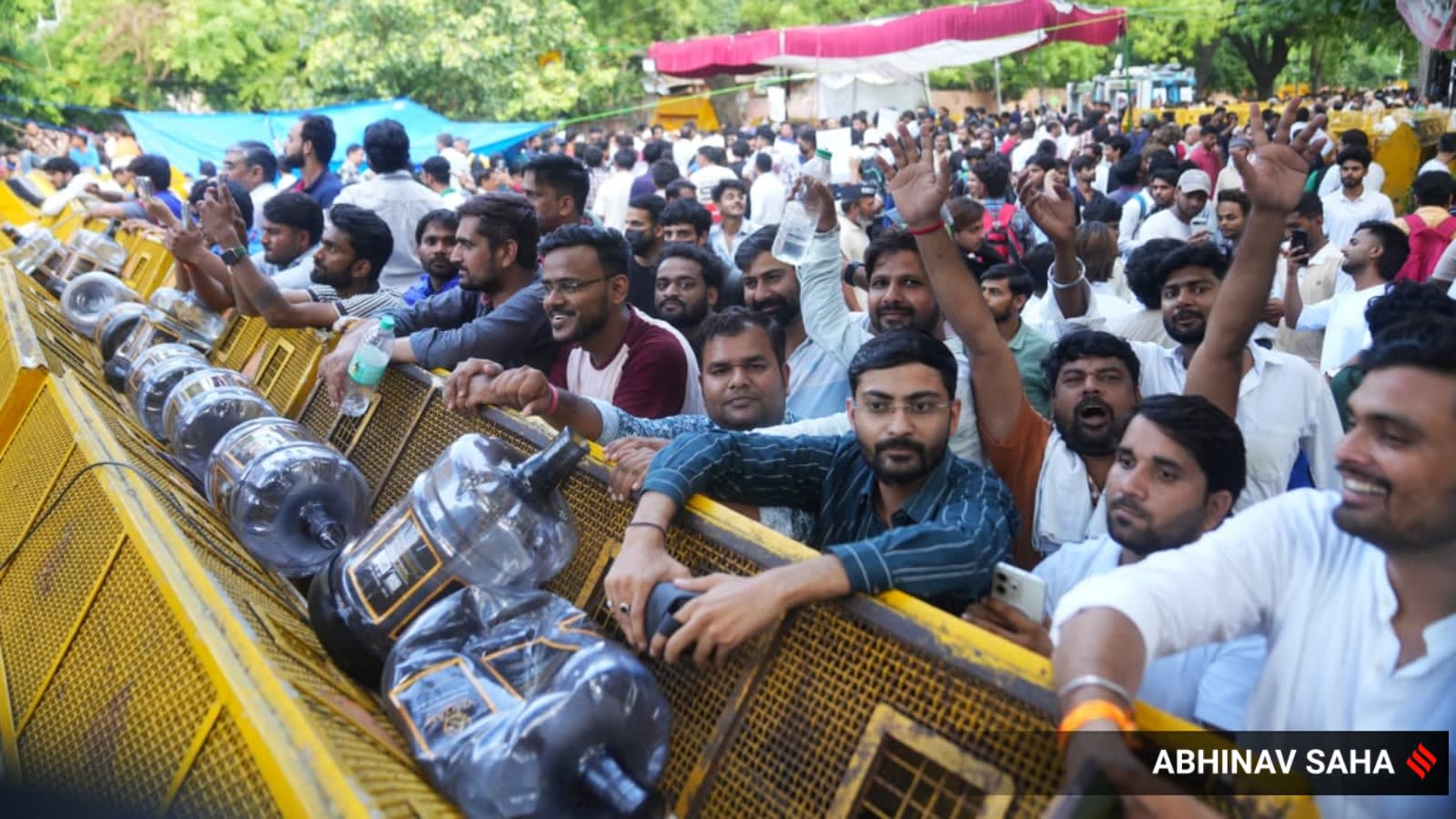
Student organizations and activists are protesting nationwide against alleged examination irregularities and police conduct. The movement calls for the resignation of Education Minister Dharmendra Pradhan and the dissolution of the NTA.
Growing Unrest Over Examination Integrity
The recent wave of student-led protests, spearheaded by organizations like the Naujawan Bharat Sabha (NBS) and the Disha Students’ Organisation, highlights a deepening crisis of confidence in India's centralized examination systems. Protesters gathered near the GVMC office to condemn alleged paper leaks and examination scams, framing these issues as systemic failures that jeopardize the future of millions of students. The agitation is not isolated; it reflects a broader national sentiment fueled by reports of administrative lapses under the National Testing Agency (NTA).
Accountability and the Demand for Resignation
A core pillar of the current protest movement is the demand for political accountability. Activists, including Disha Students’ Organisation member Avinash, have explicitly called for the resignation of Union Education Minister Dharmendra Pradhan. This demand is bolstered by CJP founder Abhijeet Dipke, who has publicly challenged Minister Pradhan to engage directly with demonstrators at Jantar Mantar. Such calls indicate that the student movement has moved beyond mere policy critique to demanding direct ministerial responsibility for the perceived mismanagement of national testing protocols.
The Role of Civil Society and Student Coalitions
The involvement of diverse groups such as the NBS and the Disha Students’ Organisation underscores the cross-sectional nature of this agitation. By expressing solidarity with the students who faced police action at Jantar Mantar, these groups are effectively nationalizing a local grievance. The condemnation of the Delhi Police’s conduct during these demonstrations has added a layer of human rights advocacy to the movement, with participants arguing that the suppression of dissent is an infringement on the fundamental rights of students to protest against institutional corruption.
Structural Critiques of the National Testing Agency
Beyond individual resignations, the movement has targeted the existence of the National Testing Agency (NTA) itself. NBS member Sujan has demanded the complete abolition of the NTA, arguing that the agency has failed to maintain the sanctity of competitive examinations. This structural critique suggests that students and activists no longer believe in reformist measures and are instead pushing for a total overhaul of the current testing infrastructure. The persistence of these protests indicates that the movement is prepared for a long-term struggle until concrete accountability mechanisms are established.
Intersecting Movements and Future Trends
The climate of protest is further complicated by parallel movements, such as the fast undertaken by Sonam Wangchuk, highlighting a broader trend of civil society mobilization in India. While the specific grievances differ—ranging from environmental and administrative status issues in Ladakh to national examination integrity—the common thread is a reliance on public fasting and mass demonstrations to capture government attention. As these movements continue to gain traction, the government faces increasing pressure to address the underlying causes of public dissatisfaction. The trend suggests that until transparent reforms are implemented, the frequency of such organized, multi-city protests is likely to rise.
Multiple Citing Sources