Supreme Court lawyers recite Constitution's Preamble seeking justice for students, CJP thanks them
Source Entity
Latest News: Todays Latest News Headlines from India & World | Hindustan Times | Hindustan Times
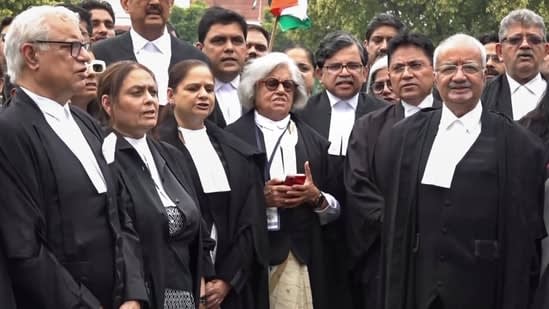
Supreme Court lawyers gathered to recite the Constitution's Preamble, seeking justice for students amid NEET exam controversy. The event highlighted a shift in protest tactics and drew sharp commentary regarding the Opposition's role in civil unrest.
Legal Fraternity Takes a Stand: The Preamble as Protest
In a significant demonstration of constitutional advocacy, a group of Supreme Court lawyers convened on the apex court premises to recite the Preamble of the Indian Constitution and sing the National Anthem. This gathering, conducted under the banner of the "Save Democracy, Save Constitution" campaign, served as a poignant response to the ongoing turmoil surrounding alleged NEET paper leaks and reports of police brutality against student protesters in New Delhi. By choosing the Preamble—the foundational spirit of the nation’s legal framework—the lawyers sought to frame their dissent not as mere political agitation, but as an exercise in upholding the core values of justice and equality.
Solidarity and the Duty of Counsel
Senior Advocates Indira Jaising and S. Muralidhar led the assembly, emphasizing that the legal community's involvement was rooted in a moral obligation to protect the rights of students. Jaising explicitly distinguished the lawyers' presence from traditional political protest, noting that the goal was to secure justice for the aggrieved student body rather than to further personal or partisan agendas. This distinction is crucial in understanding the nature of the protest; by eschewing slogans and focusing on the solemn recitation of constitutional tenets, the legal fraternity aimed to reclaim the narrative of justice from the chaos of street-level conflict.
The Role of the Opposition in Civil Unrest
Beyond the immediate student crisis, the event has sparked a broader debate regarding the efficacy and legitimacy of political opposition. Recent commentary suggests that the Opposition often struggles to find organic traction in public grievances, frequently attempting to "saunter in" after popular anger has already reached a boiling point. This criticism points to a disconnect between the established political apparatus and the visceral, grassroots frustration felt by students affected by exam irregularities. The lawyers' decision to act independently highlights a vacuum in leadership that civil society—in this case, the bar—felt compelled to fill.
Examining the 'Readymade' Revolt
There is a growing skepticism regarding the tendency of political parties to look for "readymade" revolts to capitalize on. The current discourse suggests that for a protest to remain credible, it must be driven by the affected parties themselves rather than being co-opted by opportunistic political entities. The lawyers' disciplined approach serves as a counter-model to this trend, prioritizing the sanctity of the Constitution over the pursuit of political spoils. This event underscores the difficulty opposition parties face when they attempt to become the primary beneficiaries of movements they did not help build.
Future Implications for Judicial Activism
Looking forward, this event may signal a shift in how legal professionals engage with public interest issues. As the pressure mounts on the government to address systemic failures in examination processes, the legal fraternity’s role as an intermediary between the public and the judiciary becomes increasingly vital. If the "Save Democracy, Save Constitution" campaign gains momentum, it could set a precedent for how constitutional symbols are used to hold authority accountable, potentially influencing future protest movements across the country.
Conclusion: A Constitutional Path Forward
Ultimately, the demonstration at the Supreme Court is a reflection of a society grappling with its own standards of fairness and accountability. By grounding their protest in the Preamble, the lawyers have successfully pivoted the conversation from partisan finger-pointing to a fundamental question of what the state owes its citizens. As the investigation into the NEET controversy continues, the actions of these advocates serve as a reminder that the defense of democracy often begins with the simple, solemn acknowledgment of the laws that bind the nation together.
Verification Required?