CJP meeting with govt lasts 2 hours, both sides share their version. Who said what
Source Entity
Latest News: Todays Latest News Headlines from India & World | Hindustan Times | Hindustan Times
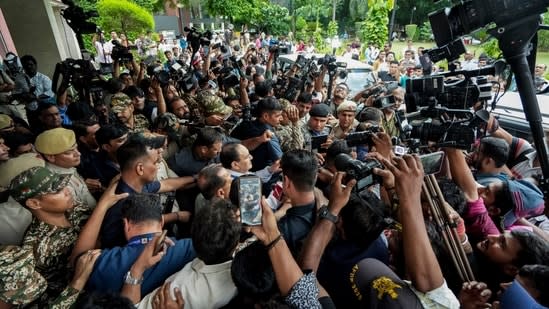
Student organizations are staging nationwide protests against alleged examination irregularities and the NTA, demanding the resignation of Education Minister Dharmendra Pradhan. Meanwhile, activist Sonam Wangchuk's family has expressed concern as his hunger strike continues amid broader calls for government accountability.
Growing Unrest Over Examination Integrity
Recent developments in India have highlighted a significant surge in student-led activism centered on the transparency and efficacy of the National Testing Agency (NTA). Protests have erupted across various regions, with groups such as the Naujawan Bharat Sabha (NBS) and the Disha Students’ Organisation mobilizing near the GVMC office and other strategic locations. These demonstrators are explicitly targeting the systemic failures perceived in the handling of examination paper leaks and the subsequent police treatment of protestors at Jantar Mantar in New Delhi.
Demands for Accountability and Institutional Reform
The core of the current agitation lies in the demand for systemic overhaul. Student leaders, including representatives like Avinash and Sujan, have articulated a clear list of grievances that go beyond mere administrative complaints. The call for the resignation of Union Education Minister Dharmendra Pradhan and the total abolition of the National Testing Agency reflects a deepening crisis of confidence in the current educational oversight framework. For these organizations, the protests are not isolated incidents but a sustained movement aimed at fixing institutional accountability.
The Role of Civil Society and Media
The intersection of media engagement and grassroots activism has become a focal point of this discourse. The dialogue between CJP founder Abhijeet Dipke and NDTV’s Shiv Aroor underscores the pressure being exerted on policymakers to address the grievances of the youth directly. By inviting Minister Pradhan to Jantar Mantar, activists are attempting to force a direct confrontation between the government and the electorate, moving the debate from bureaucratic corridors to the public square.
Parallel Movements and Solidarity
Beyond the paper leak controversies, the atmosphere of protest is further intensified by parallel civil society movements. The case of activist Sonam Wangchuk, whose brother Dorjey recently spoke to the media regarding the status of his hunger strike, highlights a broader trend of civic resistance. Although distinct in cause, these movements share a common thread of utilizing prolonged, high-visibility public demonstrations to challenge government policies and demand urgent state intervention.
Future Implications and Trends
Looking ahead, the government faces a precarious situation. If the administration fails to provide a transparent mechanism for addressing examination integrity and the safety of peaceful protestors, these localized student organizations may consolidate into a more formidable national coalition. The trend suggests that until the NTA’s operational integrity is restored and the demands for high-level ministerial accountability are addressed, the cycle of protests is unlikely to dissipate. The government's future response will be a critical indicator of its willingness to engage with the structural concerns raised by India’s youth and civil society leaders.
Multiple Citing Sources
Verification Required?