Aravallis can’t be defined by 1 yardstick: Supreme Court panel seeks extension
Source Entity
The Indian Express
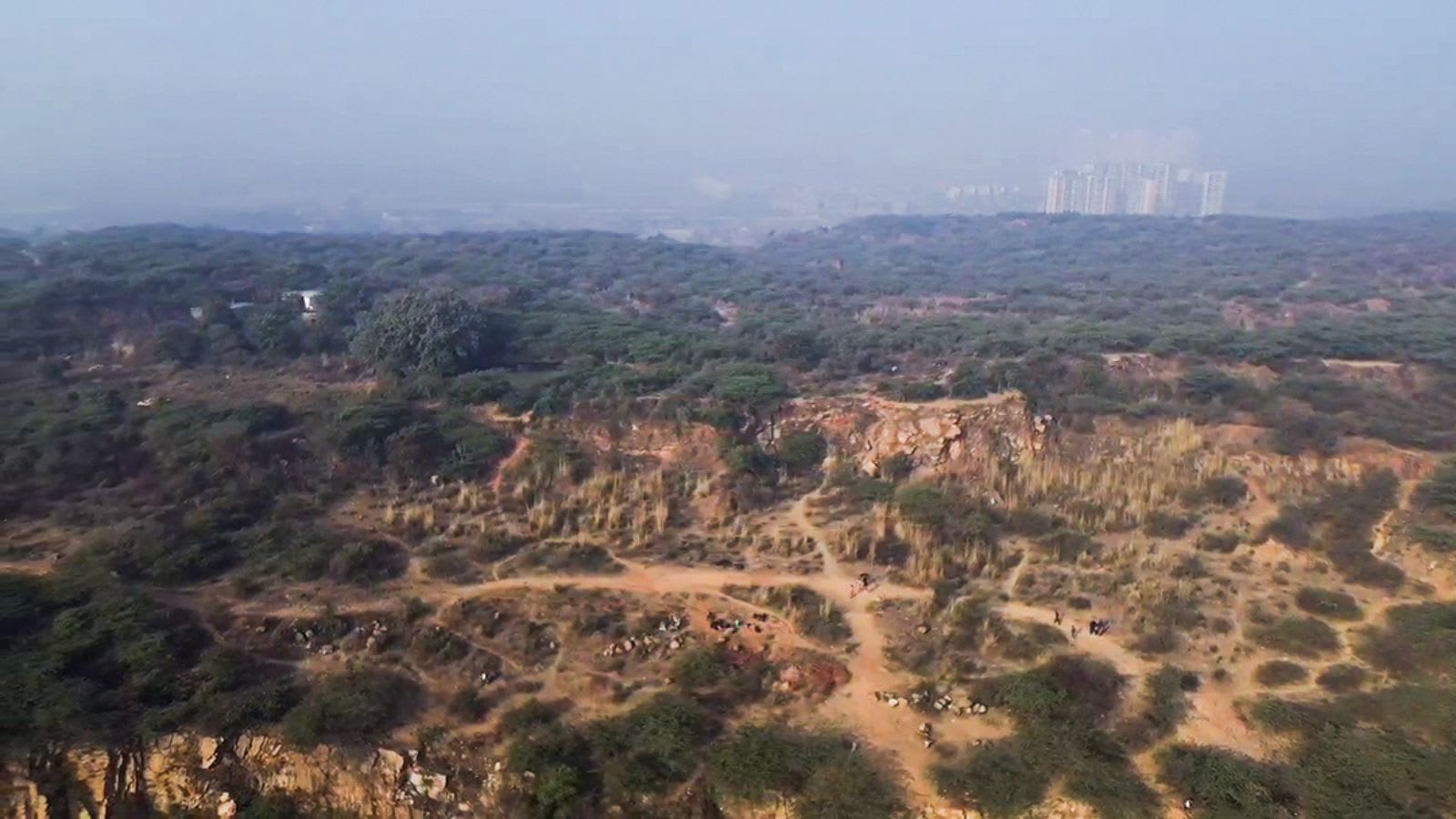
A Supreme Court-appointed committee has requested a six-month extension to redefine the Aravalli range using an ecosystem-based framework. This approach moves beyond simple terrain metrics to account for biodiversity, water systems, and livelihood connectivity.
Redefining the Aravallis: A Shift Toward Ecological Integrity
The High-Powered Committee (HPC) appointed by the Supreme Court has delivered a significant update regarding the mapping of the Aravalli hills and ranges. By cautioning against the use of a single, simplistic yardstick for delineation, the committee is challenging decades of conventional mapping that often failed to capture the true environmental value of the region. The assertion that the Aravallis cannot be defined by a single terrain-based metric marks a pivot toward a more nuanced, holistic understanding of one of India's oldest mountain ranges.
The Move to an Ecosystem-Based Framework
Instead of relying on rigid, topographical definitions, the committee has proposed a sophisticated 'Aravalli Ecosystem Landscape' framework. This model recognizes that the range is not merely a series of disparate hills, but a complex, interconnected ecological network. By integrating factors such as forest cover, water recharge systems, biodiversity hotspots, and landscape connectivity, the HPC aims to ensure that the definition of the Aravallis reflects their functional role in the environment rather than just their physical elevation or shape.
Prioritizing Scientific Rigor and Transparency
In their compliance report submitted on August 31, the committee underscored the necessity of producing a 'transparent, reproducible, and scientifically defensible assessment.' The request for a six-month extension, pushing the deadline to February 28, 2027, highlights the immense complexity of this task. The committee is clearly prioritizing accuracy over speed, fearing that premature area estimates could lead to irreversible policy errors or the misclassification of ecologically sensitive zones.
Socio-Economic and Biodiversity Implications
Beyond topography, the committee’s framework explicitly considers the role of human livelihoods. This is a critical development, as the Aravallis serve as a vital life-support system for surrounding communities. By incorporating human-environment interactions into the definition, the committee is acknowledging that sustainable development in the region depends on protecting the very resources—such as water and forest products—that local populations rely upon for their economic survival.
Future Trends and Judicial Oversight
This ongoing process reflects a broader trend of judicial intervention in environmental governance, where the Supreme Court is actively pushing for science-based solutions to land-use management. If the 'Aravalli Ecosystem Landscape' framework is successfully implemented, it could set a national precedent for how other critical ecological corridors in India are mapped and protected. The extension granted to the committee suggests a recognition by the judiciary that environmental protection requires time, longitudinal data, and multidisciplinary expertise to be effective in the long term.