Nalsar row: SC strikes down BCI orders, says it has 'no power to regulate students'
Source Entity
AYUSH PANDEY
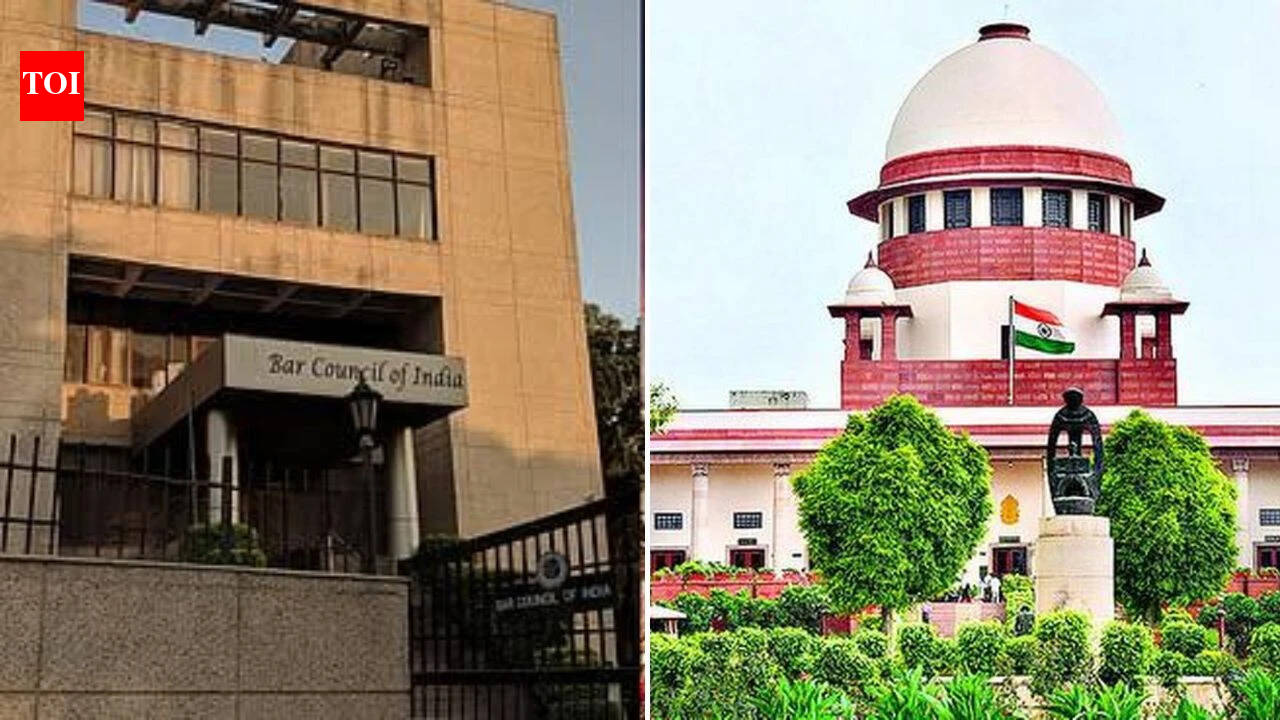
The Supreme Court has ruled that the Bar Council of India lacks the statutory authority to discipline law students, following a controversy at NALSAR University. Simultaneously, the court directed advocate Prashant Bhushan to approach the Delhi High Court regarding allegations of violence against protesters at the BCI premises.
Legal Oversight and the Limits of BCI Authority
The recent rulings and directives from the Supreme Court of India mark a significant moment in the ongoing power struggle between legal education institutions and the Bar Council of India (BCI). By explicitly striking down BCI orders that attempted to regulate the conduct of law students, the Supreme Court has clarified the jurisdictional boundaries of the Advocates Act, 1961. The Court affirmed that the BCI’s disciplinary powers are strictly confined to registered advocates, thereby invalidating attempts to penalize students based on their expressive conduct.
The NALSAR Controversy and Freedom of Expression
This judicial intervention stems from a dispute involving the 2026 graduating batch of NALSAR University. The BCI had previously threatened to ban the professional enrollment of these students after they protested against the invitation of the Chief Justice of India to their convocation. The Supreme Court’s decision acknowledges that such punitive measures created a 'chilling effect' on the fundamental rights of students, specifically their freedom of speech and association. By nullifying these orders, the court has reinforced the principle that academic autonomy must remain shielded from the regulatory overreach of professional bodies.
Allegations of Violence at BCI Premises
Beyond the regulatory scope of the BCI, the court addressed a volatile situation regarding the alleged physical assault of young lawyers. Advocate Prashant Bhushan sought intervention from the apex court, highlighting the August 21 incident where protesters at the BCI premises were reportedly beaten. While Bhushan argued for a CBI probe into the matter, the Supreme Court directed him to approach the Delhi High Court, maintaining the standard hierarchy of legal remedies even in cases involving high-profile institutions.
Rhetoric and Institutional Accountability
Adding to the gravity of the situation are the reported comments attributed to BCI chairperson Manan Kumar Mishra. Bhushan alleged that the chairperson referred to the protesting lawyers as 'legal cockroaches' and suggested they were dealt with by 'our lawyers.' Such remarks, if proven, underscore a deep-seated friction between the leadership of the Bar Council and the younger generation of legal professionals. This rhetoric has further complicated the atmosphere surrounding the BCI, making the calls for a transparent investigation into the August 21 violence increasingly urgent.
Future Implications for Legal Governance
Moving forward, these developments suggest a period of heightened judicial scrutiny over the BCI’s administrative and disciplinary actions. The Supreme Court's clear demarcation of powers serves as a precedent that will likely deter similar attempts to exercise extra-statutory authority over students. As the matter moves to the Delhi High Court, the legal community will be watching closely to see if accountability is established regarding the violence at the BCI premises, which could fundamentally reshape the relationship between the Bar Council and the legal fraternity it represents.