Explained: Challenges to Madhya Pradesh HC on Bhojshala-Kamal Maula dispute
Source Entity
Amaal Sheikh
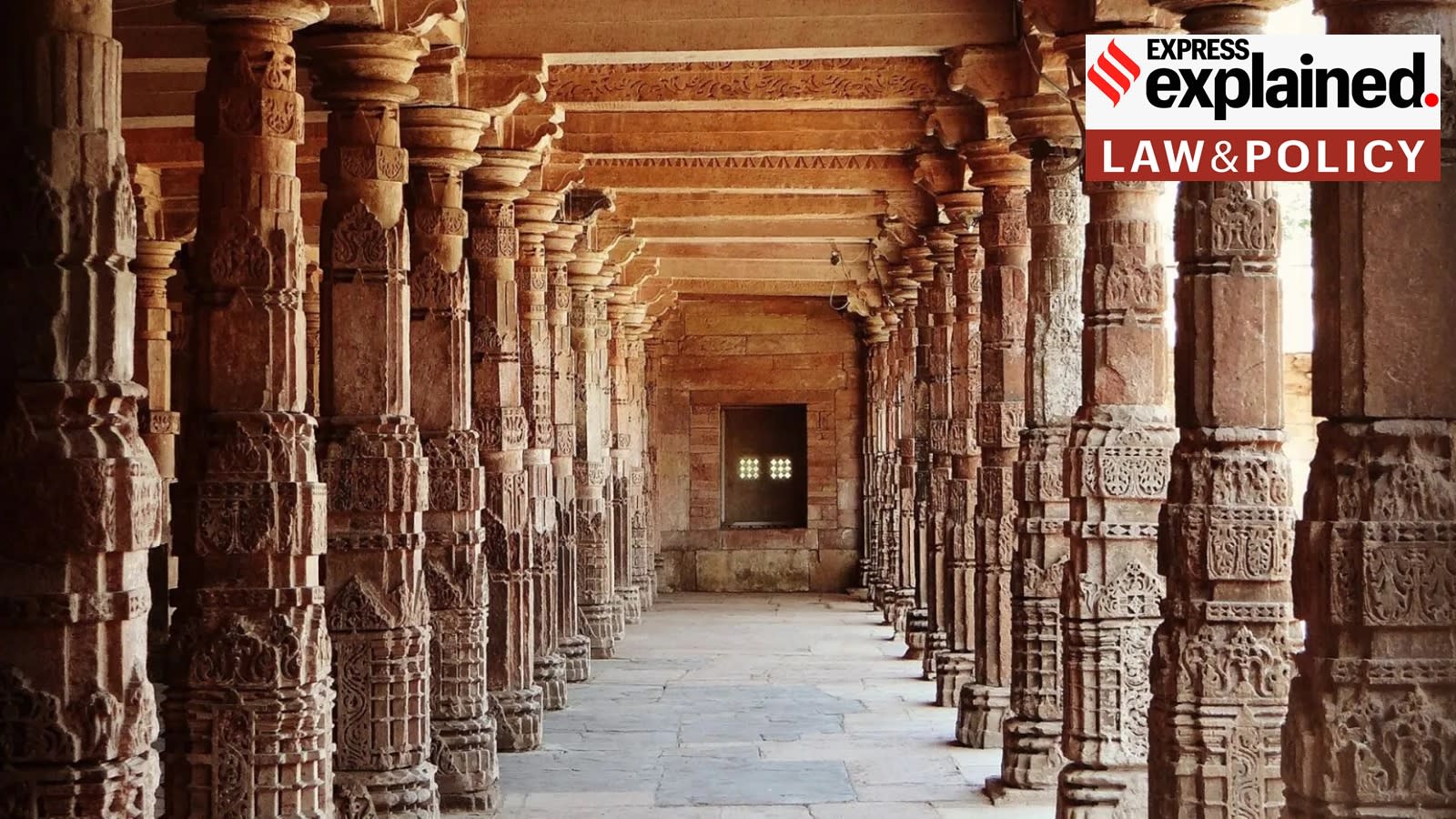
The Supreme Court of India has declined to pass an order restoring the status quo at the disputed Bhojshala-Kamal Maula complex in Dhar, Madhya Pradesh, effectively leaving the legal resolution to the Madhya Pradesh High Court.
Legal Stalemate: The Bhojshala-Kamal Maula Complex Dispute
The Supreme Court of India's recent decision to decline an order restoring the status quo at the Bhojshala-Kamal Maula complex in Dhar, Madhya Pradesh, marks a critical juncture in one of the region's most sensitive religious property disputes. The complex, which serves as both a temple and a mosque, has been a flashpoint of communal and legal tension for decades. By refusing to intervene and directing the focus back to the Madhya Pradesh High Court, the apex court has signaled that the resolution of this specific conflict must be handled through the established lower judicial channels, avoiding a premature federal mandate on a highly localized and emotionally charged issue.
The Core of the Conflict and Judicial Nuances
At the heart of the dispute is the claim over the origin and ownership of the structure. Hindu claimants argue that the site was originally a temple dedicated to Lord Shiva, commissioned by the 11th-century Paramara King Raja Bhoj. Conversely, Muslim worshippers maintain that the structure has functioned as the Kamal Maula mosque for centuries. The legal battle centers on whether the structure was converted or if it has a dual history. The Supreme Court's refusal to restore the 'status quo' means that the current arrangements for worship and access—which have often been subject to temporary court-mandated schedules—will remain under the jurisdiction of the High Court, preventing a sudden shift in control that could trigger local unrest.
Historical Context and the Shadow of Ayodhya
This dispute does not exist in a vacuum; it is deeply influenced by the historical and legal precedents set by the Ram Janmabhoomi-Babri Masjid case in Ayodhya. In both instances, the central argument revolves around the 'original' nature of the structure. The use of the Archaeological Survey of India (ASI) to conduct scientific surveys of the site is a recurring theme. In the case of Bhojshala, the ASI's findings regarding the architectural remnants of a temple beneath or within the mosque structure have become pivotal evidence. This pattern suggests a broader judicial trend in India where archaeological evidence is increasingly prioritized over oral traditions or long-term possession to determine ownership.
Socio-Political Implications in Madhya Pradesh
The Bhojshala dispute is more than a legal battle; it is a socio-political barometer for the state of Madhya Pradesh. Dhar has frequently seen protests and security lockdowns during court hearings or ASI surveys. The tension reflects a wider national discourse on cultural reclamation and religious identity. For the local administration, the challenge is twofold: ensuring the safety of both communities while upholding the court's directives. The Supreme Court's decision to avoid a sweeping order prevents an immediate escalation, but it leaves the community in a state of prolonged uncertainty until the High Court reaches a final verdict.
The Role of Evidence and the ASI
One of the most critical aspects of the ongoing challenges in the Madhya Pradesh High Court is the interpretation of the ASI report. The scientific determination of whether a structure was 'converted' or 'built upon' is a complex architectural task. The legal teams are currently debating the validity of these findings, with one side arguing that the evidence proves a temple's existence and the other arguing that such evidence is inconclusive or misinterpreted. This reliance on forensic archaeology transforms the courtroom into a space of scientific debate, where the definition of a 'temple feature' versus a 'mosque feature' becomes the deciding factor in the property's fate.
Predicting Future Trends in Religious Litigation
Looking forward, the Bhojshala case is likely to set a precedent for other similar disputes across India. As more communities seek to reclaim sites based on historical claims, the judiciary will be forced to balance the 'Right to Worship' (Article 25 of the Indian Constitution) with the legalities of land ownership and historical truth. We can expect a trend where the courts move away from 'status quo' arrangements—which often act as temporary bandages—toward definitive rulings based on comprehensive archaeological dossiers. This shift will likely lead to more permanent resolutions but may also increase short-term volatility as these rulings are delivered.
Conclusion
In summary, the Supreme Court's refusal to interfere in the Bhojshala-Kamal Maula dispute reinforces the importance of the High Court's role in adjudicating local religious conflicts. While the immediate legal tension remains unresolved, the case underscores the intersection of faith, history, and law in modern India. The eventual outcome will depend not only on legal arguments but on the scientific veracity of archaeological findings, making it a landmark case for how India handles its complex architectural and religious heritage.