Delhi Protests Case Hearing in Supreme Court LIVE: Pleas alleging detention, assault
Source Entity
Ashish Shaji
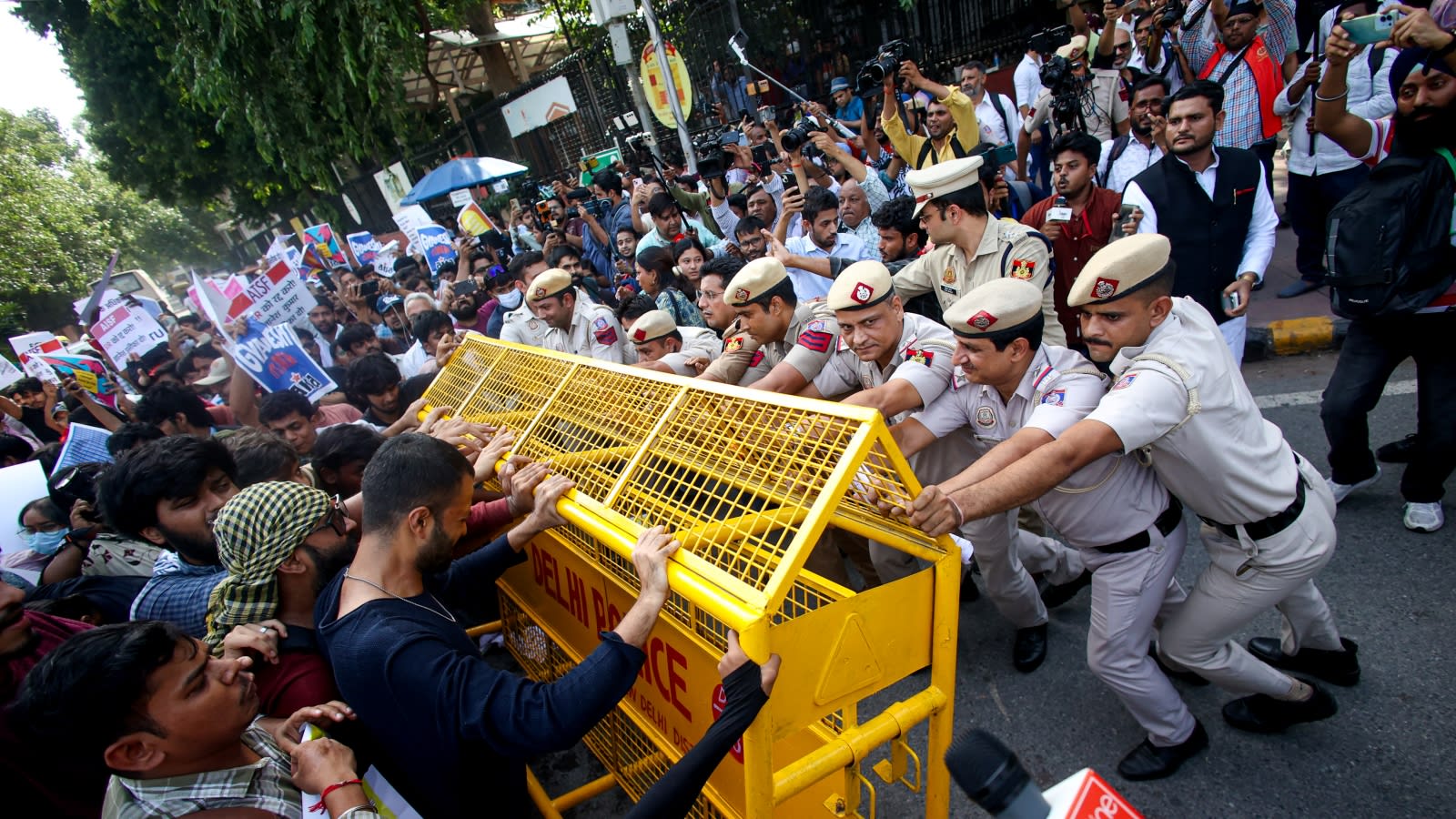
The Supreme Court is hearing petitions regarding alleged police misconduct, including illegal detentions and assaults on protesters and journalists during the October 3, 2026, demonstrations against CEC Gyanesh Kumar. The court has mandated the preservation of CCTV footage as it examines these claims of irregularities and suppressed dissent.
Supreme Court Scrutinizes Allegations of Police Misconduct in Delhi
On October 3, 2026, the streets near Jantar Mantar in New Delhi became the site of significant civil unrest as protesters gathered to demand the resignation of Chief Election Commissioner (CEC) Gyanesh Kumar. The demonstrations, which centered on allegations of irregularities in the functioning of the Election Commission, culminated in police intervention and the detention of several participants. These events have now reached the highest judicial level, as the Supreme Court prepares to hear a series of petitions addressing the conduct of law enforcement during these protests.
Legal Challenges and Allegations of Abuse
The petitions before the Supreme Court are multifaceted, addressing serious concerns regarding civil liberties and the treatment of citizens during public dissent. Among the primary allegations are claims of illegal detentions and physical assaults against protesters. Furthermore, the court is addressing a contempt plea that highlights the restrictive measures imposed on public transit, specifically the limitations placed on metro and train services during the unrest. This legal challenge underscores the tension between maintaining public order and upholding the fundamental right to protest and assemble in the national capital.
Protection of Press Freedom
A particularly concerning aspect of the current litigation involves the treatment of the media. The petitions before the court include specific grievances regarding the detention and alleged assault of journalists who were reporting on the protests. In any democratic framework, the ability of the press to document public demonstrations without fear of state interference is paramount. The Supreme Court's decision to specifically include these claims in its hearing reflects the gravity of the situation and the necessity of ensuring that reporters are not targeted for fulfilling their professional duties.
Judicial Oversight and Evidence Preservation
In preparation for the current proceedings, the Supreme Court has taken proactive measures to ensure institutional accountability. During the previous hearing, the bench issued formal notices regarding all petitions and mandated the preservation of all relevant CCTV footage. This directive is a critical procedural safeguard designed to prevent the destruction of evidence and to ensure that the court has a factual, objective basis upon which to evaluate the conduct of law enforcement agencies during the October 3 incidents.
Broader Implications for Democratic Institutions
This case transcends the immediate local protests, touching upon the broader health of democratic institutions in India. By focusing on the functioning of the Election Commission and the subsequent response by the state, the Supreme Court is positioning itself as the arbiter of accountability in a volatile political climate. The court's handling of these petitions will likely set a precedent for how law enforcement agencies manage large-scale protests and how the judiciary balances security concerns with the constitutional rights of the citizenry.
Concluding Summary
As the Supreme Court moves forward with its review, the nation remains attentive to the outcome of these proceedings. The intersection of electoral integrity concerns, allegations of police brutality, and the protection of journalists creates a complex legal landscape. The court's commitment to examining the evidence—backed by the required CCTV footage—will be central to determining whether the state's response to the Jantar Mantar protests exceeded legal boundaries, thereby reaffirming the role of the judiciary in upholding democratic standards.