"Will Sit On Dharna": Supreme Court's Quip Over Delayed Road Work Near Delhi High Court
Source Entity
NDTV News Search Records Found 1000
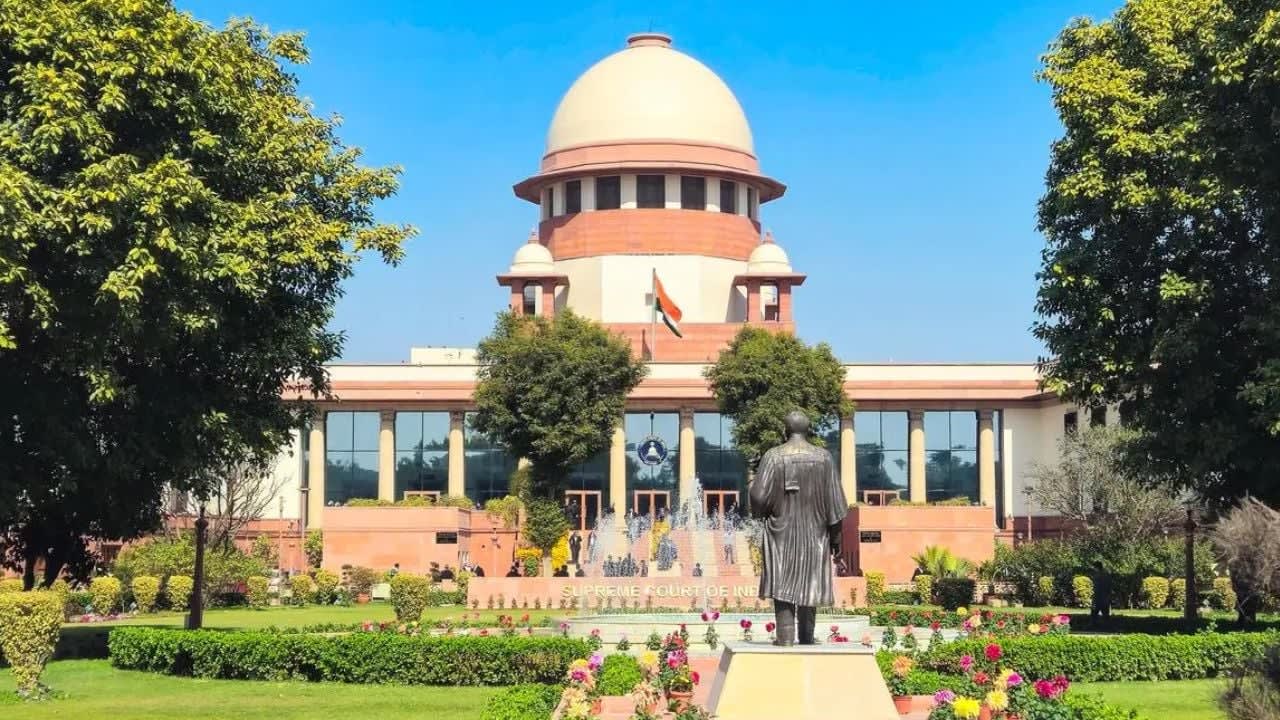
The Supreme Court has issued a stern warning regarding the long-delayed road safety project near the Delhi High Court. The court mockingly threatened to sit on a 'dharna' to highlight the urgent need for infrastructure improvements at the Mathura Road crossing.
Judicial Intervention in Urban Infrastructure
The Supreme Court of India recently issued a pointed, albeit humorous, rebuke regarding the persistent delays in road safety improvements at the critical Mathura Road crossing adjacent to the Delhi High Court. By remarking that they would resort to a 'dharna'—a traditional form of sit-in protest—to demand action, the bench underscored the absurdity of a situation where even the immediate vicinity of the judiciary remains plagued by hazardous traffic conditions and administrative lethargy.
The Critical Nature of Mathura Road
Mathura Road serves as one of the most vital arterial routes in the national capital, carrying a heavy load of daily commuters, public transport, and government traffic. The specific intersection near the Delhi High Court is a high-density zone where pedestrian safety, vehicular flow, and accessibility for legal professionals and litigants converge. The failure to finalize safety infrastructure at this junction is not merely a matter of urban inconvenience but a significant lapse in public safety standards.
Bureaucratic Inertia and Judicial Frustration
The court's sarcastic commentary reflects deep-seated frustration with the 'silo' mentality often observed within municipal and public works departments. When infrastructure projects meant to protect citizens stall repeatedly, the judiciary is often forced to step in as a de facto supervisor. This intervention highlights a broader systemic failure in project management, where accountability mechanisms remain weak, leading to project timelines that stretch indefinitely without consequence.
Implications for Urban Planning
This incident acts as a microcosm for the larger challenges facing Delhi’s urban planning. The city’s infrastructure is frequently caught between competing jurisdictions, including the Public Works Department (PWD), the Municipal Corporation, and the land-owning agencies. When these bodies fail to coordinate on essential road safety projects, it is the public that suffers, leading to increased accident risks and chronic congestion. The Supreme Court’s involvement serves as a signal that the status quo is no longer acceptable.
Looking Toward Future Accountability
The judicial pressure applied in this case is likely to accelerate the implementation of safety measures, such as improved signage, pedestrian crossings, and traffic management systems. However, the reliance on the Supreme Court to micromanage road projects is unsustainable. For long-term improvement, the city requires a robust, integrated traffic management authority capable of executing safety protocols without the constant threat of judicial intervention.
Conclusion
In summary, the Supreme Court’s remarks regarding the Mathura Road crossing serve as a necessary catalyst for change. By highlighting the delay through the lens of a 'dharna,' the bench has successfully brought public and administrative focus back to the immediate necessity of road safety. Moving forward, the successful completion of this project should serve as a benchmark for how inter-agency cooperation can resolve long-standing infrastructure bottlenecks in the capital.
Verification Required?