Pleas in Supreme Court allege illegal detentions by Delhi and Bihar police
Source Entity
India Latest News: Top National Headlines Today & Breaking News | The Hindu
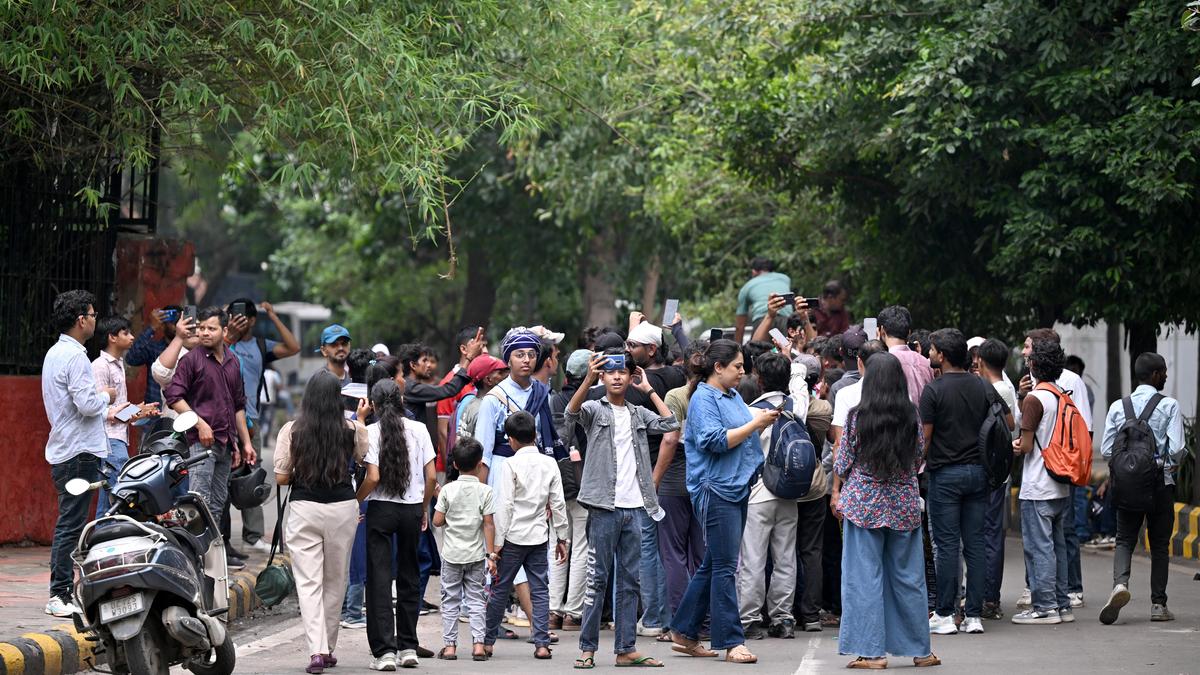
The Supreme Court has ordered a transparent, independent probe into allegations of police violence against students protesting NEET paper leaks. The court is considering the formation of an SIT while granting interim protection to peaceful protesters and ordering the release of detained minors.
Judicial Intervention in Student Protests
The Supreme Court of India has taken a decisive stance regarding the recent unrest surrounding the National Eligibility-cum-Entrance Test (NEET) paper leak protests. A bench led by Chief Justice of India Surya Kant, alongside Justices Joymalya Bagchi and V Mohana, has underscored that a prima facie case exists for a transparent, independent inquiry into allegations of police excesses. The court’s intervention serves as a critical check on state power, emphasizing that the rule of law must govern both the conduct of protesters and the response of law enforcement agencies.
Accountability and the Rule of Law
Central to the court's proceedings is the principle of accountability. The bench explicitly stated, "Whosoever committed excesses, took law in their hands should be taken to task." This directive applies equally to those inciting violence and to police officers accused of using disproportionate force, such as the alarming reports of an AK-47 being brandished against peaceful demonstrators in Bihar. By calling for an SIT (Special Investigation Team), the court aims to strip away political biases from the investigative process, ensuring that the "defined protocol" for handling public demonstrations is upheld.
Protecting the Rights of Students
In a move to protect the rights of the student community, the Supreme Court has granted interim relief, barring coercive action against student protesters and ordering the immediate release of all minors detained during the demonstrations. Furthermore, the court has directed authorities to refrain from making the personal data of these students public. This reflects a judicial effort to prevent the criminalization of academic dissent, though the court has crucially clarified that such protections do not extend to "anti-social elements" or those with established criminal antecedents.
Broader Implications for Public Order
These events stem from widespread national frustration over NEET paper leaks, which have mobilized students across various states and the capital, New Delhi. The opposition’s focus on the use of pellet guns against marchers underscores the intensity of the confrontation. The Supreme Court's push to establish a standardized protocol for future protest management suggests a desire to move beyond reactive policing and toward a more structured, constitutional framework for civil demonstration.
Future Trends in Judicial Oversight
Moving forward, the formation of an SIT and the potential for a commission of inquiry signal a shift toward greater judicial oversight of state-led law enforcement during civil unrest. If successful, this process could serve as a template for handling similar grievances in the future, where the right to peaceful assembly is balanced against the state's duty to maintain public order. The court’s insistence on a "fair, transparent and thorough" probe highlights the judiciary's role as the final arbiter in protecting fundamental rights during periods of national agitation.
Multiple Citing Sources
Verification Required?