Supreme Court Questions 2-Child Poll Norm As Fertility Rate Drops
Source Entity
NDTV News Search Records Found 1000
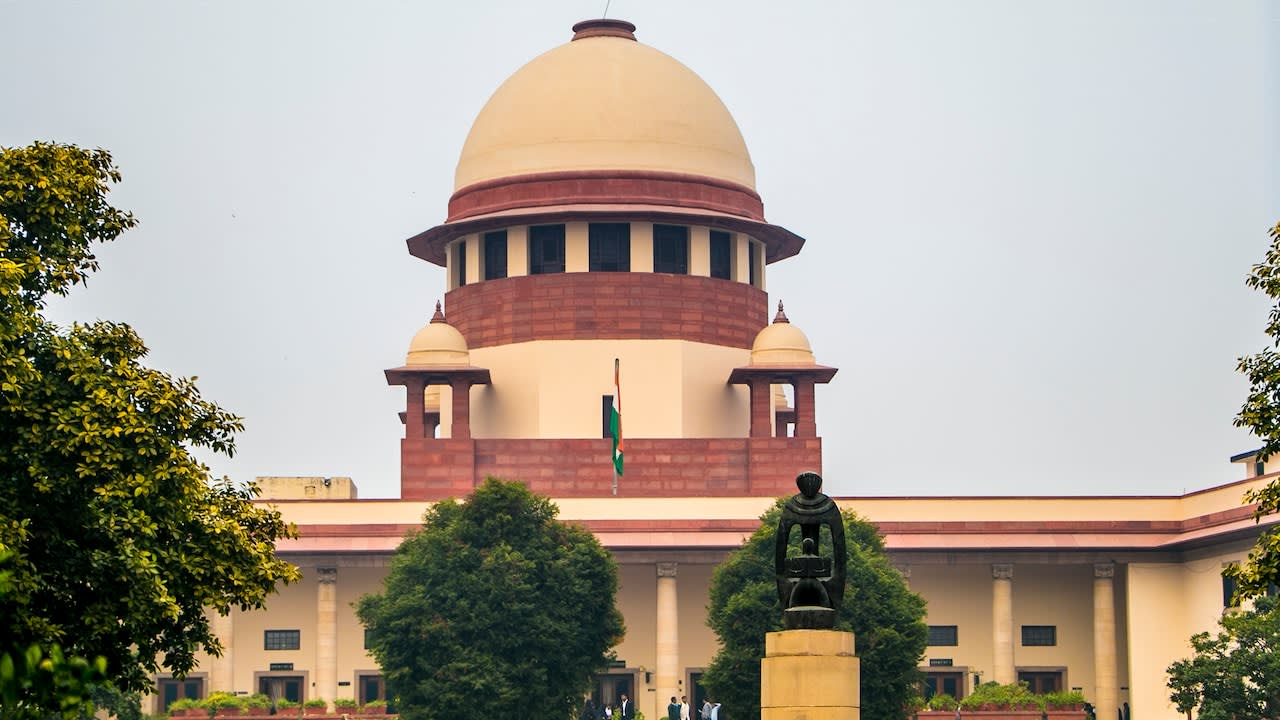
The Supreme Court of India is re-evaluating the relevance of two-child policies for electoral eligibility. This scrutiny follows a significant decline in India's Total Fertility Rate from 3 in 2003 to 1.9 today.
Judicial Scrutiny of India's Two-Child Electoral Norms
The Shifting Demographic Landscape
The Supreme Court of India has recently initiated a critical inquiry into the viability and necessity of two-child policies as a criterion for contesting elections. This judicial re-evaluation comes at a pivotal moment, as the country's demographic profile has undergone a profound transformation. Data indicates that India's Total Fertility Rate (TFR) has plummeted from 3.0 in 2003 to 1.9 in the current period, falling below the replacement level of 2.1.
Historical Context and Policy Intent
For decades, various state-level legislative measures aimed to curb population growth by disqualifying individuals with more than two children from holding elected office. These policies were rooted in the Malthusian concerns of the early 2000s, when high fertility rates were perceived as a primary obstacle to economic development and resource allocation. At that time, a TFR of 3.0 necessitated aggressive public policy interventions to manage population stabilization.
The Case for Re-evaluation
The Supreme Court's questioning suggests a recognition that the demographic reality has fundamentally shifted. With the TFR now at 1.9, the original justification—that population explosion poses an immediate threat to national progress—is being challenged. The court is now weighing whether punitive measures in the electoral process remain constitutionally sound when the objective of population control has, in many ways, been surpassed by natural demographic transitions.
Socio-Political Implications
This legal discourse has significant implications for democratic representation. Critics of the two-child norm have long argued that such policies disproportionately affect marginalized communities and may incentivize regressive practices. By linking reproductive choices to political rights, these laws have created a complex intersection between fundamental rights and state-mandated social engineering. The judiciary’s current stance suggests a move toward aligning legal frameworks with modern demographic data.
Future Trends and Policy Trajectory
Looking ahead, India’s policy focus is likely to transition from population control to population management and investment in human capital. As the fertility rate remains below replacement levels, the focus of the state may shift toward addressing the challenges of an aging workforce and the economic implications of a narrowing demographic dividend. The Supreme Court's intervention serves as a catalyst for a broader national conversation on whether electoral eligibility should be decoupled from private family decisions in an era of declining fertility.
Verification Required?