Why has the Supreme Court sought Centre’s view on totalisers for vote counting in EVMs | Explained
Source Entity
India Latest News: Top National Headlines Today & Breaking News | The Hindu
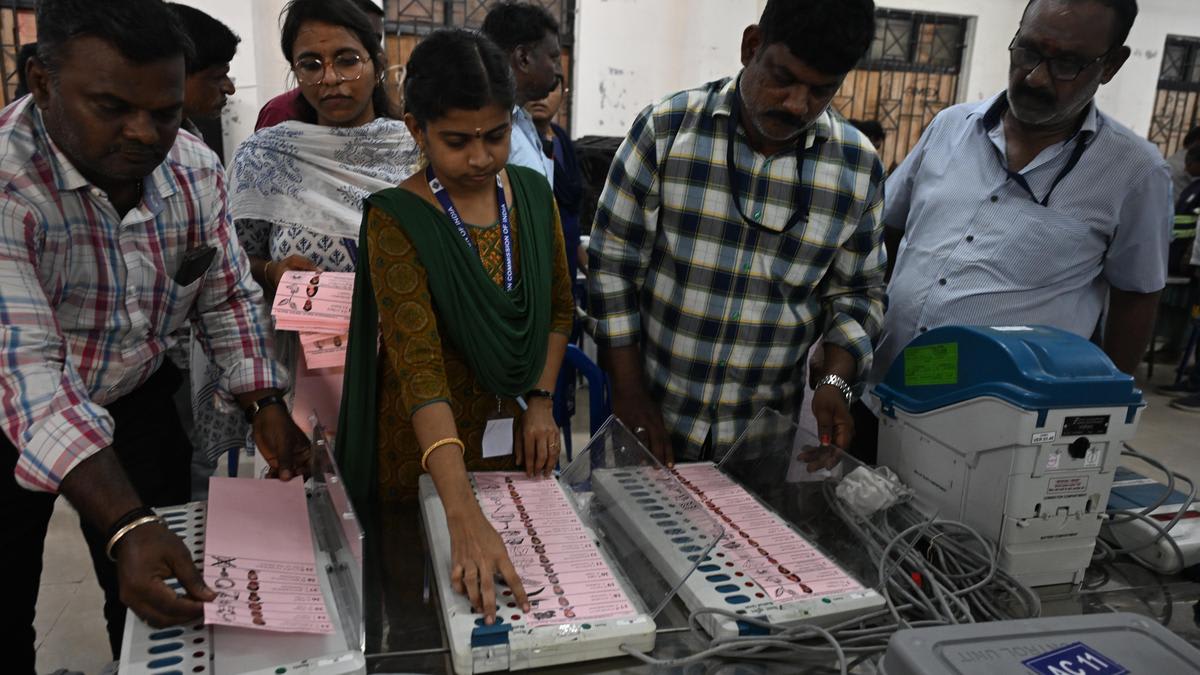
The Supreme Court has asked the Centre to consider using 'totaliser' machines to mix EVM votes before counting to ensure voter privacy. This reform aims to prevent political victimization by obscuring booth-wise voting patterns, a practice currently mandated by the 1961 Conduct of Elections Rules.
The Push for Electoral Privacy: Supreme Court Intervenes on Totaliser Usage
The Supreme Court of India, led by a three-judge bench including Chief Justice Surya Kant, Justice Joymalya Bagchi, and Justice V. Mohana, has formally requested the Central government to provide its stance on the implementation of 'totaliser' machines for vote counting. This legal development marks a significant juncture in a long-standing debate concerning the intersection of electoral transparency and voter privacy. The core objective of this judicial inquiry is to determine whether the government can amend the Conduct of Elections Rules, 1961, to facilitate the pooling of votes from multiple polling stations before they are tallied, thereby masking the specific voting behavior of individual booths.
The Mechanics of Current Counting vs. The Totaliser Proposal
Under the current regulatory framework, the control unit of each Electronic Voting Machine (EVM) is processed individually. This system allows candidates and political parties to analyze results with high granularity, identifying precisely which localities or polling booths supported or rejected them. While this provides transparency in the counting process, critics argue it exposes voters to potential victimisation or intimidation by political actors in regions that did not support their preferred candidates. The totaliser, a device that has been technically available since 2007, proposes to mix votes from approximately 14 polling stations, effectively shielding the identity of individual booth preferences.
Historical Context and the 18-Year Wait
The quest for this reform is not new; the Election Commission of India (ECI) has advocated for the option to implement totalisers for nearly 18 years. The current Supreme Court proceedings stem from public interest litigation (PIL) originally filed in 2014 by petitioners Yogesh Gupta and Imran Khan. Their plea highlighted the systemic risk that booth-wise data poses to the fundamental right to a secret ballot. Despite the ECI’s support for this technological upgrade to prevent voter intimidation, the legislative shift required to modify the 1961 rules has remained stalled, prompting the Court’s recent intervention.
Legal and Procedural Implications
The Supreme Court's inquiry centers on whether the existing legal framework—which already permits the pooling of paper ballots—can be extended to accommodate the digital nature of EVM counting. The bench is specifically examining if suitable changes can be integrated into the Conduct of Elections Rules to protect the secrecy of the vote without compromising the integrity of the electoral process. By asking the government to clarify its position, the Court is applying pressure to resolve a conflict that balances the need for granular data with the constitutional necessity of voter protection.
Broader Implications for Indian Democracy
The potential adoption of totaliser machines represents a shift toward prioritizing voter security over the political convenience of granular result analysis. If implemented, this reform would significantly alter how political parties strategize, as they would no longer be able to pinpoint voting trends at the hyper-local booth level. This change could theoretically mitigate instances of post-poll retaliatory actions against specific communities or neighborhoods. Furthermore, it reinforces the principle that the act of voting must remain a private, protected exercise, free from the shadow of political retribution.
Future Trends and Conclusion
As the government prepares its response to the Supreme Court, the outcome will likely set a precedent for how technological advancements in elections are balanced against traditional rules. Should the Centre agree to the proposed amendments, it would modernize the electoral process to better align with the digital era while safeguarding the democratic right to anonymity. The final decision will be a landmark moment in ensuring that the privacy of the Indian voter remains the cornerstone of the electoral system, potentially ending nearly two decades of administrative and legislative inertia regarding this vital reform.
Verification Required?