'You ignored because she was poor?': Supreme Court lambasts doctor, hospital for denying care to 4-year-old rape victim
Source Entity
Latest News: Today's Latest News Headlines from India & World | Hindustan Times | Hindustan Times
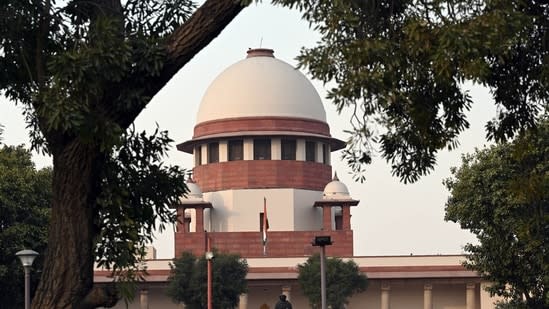
The Supreme Court has harshly criticized an Ayurvedic doctor and a private hospital for denying emergency care to a four-year-old rape victim in Ghaziabad. The bench, led by CJI Surya Kant, questioned the medical ethics of the professionals involved and suggested compensation for the victim's family.
Supreme Court Reprimands Medical Negligence in Ghaziabad Case
In a scathing observation, the Supreme Court of India has addressed a grave case of medical negligence involving the denial of emergency care to a four-year-old rape and murder victim in Ghaziabad. A three-judge bench, presided over by Chief Justice of India Surya Kant and Justices Joymalya Bagchi and V. Mohana, characterized the actions of the involved Ayurvedic doctor and the private hospital as "merciless, ruthless, and insensitive."
Questioning the Ethics of Care
The core of the Court's frustration lies in the fundamental dereliction of duty by the medical professionals. The bench pointedly challenged the doctor’s right to hold the title, asserting that the profession demands a baseline of human sensitivity that was entirely absent in this instance. By failing to provide immediate stabilization or even facilitate a transfer to a facility with appropriate resources, the medical staff effectively abandoned a critically injured child in her most vulnerable moment.
The Socio-Economic Bias in Healthcare
A particularly harrowing aspect raised by the Supreme Court was the potential for socio-economic bias in the delivery of emergency services. The bench explicitly questioned whether the refusal of care was rooted in the victim’s inability to pay, asking, "You ignored because she was poor?" This highlights a systemic concern regarding the accessibility of emergency medical care for the underprivileged in India, where private institutions may prioritize financial solvency over the Hippocratic oath.
Legal and Moral Implications
The Court warned the hospital that while a monetary penalty might be considered, such measures risk a "chilling effect" if they do not sufficiently address the root of the apathy. The bench instead focused on the moral obligation of the medical community to uphold the right to life, which is enshrined under Article 21 of the Indian Constitution. The directive for the hospital to consider compensation for the bereaved family serves as a recognition of the irreparable loss caused by this administrative and ethical failure.
Broader Impact on Medical Governance
This case serves as a stark reminder of the need for stricter enforcement of emergency medical protocols. The Supreme Court's intervention underscores that medical licenses are not merely professional credentials but social contracts that mandate the preservation of life above all other considerations. Future trends in judicial oversight may see more stringent accountability measures for private hospitals that fail to act as first responders in trauma cases, regardless of the patient's financial status or the facility's specific medical designation.
Conclusion
The tragedy in Ghaziabad has sparked a necessary national conversation regarding the intersection of medical ethics and human rights. By holding the medical professionals accountable for their lack of empathy and professional failure, the Supreme Court has signaled that the judiciary will not remain a bystander when the institutions meant to save lives choose to look the other way. The final outcome of this case will likely set a significant precedent for how medical negligence is handled in cases involving the most vulnerable segments of society.
Multiple Citing Sources
Verification Required?