Supreme Court Stays Order On Board, Not Community Of Priests Managing Tamil Nadu Temple
Source Entity
NDTV News Search Records Found 1000
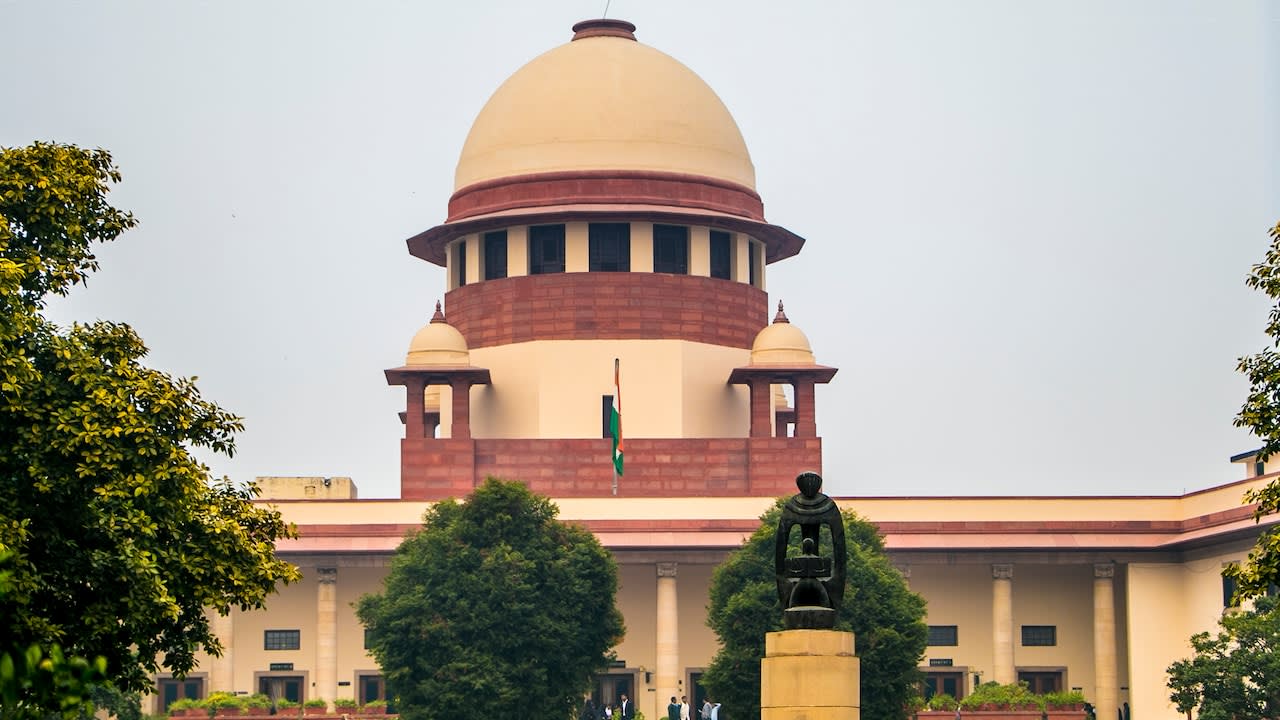
The Supreme Court has stayed a Madras High Court order that sought to appoint a board of management for the Chidambaram Sabanayagar Temple. The apex court is now examining whether the state's parens patriae jurisdiction applies selectively to temples or extends to all religious institutions.
Legal Intervention in Chidambaram Temple Governance
On November 4, 2026, the Supreme Court of India intervened in a significant religious governance dispute by staying a Madras High Court order that had mandated the formation of a Board of Management for the ancient Chidambaram Sabanayagar Temple in Tamil Nadu. The Bench, comprising Justices Aravind Kumar and Vipul M. Pancholi, issued a notice to the State of Tamil Nadu, effectively freezing the implementation of the October 30 order while the court deliberates on deeper constitutional questions.
The Core Legal Conflict: Parens Patriae Jurisdiction
The most critical aspect of the Supreme Court's scrutiny is the concept of parens patriae, or the state's role as a guardian for religious institutions. The apex court has raised a fundamental question regarding the scope of this doctrine: do State High Courts possess the authority to exercise this jurisdiction solely over public temples, or does such power implicitly extend to places of worship belonging to other faiths? This inquiry suggests that the Supreme Court is looking to establish a more uniform standard for how state authorities interact with the management of religious sites.
Historical Context and the Podhu Dikshidar
The dispute centers on the Podhu Dikshidar, a hereditary community of priests who have managed the temple since the Supreme Court's 2014 ruling handed over the administration to them. The Madras High Court's October 30 order had alleged that the temple had been subject to maladministration under the Dikshidars' tenure. In response, the High Court had appointed retired judges V. Bharathidasan and R. Suresh Kumar to oversee the administration, a move that the hereditary priests have now successfully challenged at the Supreme Court level.
Implications for Temple Administration
By staying the High Court's order, the Supreme Court has temporarily restored the status quo, allowing the Podhu Dikshidar to continue their management duties while the legal challenge proceeds. This case highlights the persistent tension between the state’s desire to regulate public religious institutions to prevent mismanagement and the rights of specific communities to maintain traditional, hereditary management structures. The outcome of this case will likely set a significant precedent for the administrative autonomy of temples across India.
Future Trends in Religious Governance
The Supreme Court’s focus on the selective application of jurisdiction signals a shift toward a more rigorous legal evaluation of how state governments interfere with religious affairs. If the Court determines that the current application of parens patriae is discriminatory or legally inconsistent, it could lead to a nationwide reassessment of temple management acts. This development could eventually require states to either standardize their oversight mechanisms across all faiths or significantly reduce their interventionist role in temple administration altogether.
Multiple Citing Sources
Verification Required?