FIR against 19 for illegal registration of trust properties meant for Meenakshi Amman temple
Source Entity
India Latest News: Top National Headlines Today & Breaking News | The Hindu
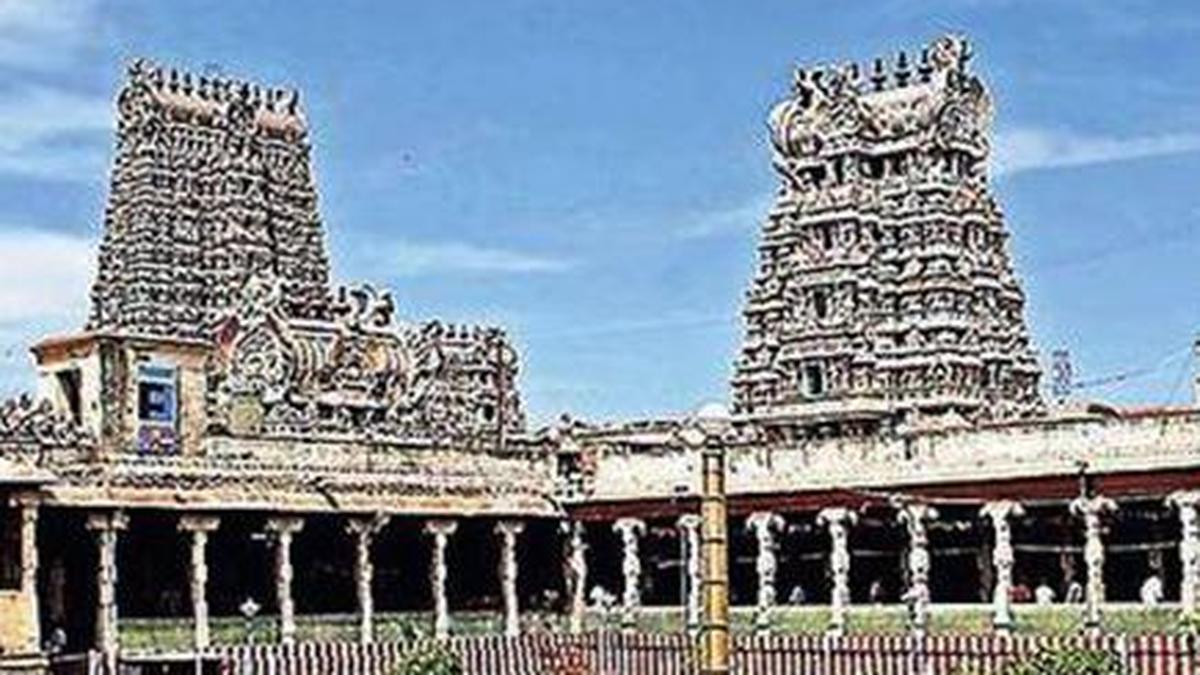
The Tamil Nadu HR&CE Department has filed an FIR against 19 individuals for the fraudulent registration of Madurai Meenakshi Amman temple trust properties. Meanwhile, the state government faces legal challenges and criticism over its policy regarding the registration of 'Inam' lands in Karur.
Temple Land Controversies: A Dual Crisis in Tamil Nadu
The Hindu Religious and Charitable Endowments (HR&CE) Department in Tamil Nadu is currently navigating a complex legal and administrative crisis involving the alleged misappropriation of temple-endowed lands. Recent developments highlight two distinct but related issues: the criminal investigation into the fraudulent registration of trust properties linked to the Madurai Meenakshi Amman temple, and a broader, contentious debate surrounding the government's decision to allow the registration of 'Inam' lands in Karur.
The Madurai Fraud Case
Authorities have registered an FIR against 19 individuals following a complaint by K. Chelladurai, the Executive Officer of the Madurai Meenakshi Amman Temple. According to HR&CE Minister Ramesh, 1.79 acres of land belonging to a trust meant to serve the Meenakshi Amman Temple and Alagarkoil were fraudulently registered in 2021. The financial stakes are significant; while the official guideline value is estimated between ₹20 crore and ₹30 crore, the actual market value is estimated at approximately ₹60 crore. This case underscores the ongoing challenges the state faces in protecting temple assets from private encroachment.
The Karur Inam Land Dispute
A separate, high-stakes legal battle is unfolding regarding the state government's decision to lift the ban on the registration of 'Inam' lands in Karur. A Public Interest Litigation (PIL) filed in the Madras High Court alleges that the HR&CE department has effectively ceded 3,084.95 acres of temple lands to 3,390 individuals. The petitioner, P. Bhaskar, argues that these 'Devadanam' lands—properties historically bequeathed to temples by former kings—are being lost to private entities to the detriment of four local temples.
Government Justification and Political Backlash
Minister Ramesh has strongly defended the government's policy, asserting that the titles for these specific 'Inam' lands were never legally held by the temples. He maintains that individual titles were granted under the Inam Abolition Act and are accurately reflected in updated revenue (UDR) records and computerized chitta. The Minister further argues that the policy shift in Karur was a response to long-standing demands, noting that opposition parties like the BJP and AIADMK had previously included similar promises in their own election manifestos.
Broader Implications for Temple Governance
The controversy serves as a flashpoint for the larger debate on the state's role in managing religious endowments. The HR&CE Department has announced plans to expand a pilot survey of temple properties from Palani to other major temples across the state, signaling a move toward greater digital transparency and administrative oversight. However, the tension between historical land rights, administrative efficiency, and the protection of religious heritage remains palpable.
Looking Ahead
The outcome of the PIL before the Division Bench of the Madras High Court, led by Chief Justice Sushrut Arvind Dharmadhikari and Justice G. Arul Murugan, will be critical. It will likely set a legal precedent for how the state handles 'Inam' lands moving forward. As the HR&CE department attempts to reclaim the 1.79 acres in Madurai through legal channels, the state government remains under pressure to balance property rights with its fiduciary duty to protect temple assets.
Multiple Citing Sources
Verification Required?